With more than 8 million people, Hangzhou is the fourth largest metropolitan area in China as well as the capital of the Zhejiang province. Situated two hours south of Shanghai, it was an easy weekend trip filled with Chinese history, culture, and scenic beauty.
Hangzhou is home to one of China’s most influential cultural sites known as West Lake. Chinese painters, poets, and the religious have been inspired by its beauty as well as its historic relics. Numerous pagodas, temples, Buddhist monasteries, and stone carvings from the 10th century occupy the mountainous landscape surrounding West Lake.
We started by hiking the Fei Lai Feng (Peak Flown From Afar).
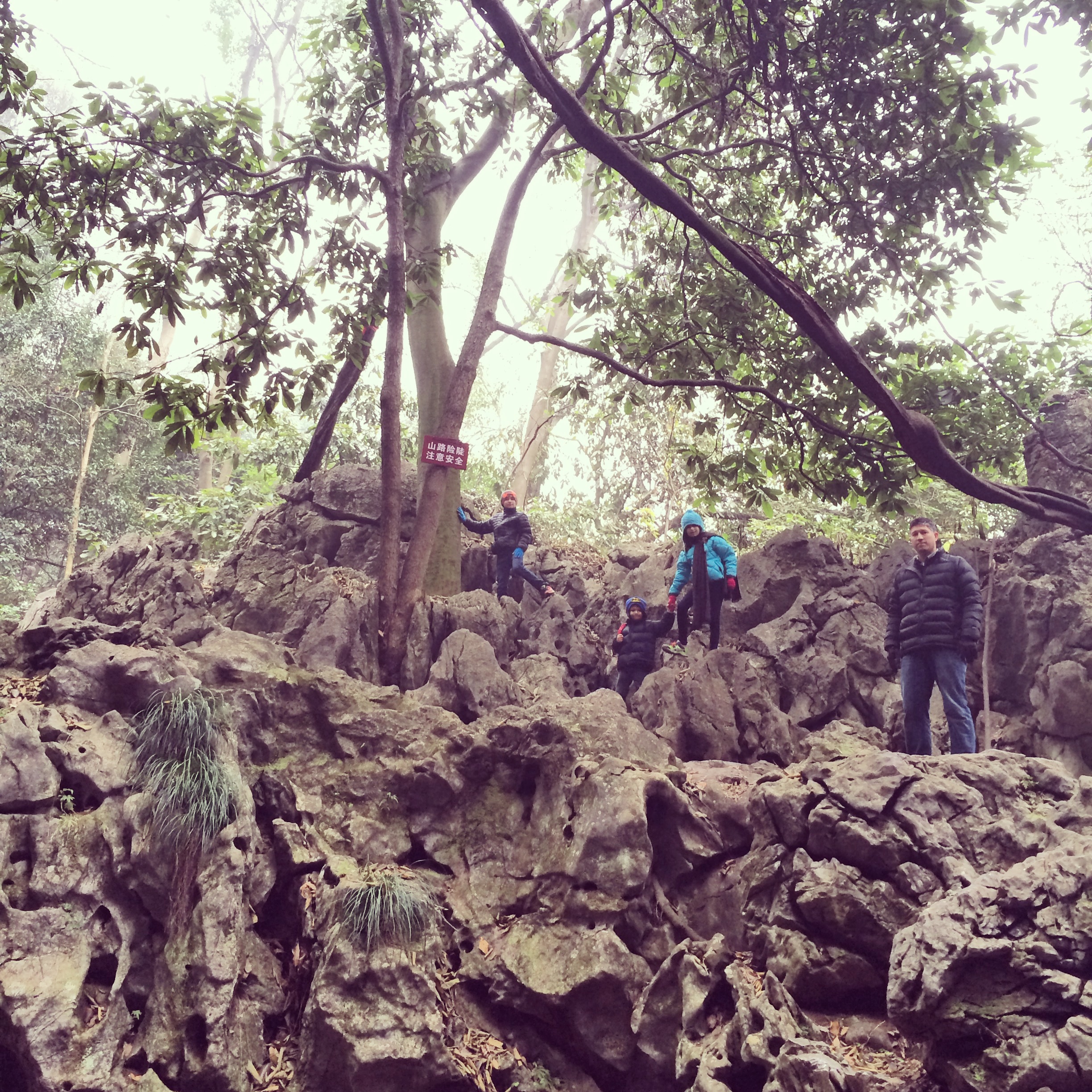
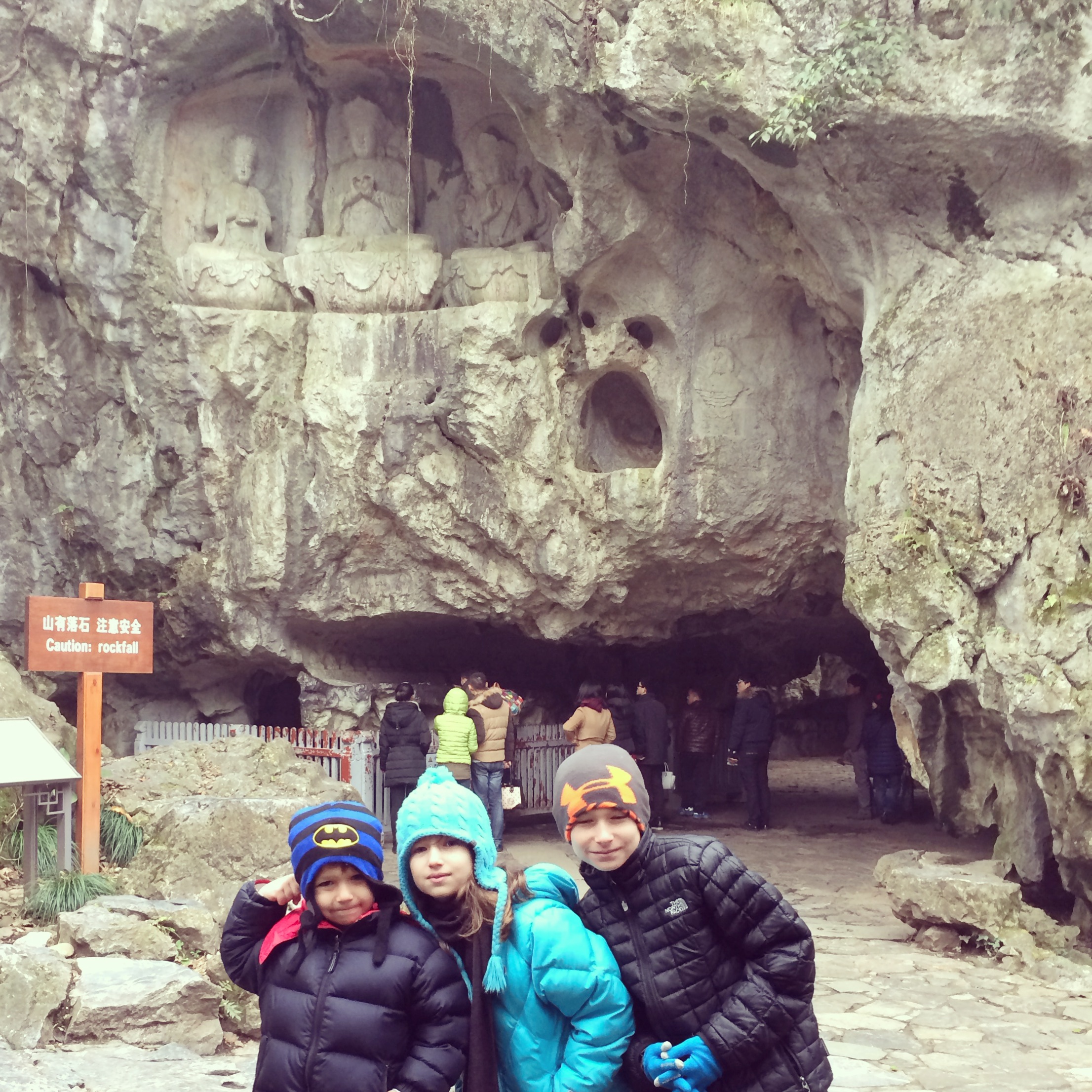
Exploring caves and searching for ancient grotto art.
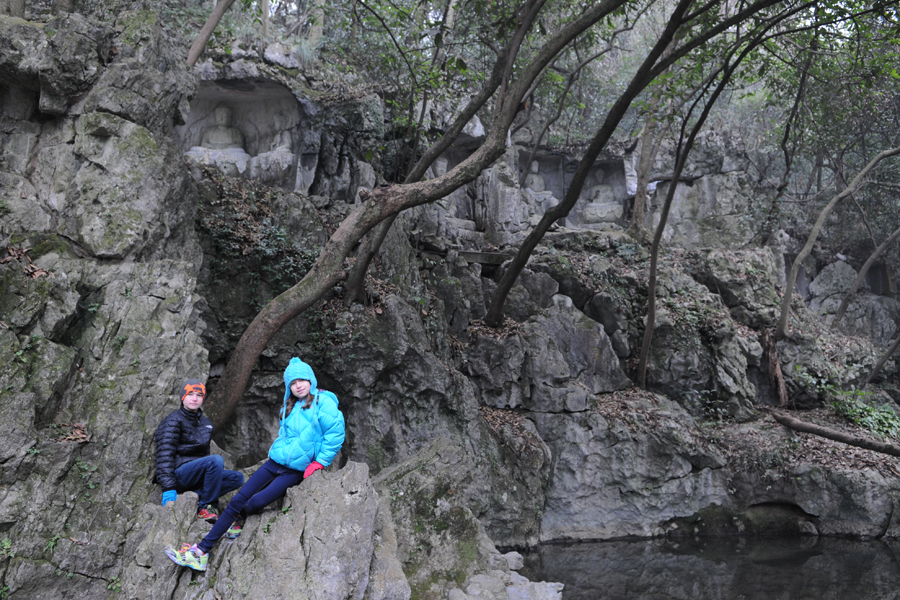
Can you spot the buddhas?
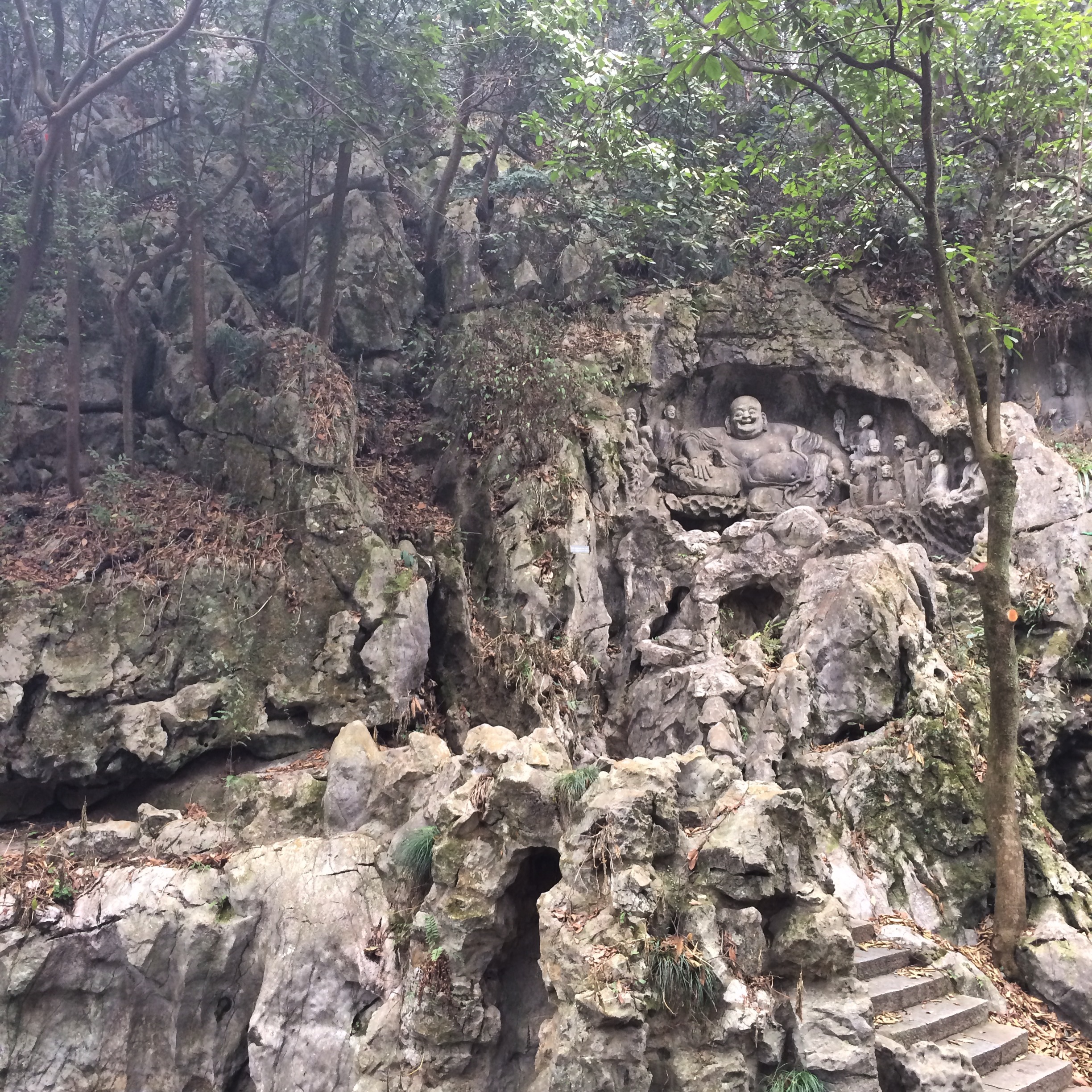
Laughing Buddha
This hike lead us to Yongfu Temple.
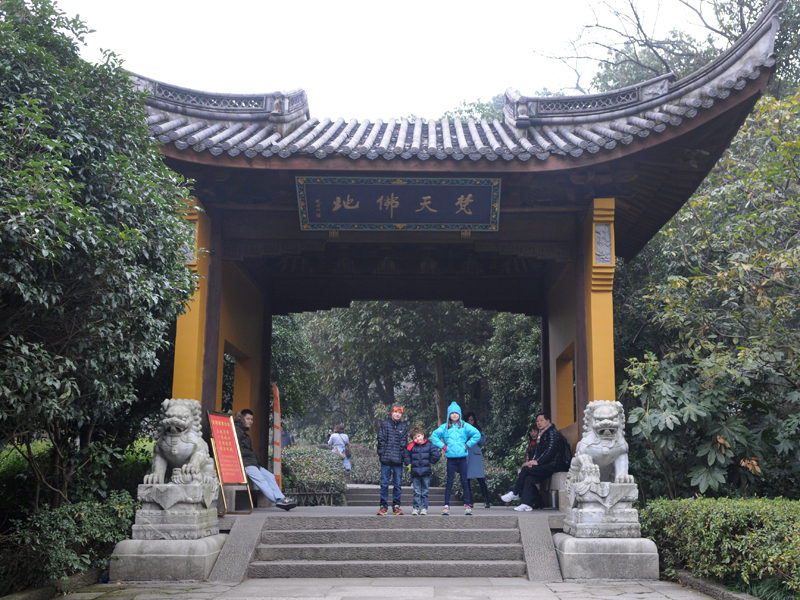
The gateway to Yongfu Temple.
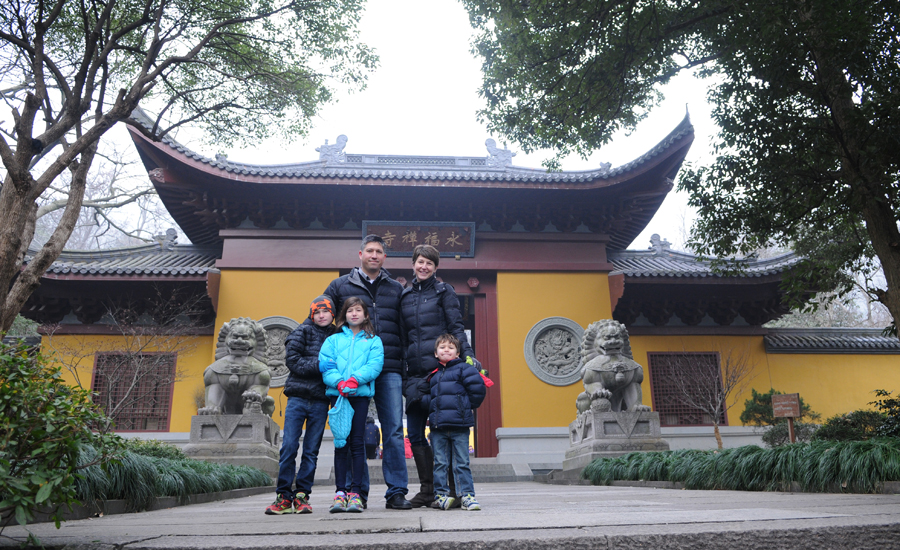
At the entrance to Yongfu Temple. Love the Chinese Guardian Lions!
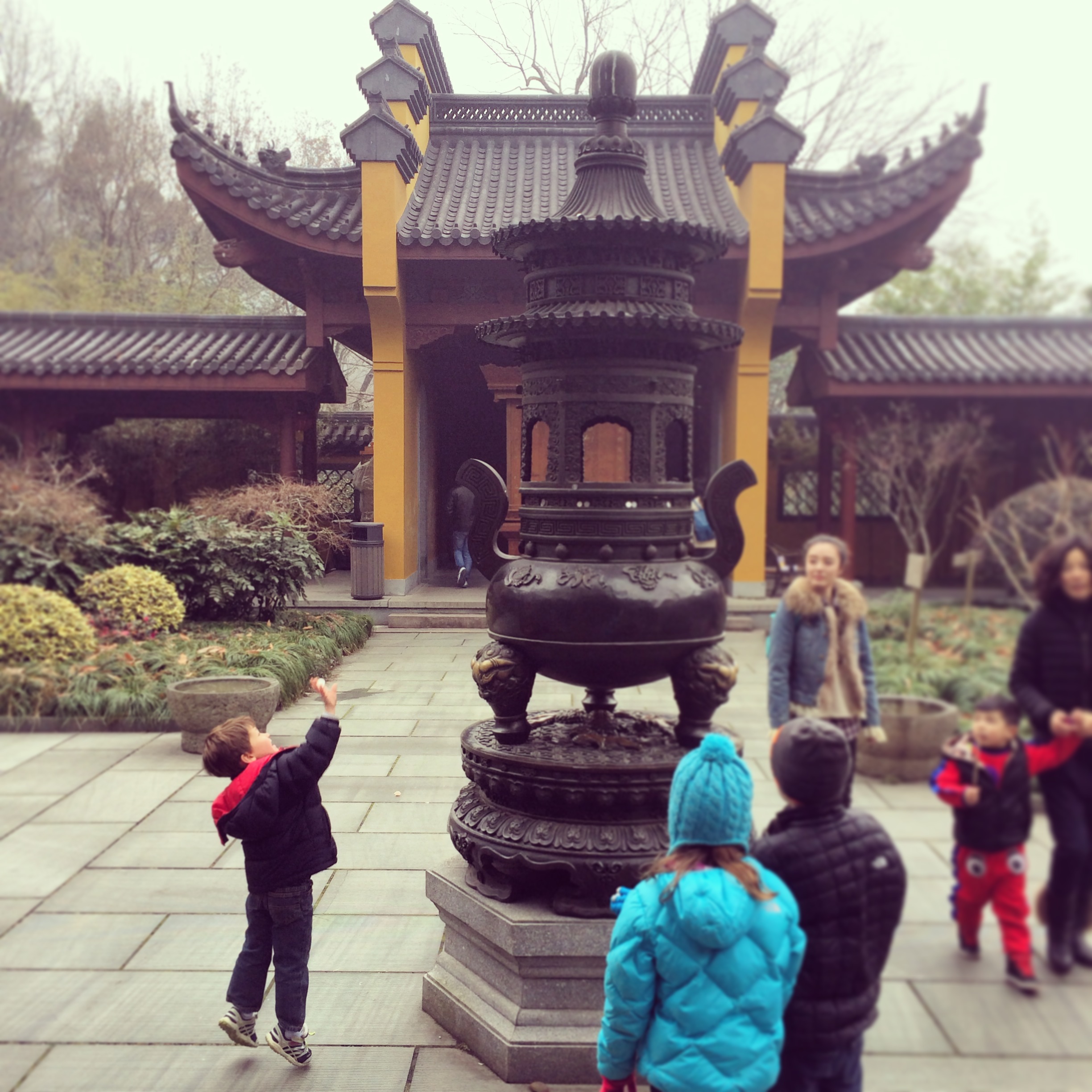
Luke trying to throw a coin into the offering tower for good luck.
We also visited a Longjing “Dragon Well” Tea Plantation. The Longjing village cultivates the most expensive and prized teas in China. The best harvests of this tea, known as Longjing or “dragon well” green tea, are traditionally reserved for government officials and wealthy elite.
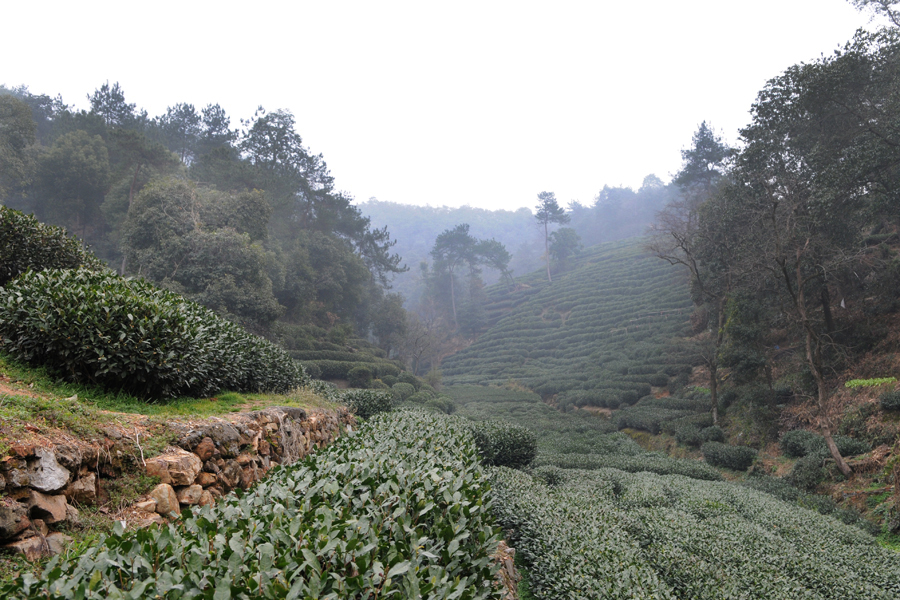
Longjing tea plantation.
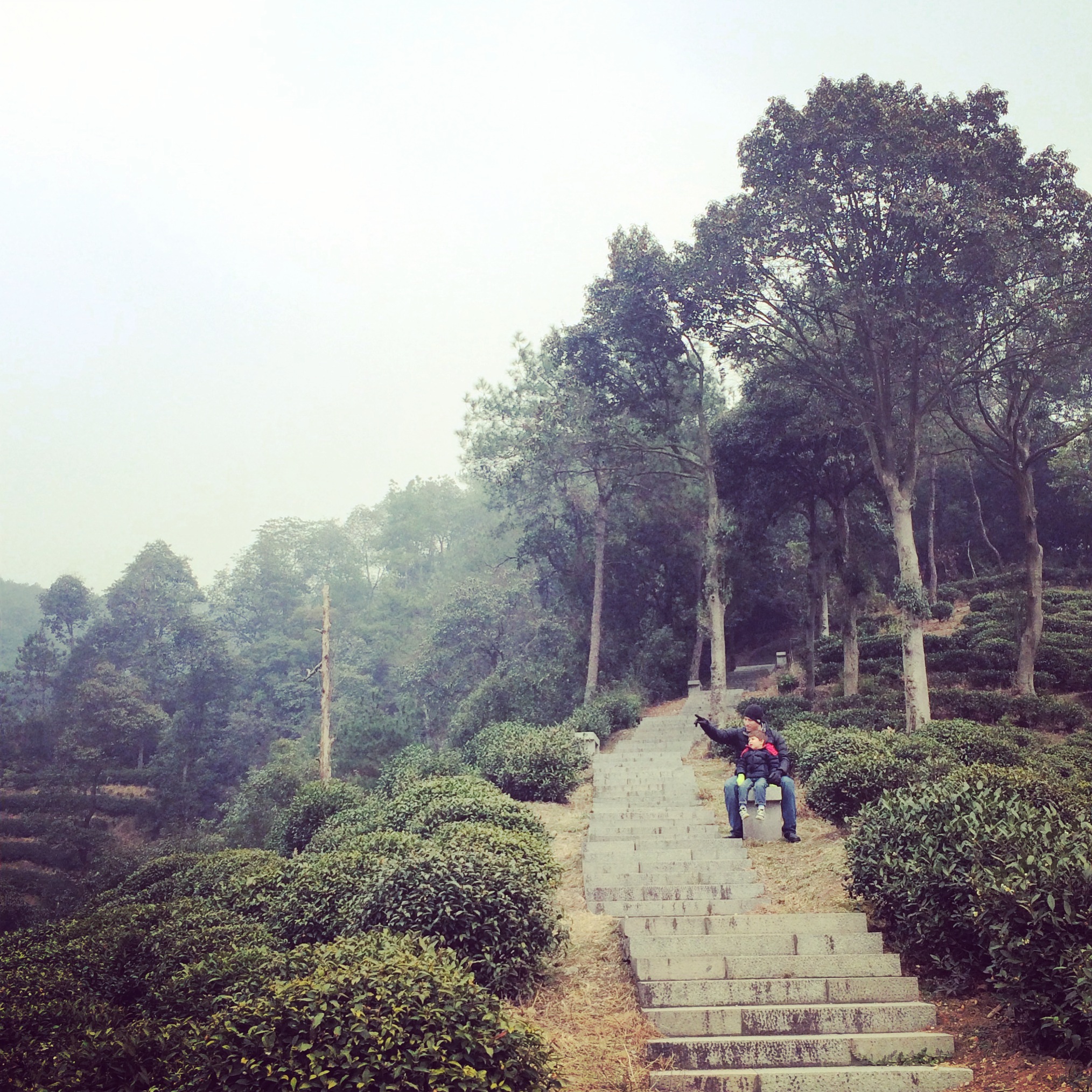
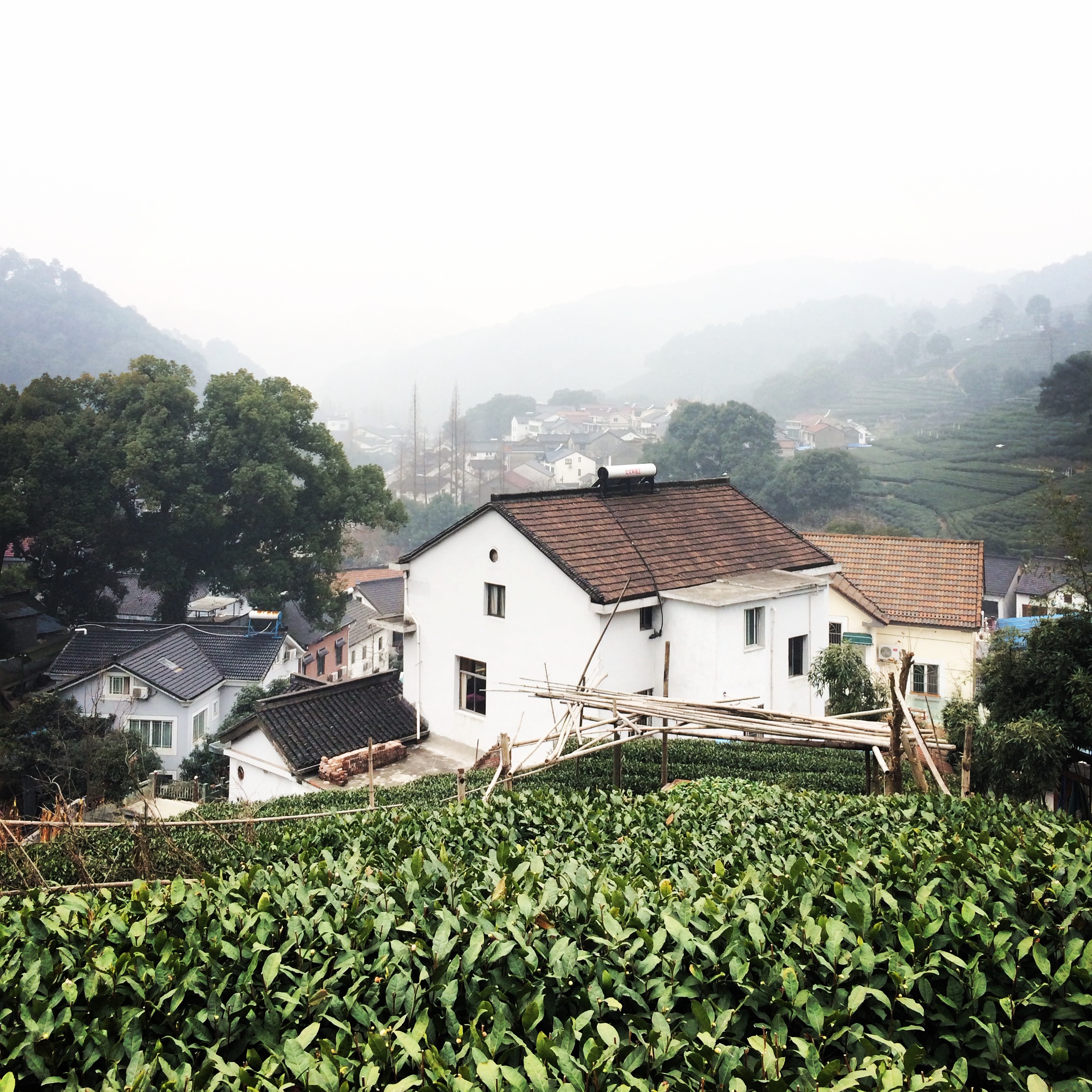
The view from the top of Longjing village.
Since Chinese New Year is just a few weeks away, the village was having a Nian Gao Festival. Nian Gao, also known as sticky rice cake, is a popular food prepared during this important holiday. “Nian Gao” is a homonym in mandarin of two words that have the same pronunciation, yet different meanings depending on which characters are used. Phonetically, nian gao translates into both “higher year” and “sticky cake.” Thus, the cake has become a traditional Chinese New Year staple for creating a better life in the upcoming new year.
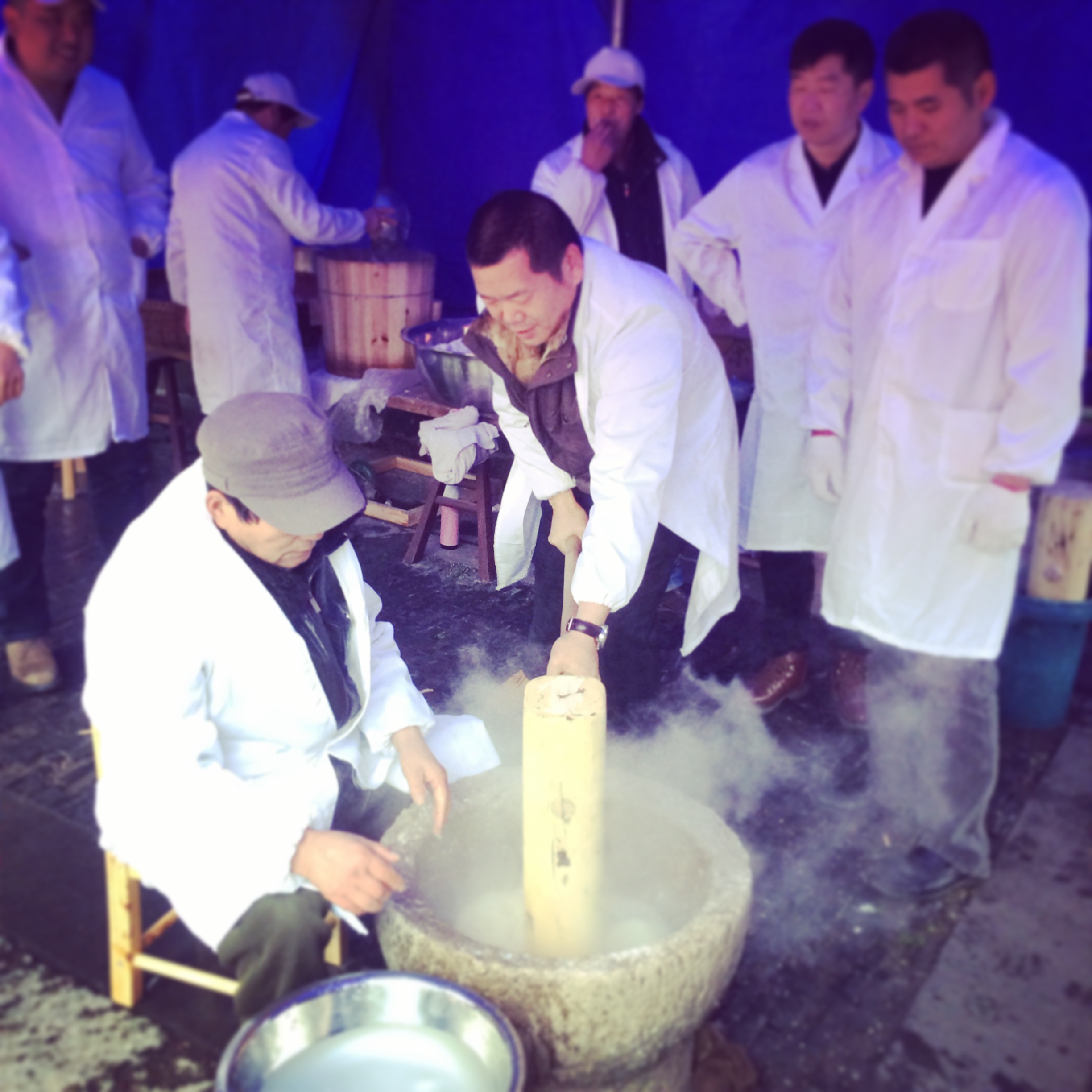
Here they are making the sticky rice by repeatedly pounding, rotating, and smoothing the ball of rice batter with hot water until it is done. It is then formed into small cakes.
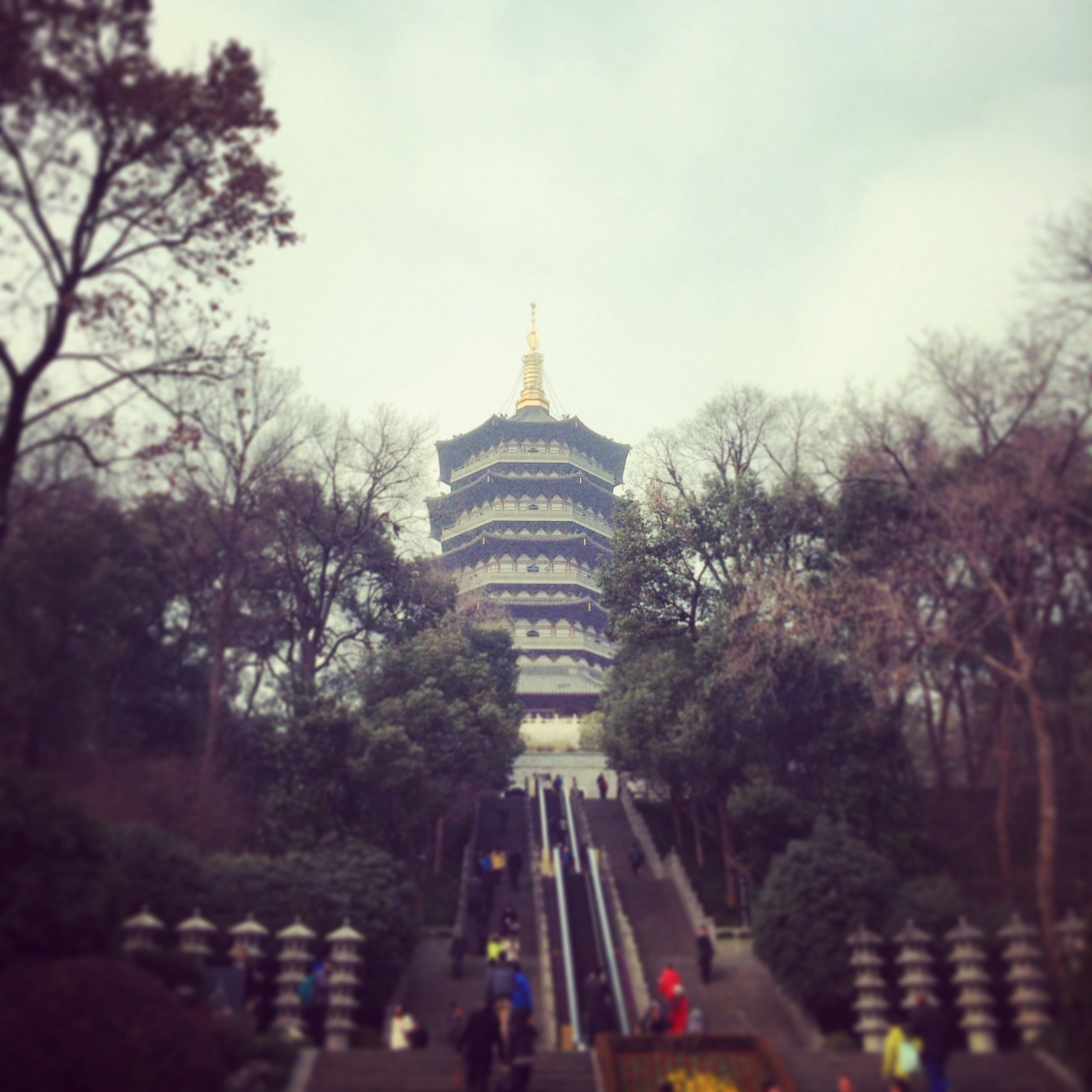
Hangzhou is home to many beautiful pagodas. One of the most popular is the Leifeng Pagoda. Originally built in 927 AD, it suffered damage from a Japanese pirate attack during the Ming Dynasty. The original structure eventually collapsed in 1924 after its remaining bricks were pillaged. This, due to local folklore and superstition that the bricks from the tower could repel illness and prevent miscarriage. A new five-story pagoda, built upon the original site, was opened in 2002 and houses a viewing area of the original ruins and foundation in its lower level.
Unfortunately, the majority of Hangzhou’s urban historical buildings were destroyed during the Taiping Rebellion in the mid-1800’s. Fortunately, Hefang Street survived. At the heart and commercial center of ancient Hangzhou, walking this street serves as a reminder of it’s cultural history. The street is full of Chinese crafts, diverse street food, sugar art, tea houses, fan shops, and too much stinky tofu.
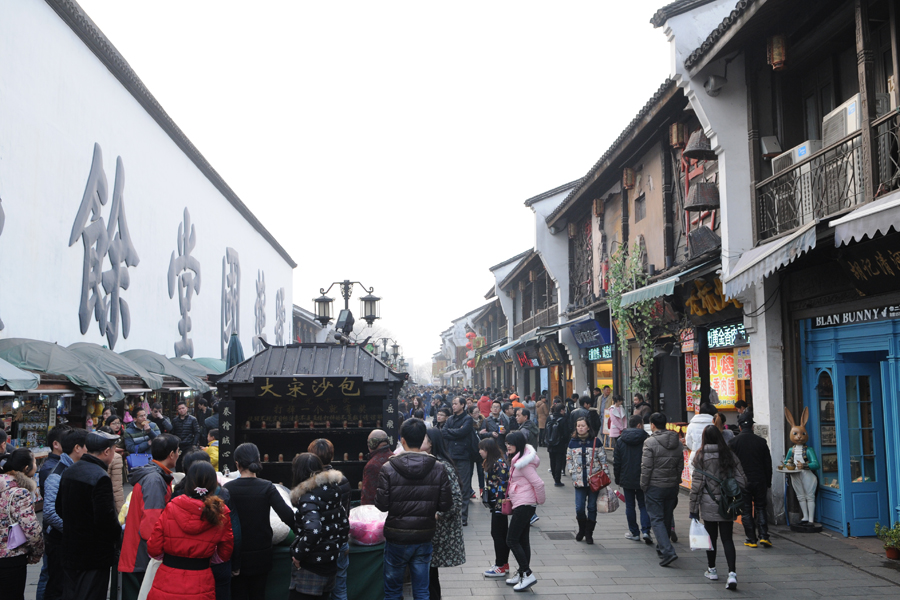
Hefang Lu
One of the most interesting sites along Hefang Lu is an ancient traditional Chinese medicine shop.
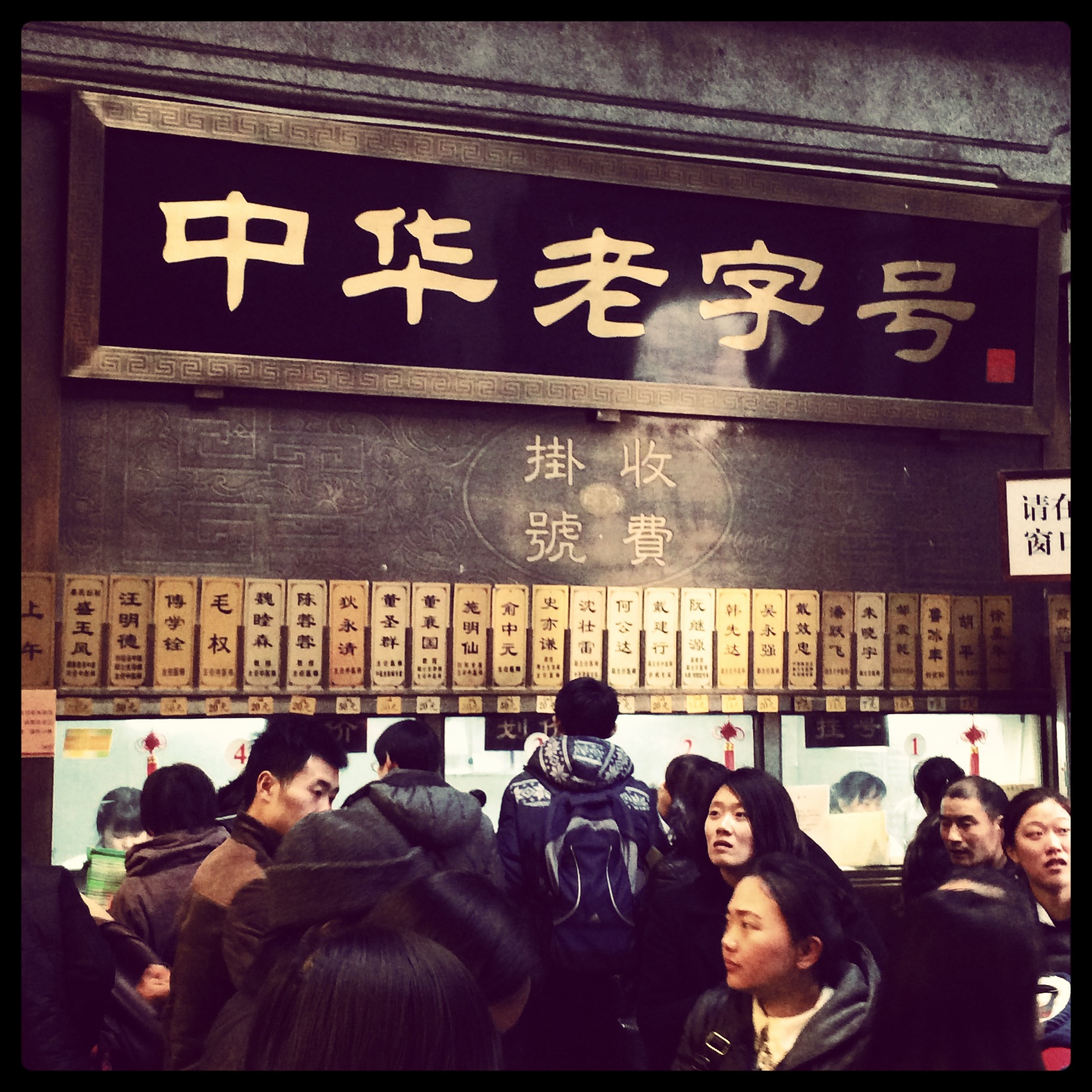
Here you describe your ailment and are directed to the appropriate doctor on-call upstairs.

Hu Qing Yu Tang Pharmacy
After finishing our tour of Hangzhou, we headed back to our hotel while discussing our favorite things about Hangzhou. Jack and Kate both agreed that the caves topped their list while Luke immediately said, “when there’s no traffic.” (I must clarify that we had told Luke that he was only allowed to play his LeapPad once we returned to the hotel.) Luke was very appreciative that there wasn’t much traffic to delay his game playing any further.
 ourshanghaidays
Wonderful photos and copy.
Mary Beth Harper
mbharper@gmail.com
Julie– this was so interesting!!!Loved it !!!! Date: Tue, 20 Jan 2015 13:36:06 +0000 To: lulupaw@hotmail.com