When you are separated by not only miles, but distinct cultures, bringing your family to your expat home helps bridge the gap between your two worlds. We were longing for a little bit more of our “Ohio home” to enter and fill our “China home.”
With Grandma Patty and Papa Tommy came everything we so dearly miss and cannot find in Shanghai: oatmeal creme pies, Heinin’s Snakebite jelly, wheat thins, our favorite pesto mix, Malley’s chocolate, baseball equipment, and presents from Grandma Lulu and Papa Jack.
But of course, it wasn’t the amazon.com-suitcase-full-of-goodies that we missed the most. It was finally zero days until we could share our Shanghai life with them.
Jack could see grandma and papa in the audience during his school rock band performance. Kate could play hours upon hours of rummy with grandma. Luke could hold papa’s hand as he guides him through his favorite aquarium.
Getting to share and experience the diverse world of China through their eyes was an added bonus.
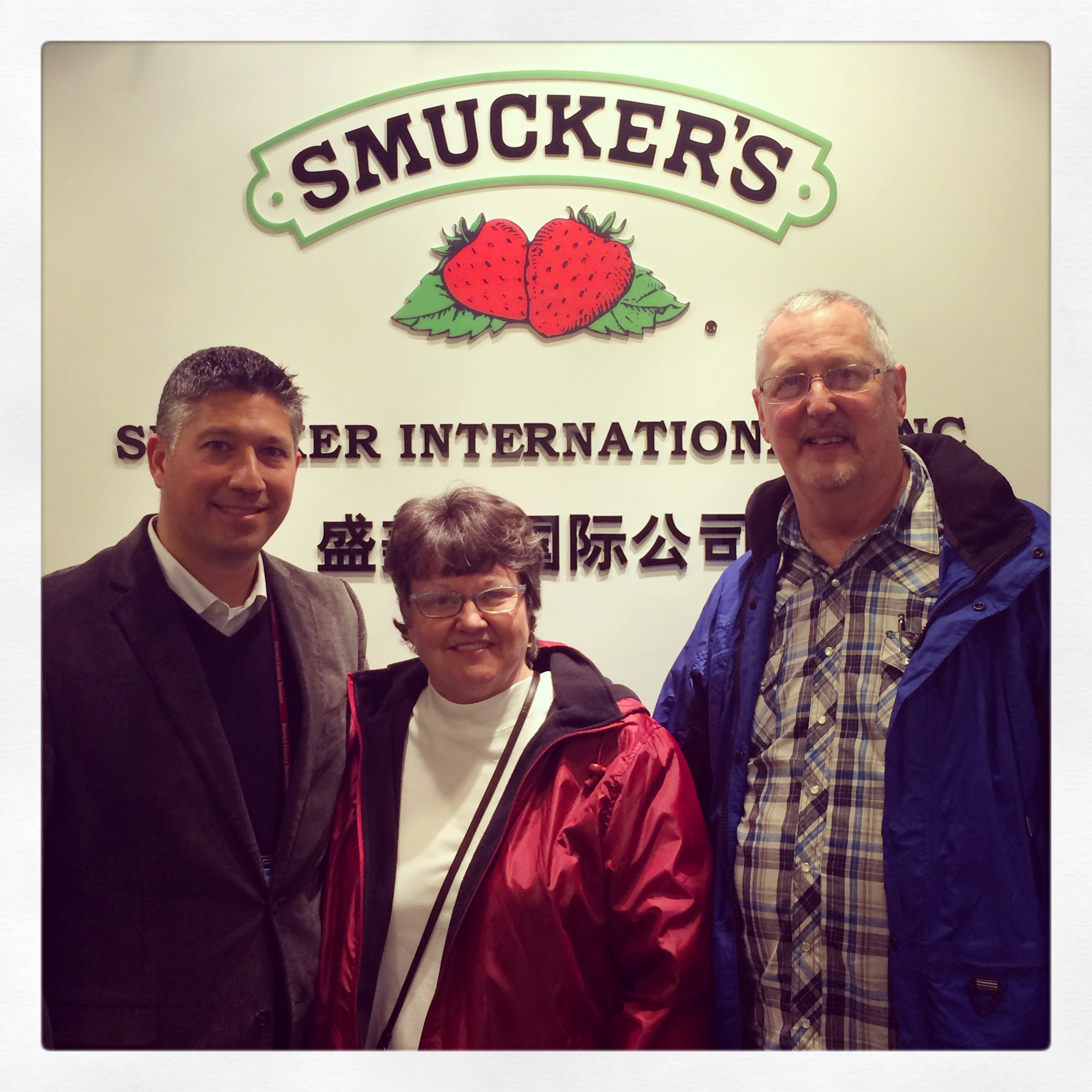
From Ohio to Shanghai. With a name like Smucker’s…
Shanghai is a city in the midst of constant change. The old Shanghai is disappearing at such a fast rate with construction cranes visible in every direction.
I wanted my parents to experience this transformation, so we visited Dong Tai Lu. Also known as “antique street,” it lies nestled between new high-rise apartments and offices. This dynamic street is lined with migrant antique dealers selling anything from discarded household goods to antique relics. Unfortunately, this street and it’s shikumen housing will only exist for another month and is already in the process of being torn apart.
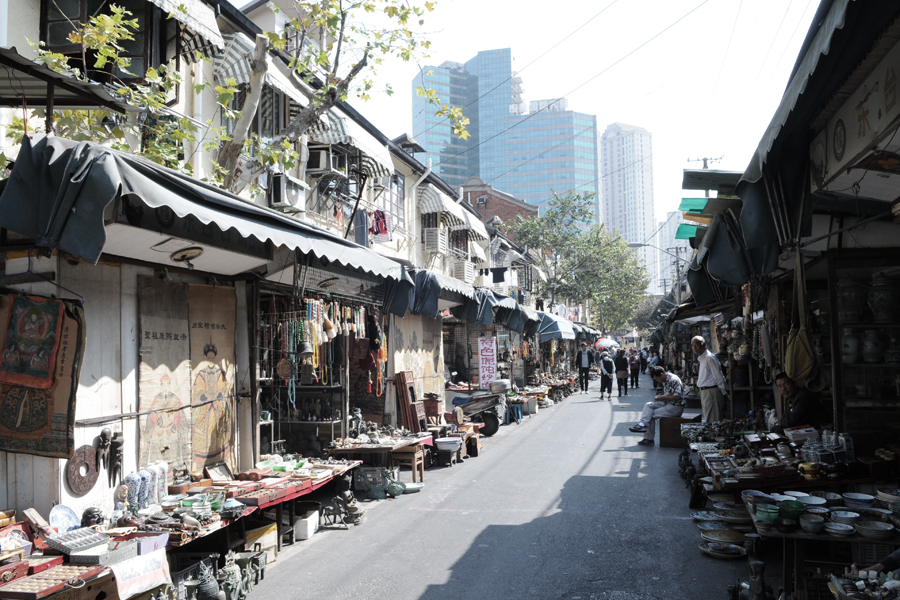
Dong Tai Lu : October 2014
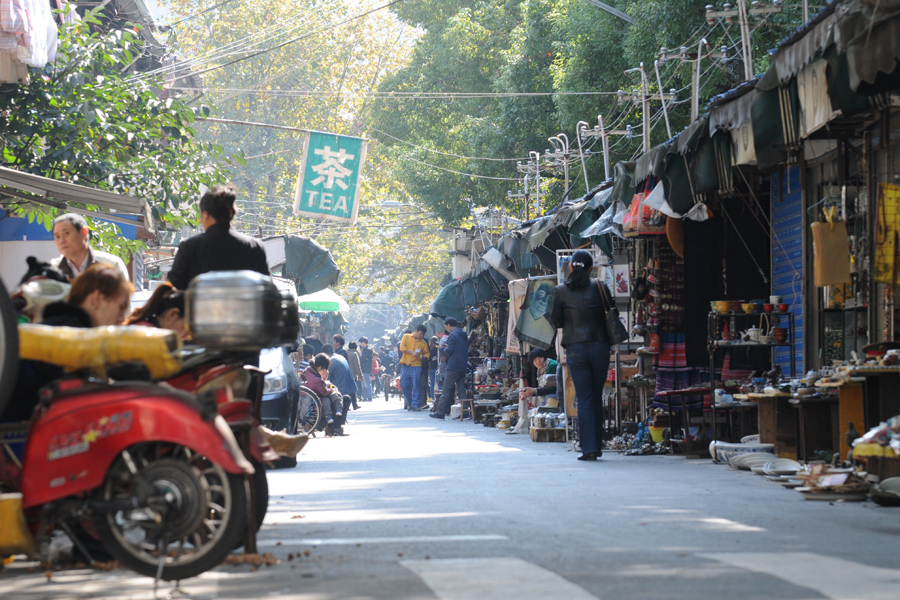
Dong Tai Lu : October 2014
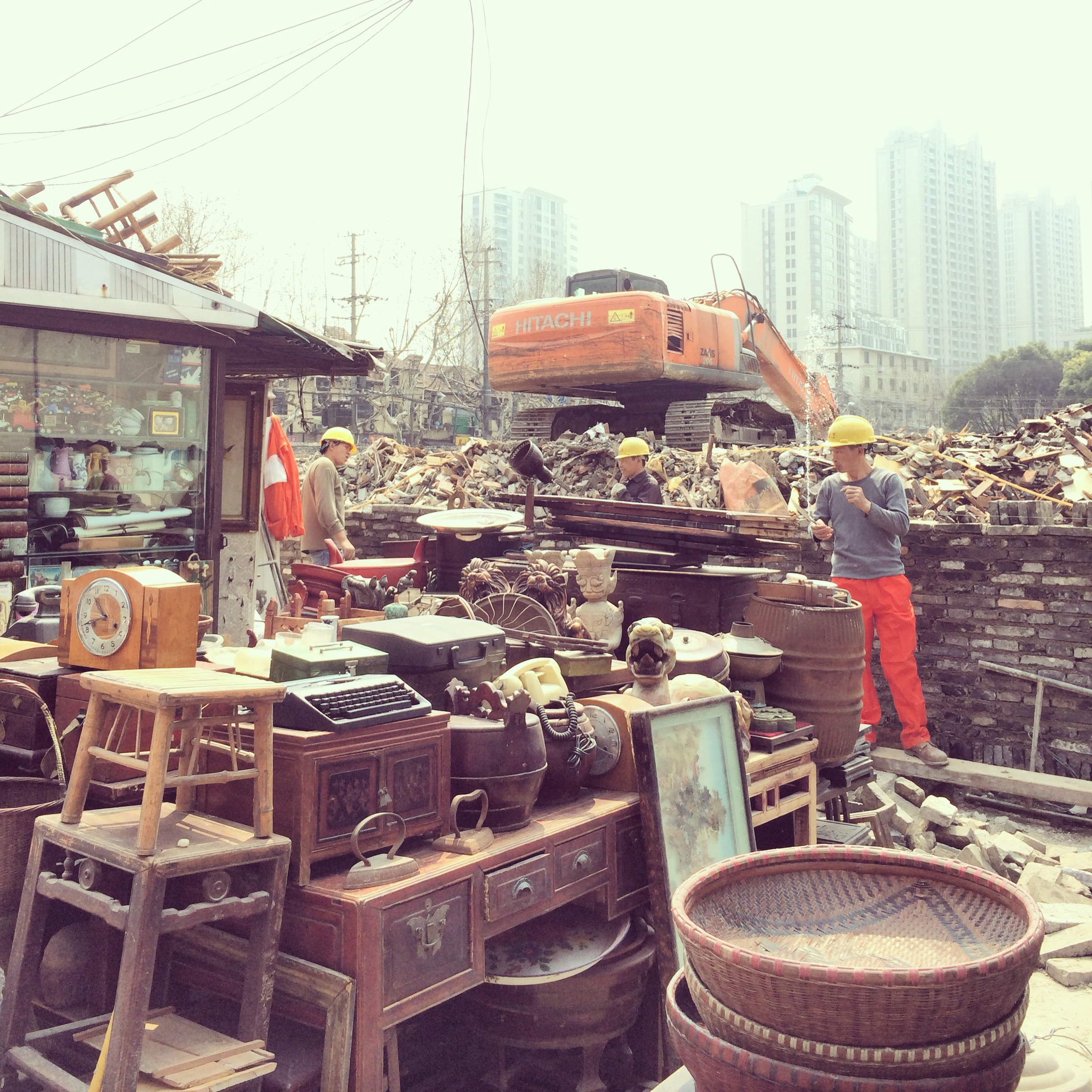
On both sides of the street, the housing is now being demolished as masons build brick walls to seal off the new construction area.
In order to feel the energy of this city, we took a sidecar tour through it’s busy streets and narrow lanes.
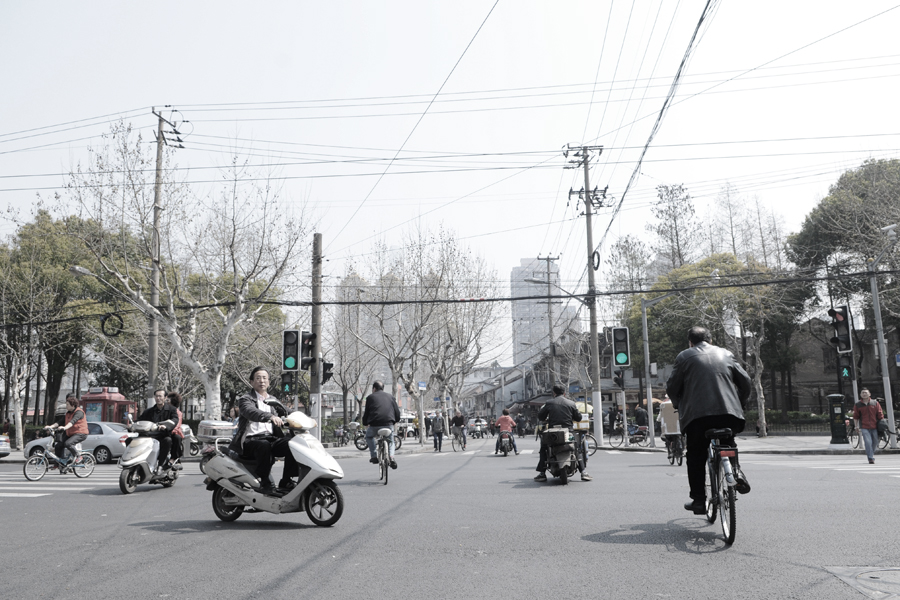
Wait, who has the green light here? Believe me, it doesn’t matter.
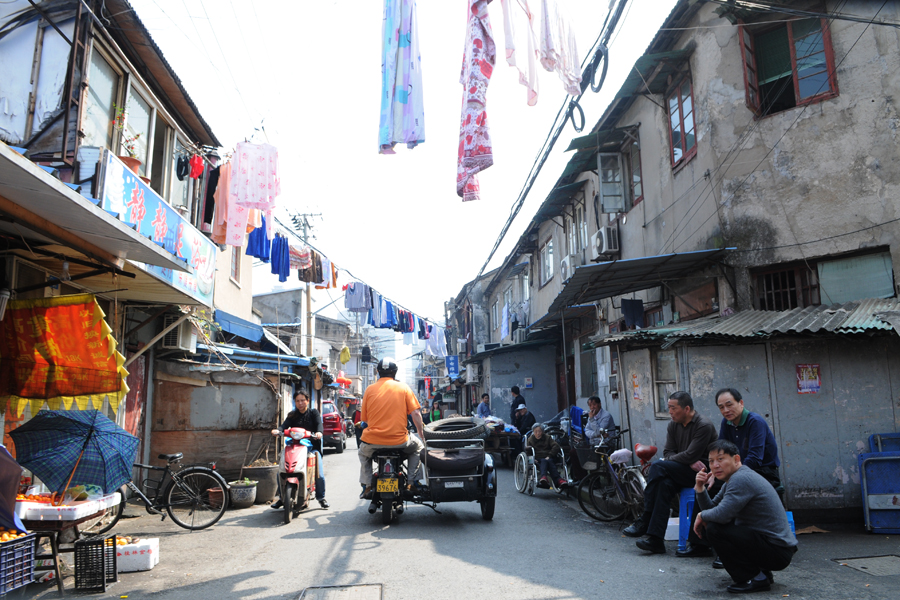
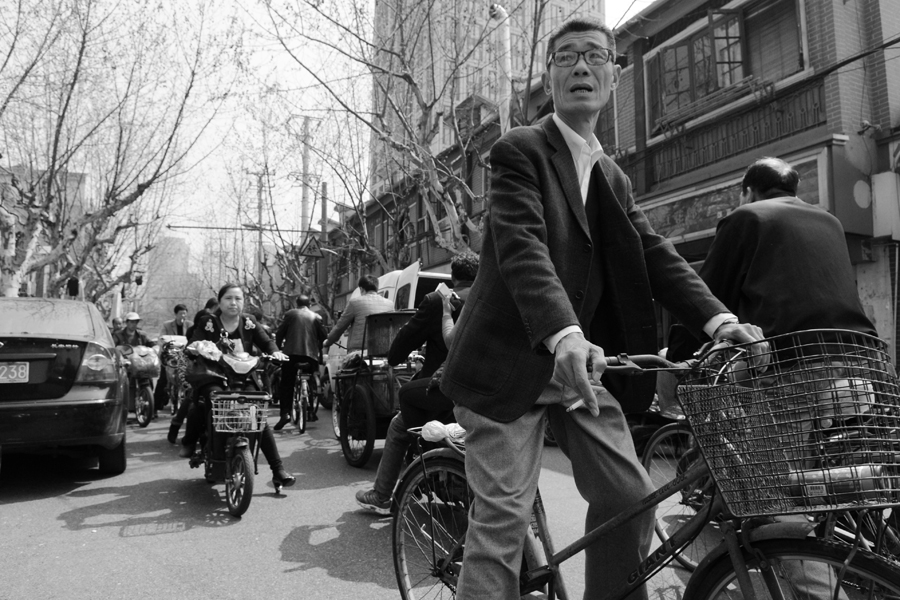
And to better understand the cultural history of Shanghai, we stopped to walk through one of the city’s shikumen neighborhoods. A place where kitchens and bathrooms are shared and a true sense of community is felt. Like Dong Tai Lu, these neighborhoods are disappearing quickly.
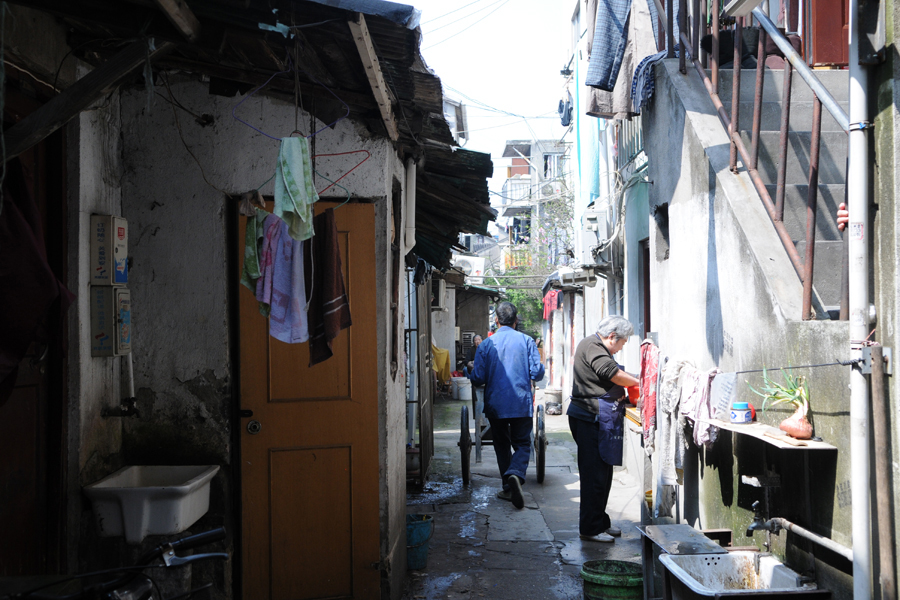
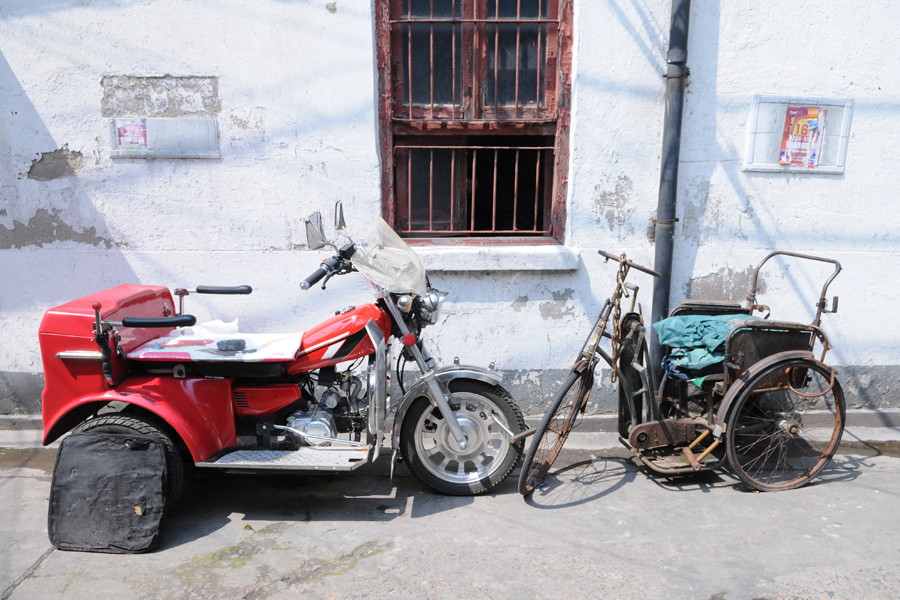
Old Shanghai face-to-face with New Shanghai.
Visiting an almost empty shikumen neighborhood presented the stark reality of Shanghai’s ever-present facelift efforts.
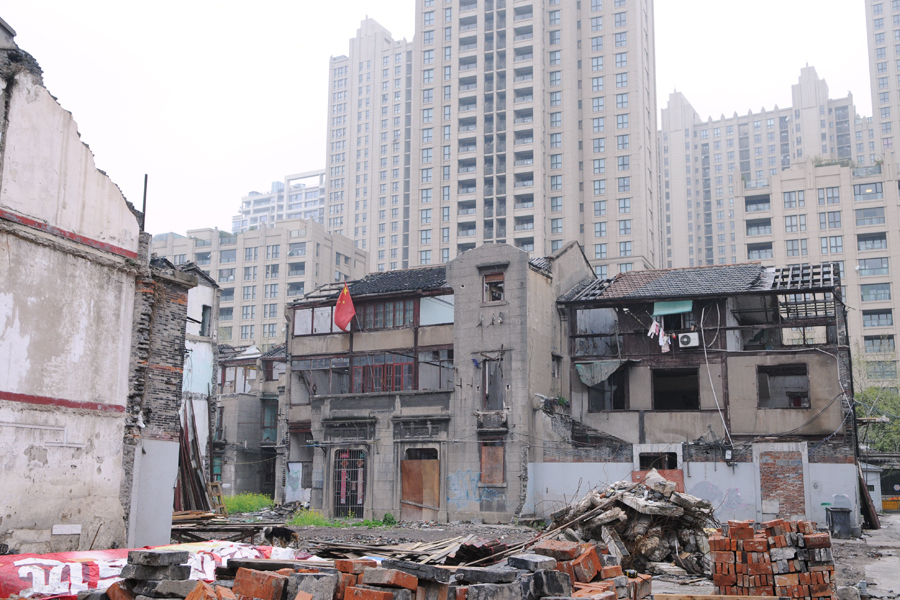
With their future looming overhead, few occupants remain.
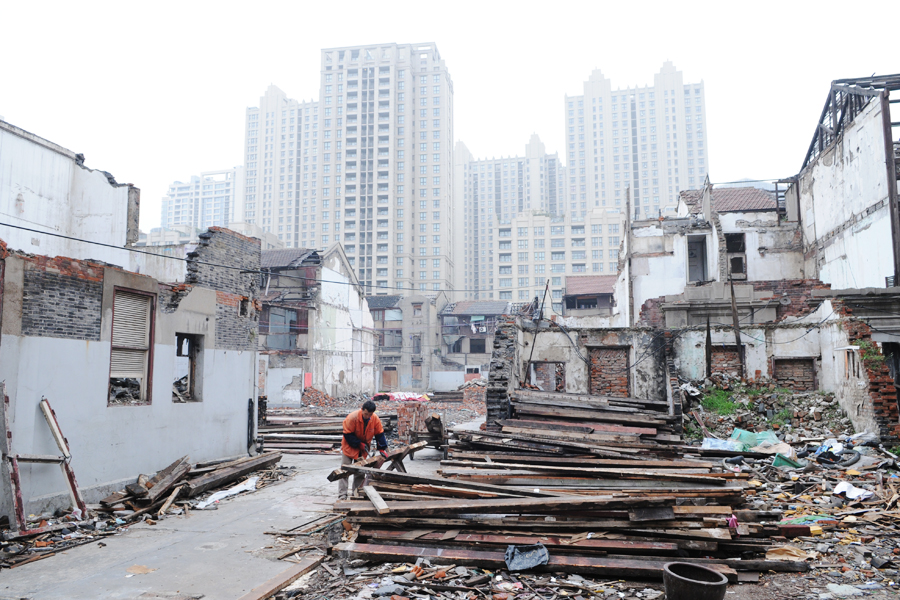
A worker creates a pile of recycled wood.
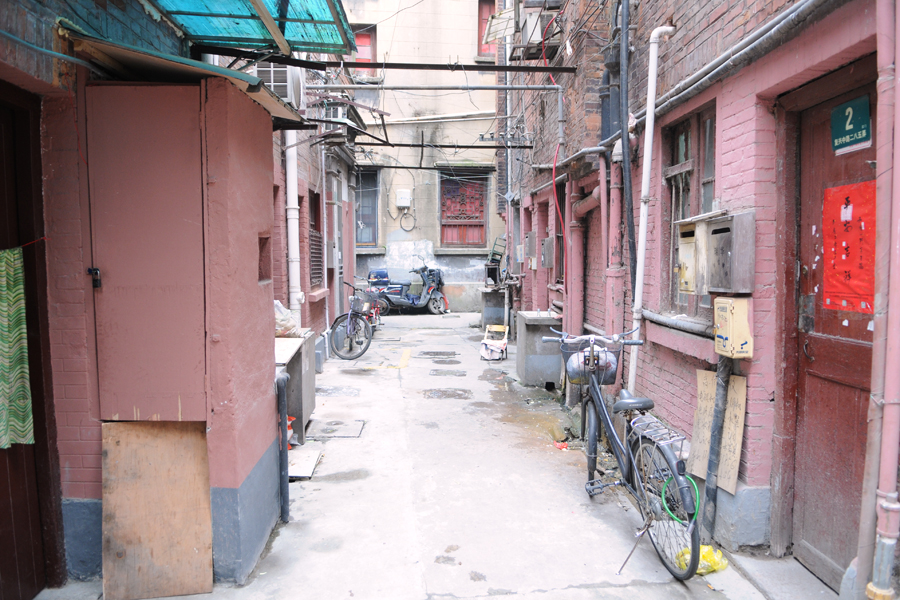
The edge of existence.
The former French Concession gave us a look at the more relaxed side of Shanghai. One of my favorite locations there is Fuxing Park. This european style park is not only beautiful, but in the mornings, it is full of life. Throughout, there are dancers, card and mahjong players, tai chi and calligraphy artists, as well as various singing groups. The atmosphere is jubilant with music and laughter filling the air.
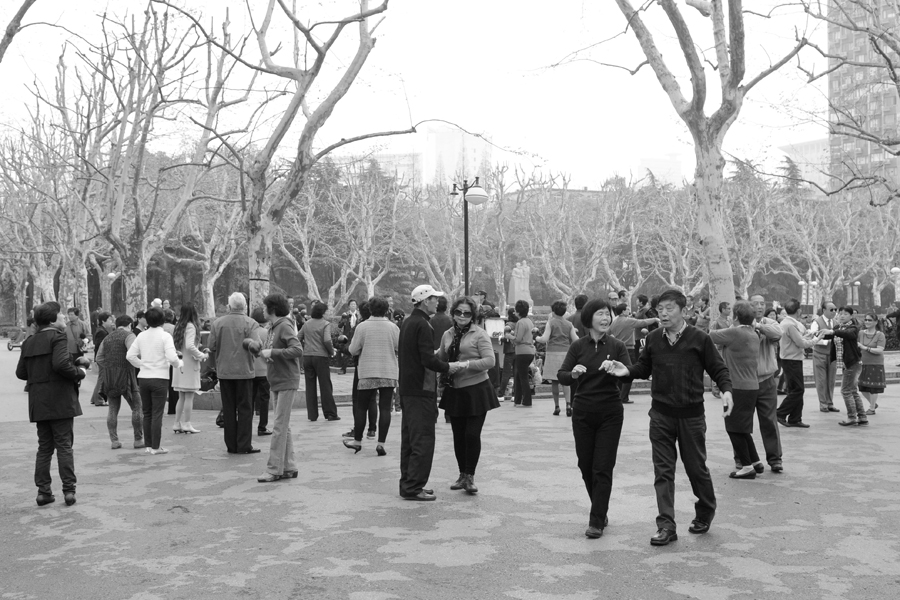
The majority of the park-goers are retirees. In Shanghai, women can retire at age 50 and men at age 60; both receiving pensions thereafter.
The diversity of food accessible within Shanghai is limitless. Not only can you find amazing Chinese cuisine, but this mega city is comprised of chefs from every corner of the world trying to showcase their most amazing dishes. Simply put, it’s a food-lover’s heaven. We took grandma and papa to our favorite Chinese, Thai, Taiwanese, Indian, Yunnan, Mexican, French, American, and Italian restaurants.
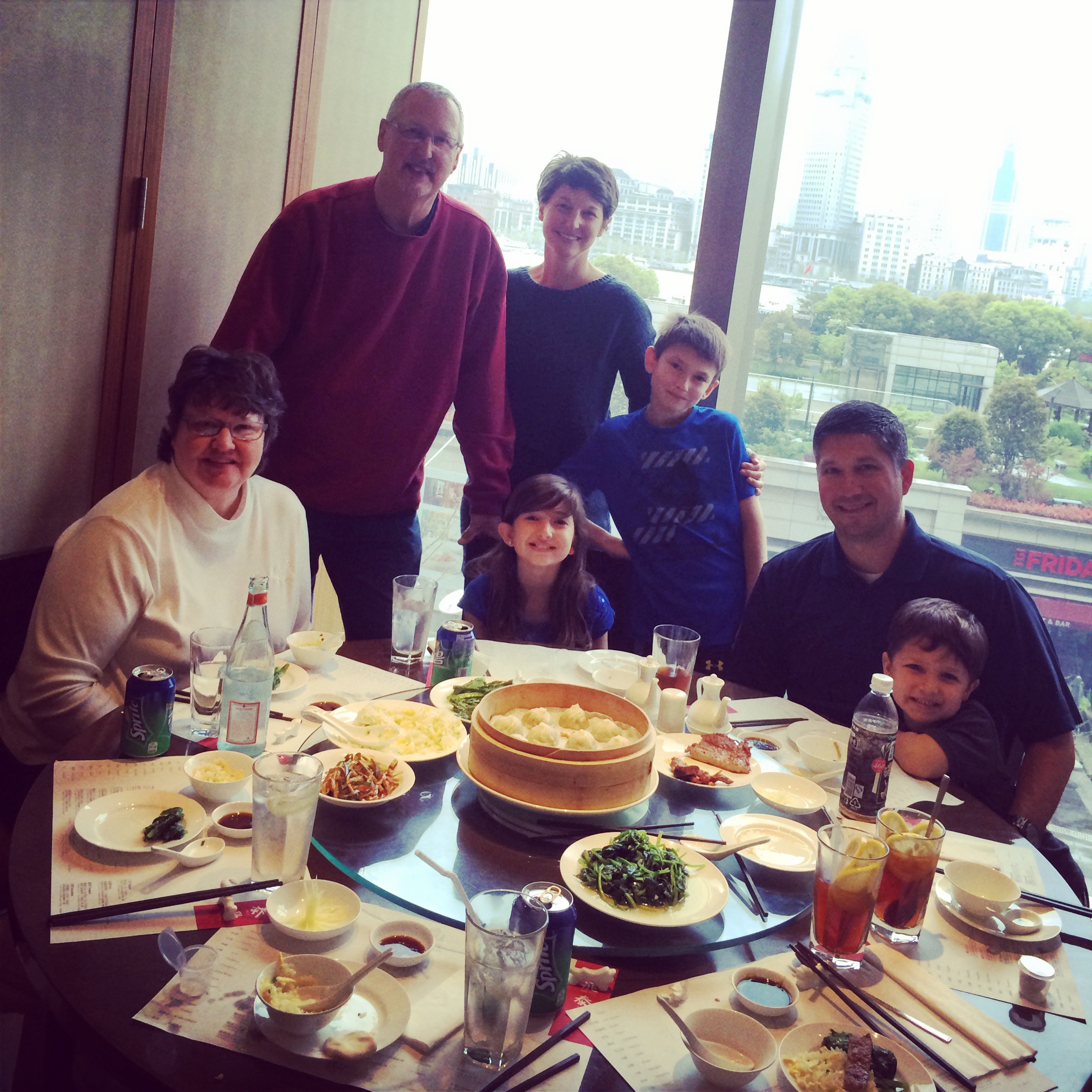
Dinner at Din Tai Fung.
The streets of China offer a variety of ways to taste local Chinese cuisine. Corners are occupied by trucks overflowing with fruits and vegetables. Along sidewalks, food carts sell everything from baked sweet potatoes to youtiao. Rice and noodles serve as the foundation for everyday Chinese meals, with fish, poultry, and vegetables being equally important.
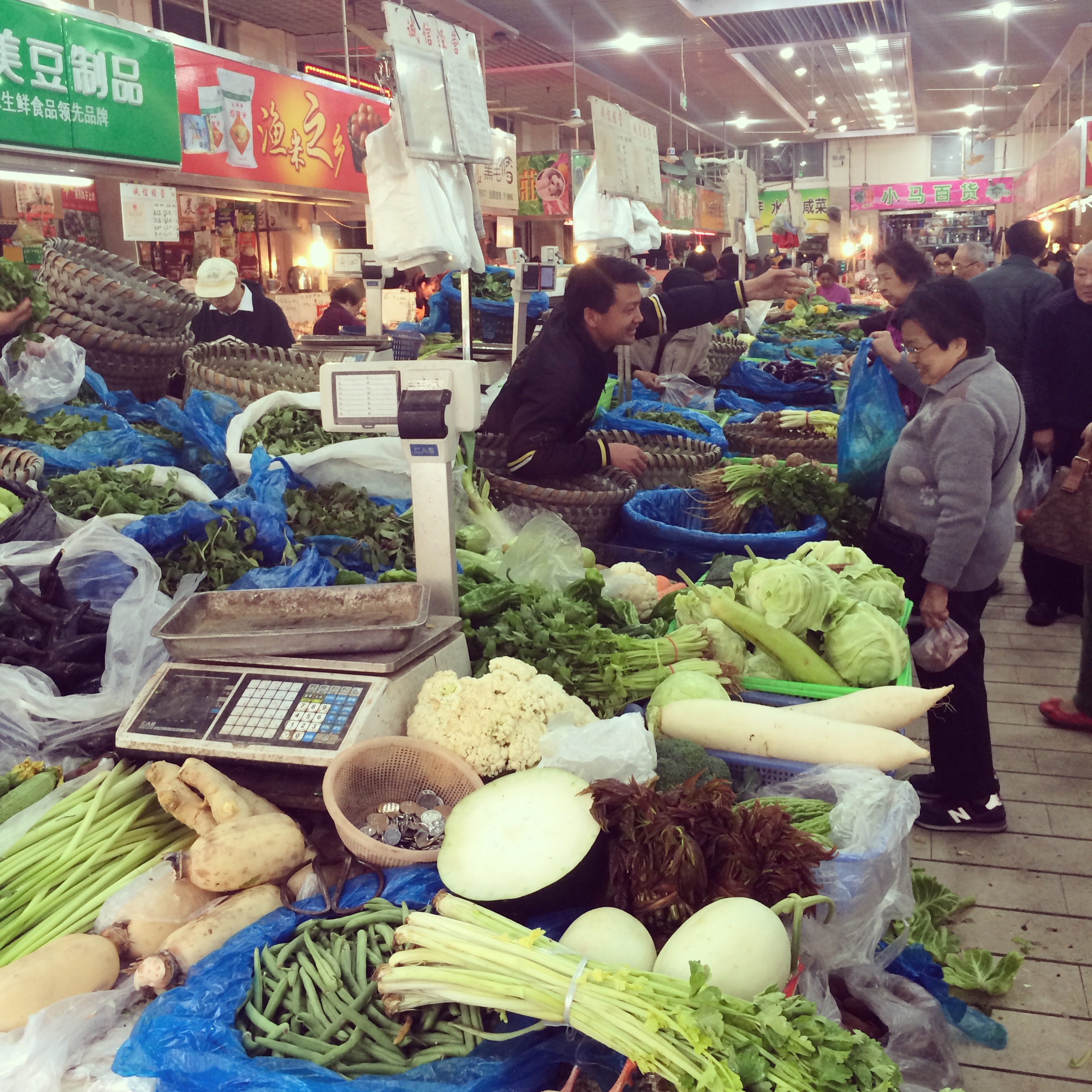
A local wet market where you can purchase all varieties of fruits and vegetables. Here, you can also find aquariums full of fish, eel, turtles, and frogs. All freshly caught and ready to prepare for your next meal.
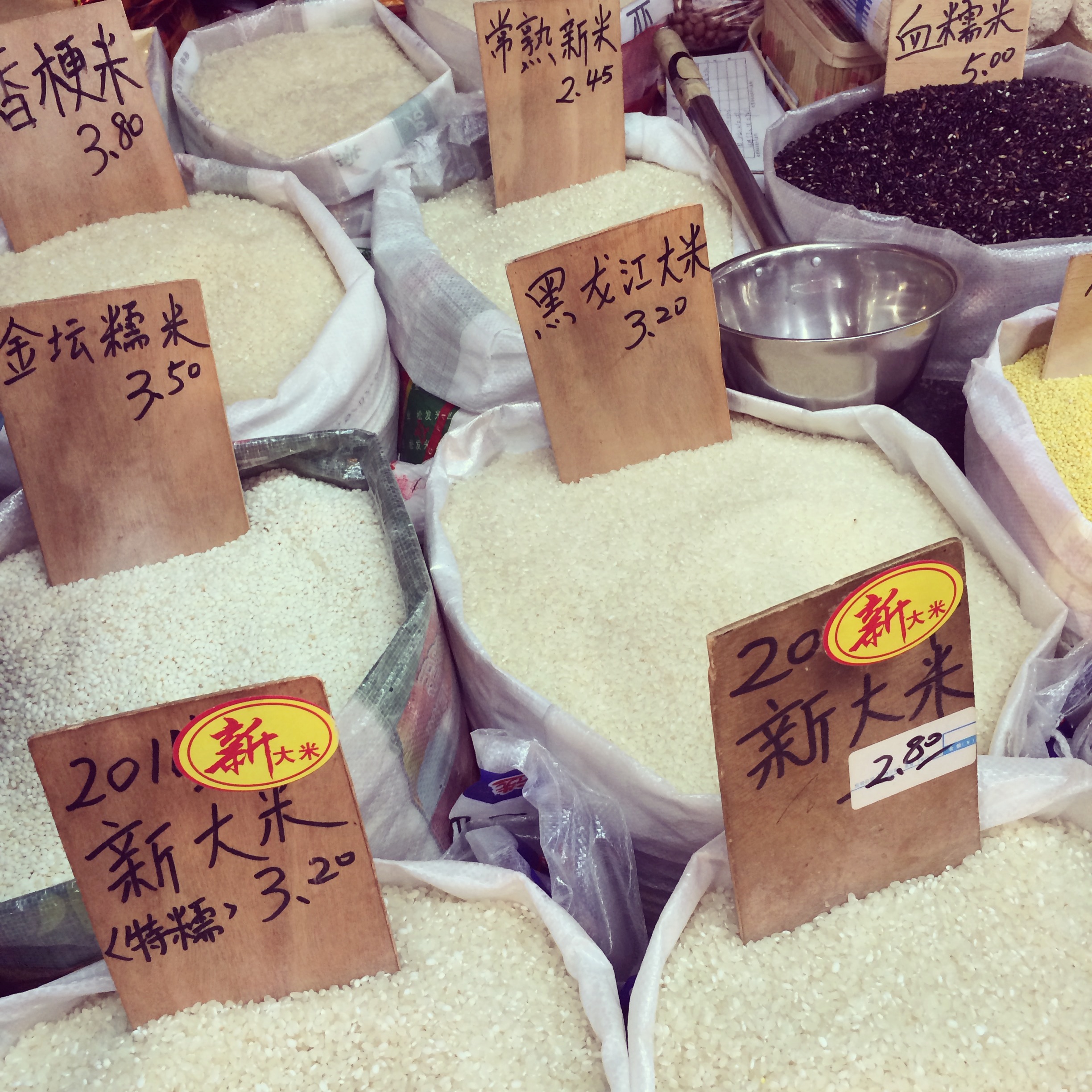
An abundance of rice options.
Privacy and personal space in Shanghai is almost nonexistent. In doctor’s offices, homes, businesses, and (unfortunately) bathrooms, doorways are often left wide open.
You can never be sure what you’ll find when you glance inside an open doorway along any given street in Shanghai.
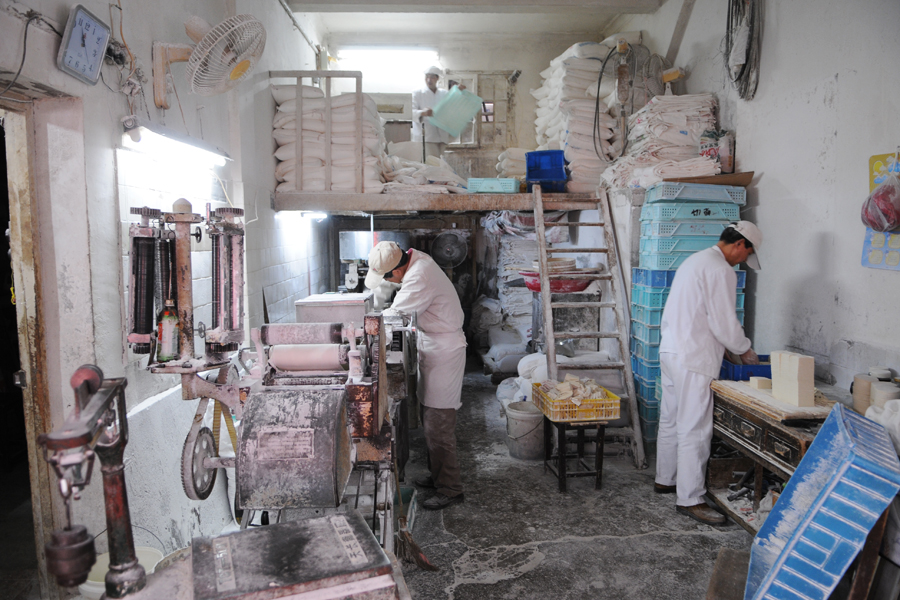
We found a local noodle factory…
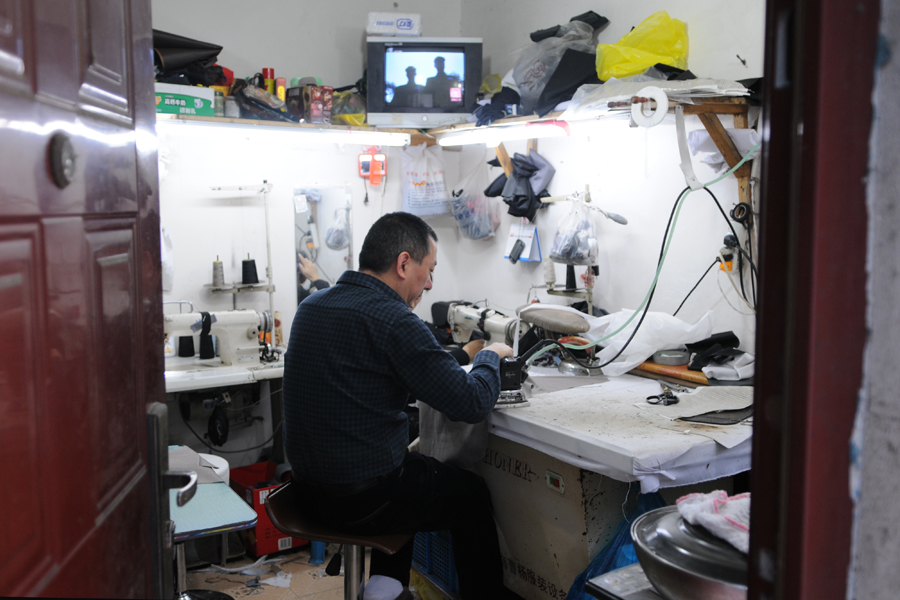
And a local seamstress.
Modern Shanghai consists of an endless sea of skyscrapers and a sea of people. Offering new vantage points on a city of constant fluctuation, these skyscrapers provide stunning views showing how truly expansive Shanghai has become.
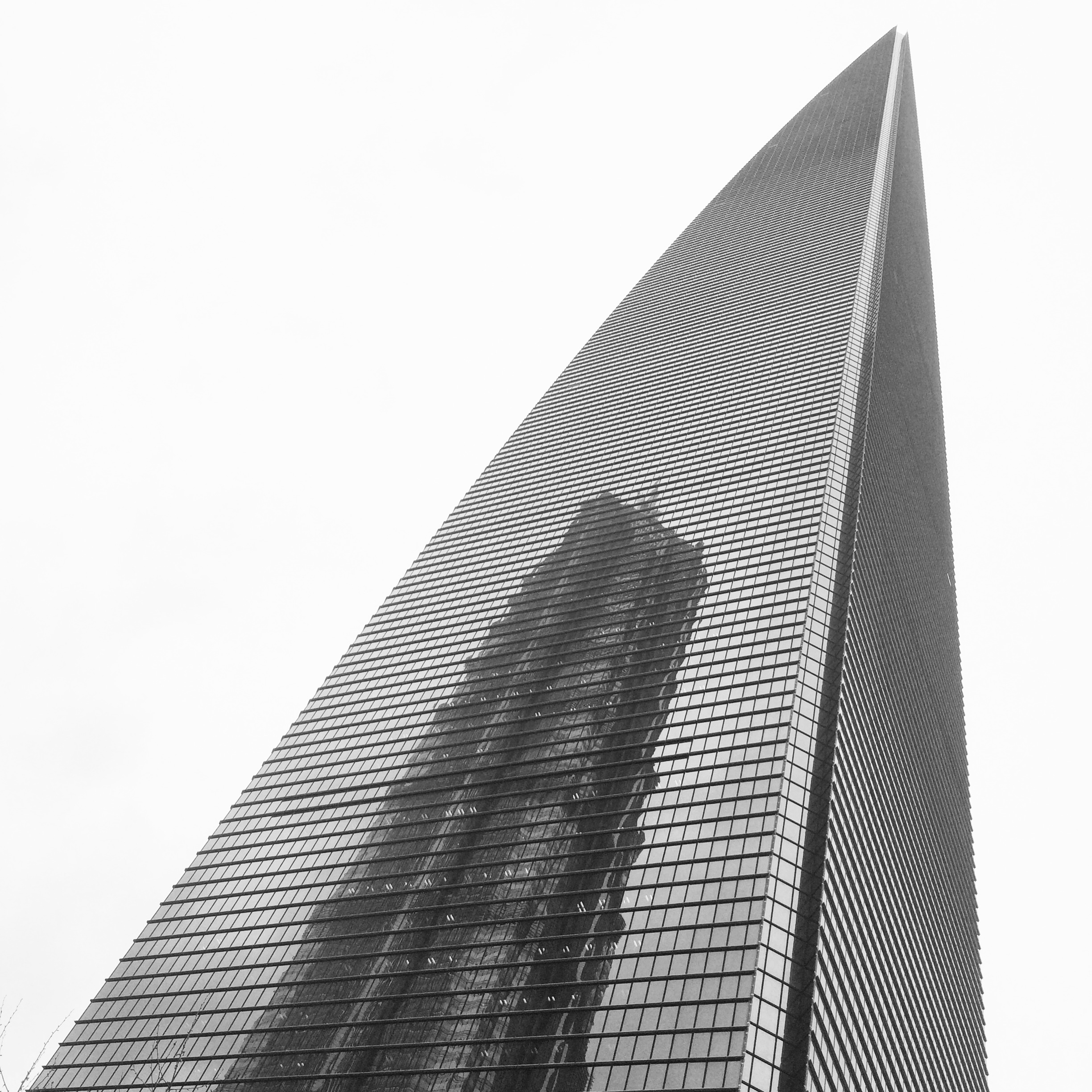
The once-dominating Jin Mao tower’s reflection can be seen on the larger Shanghai World Financial Center.
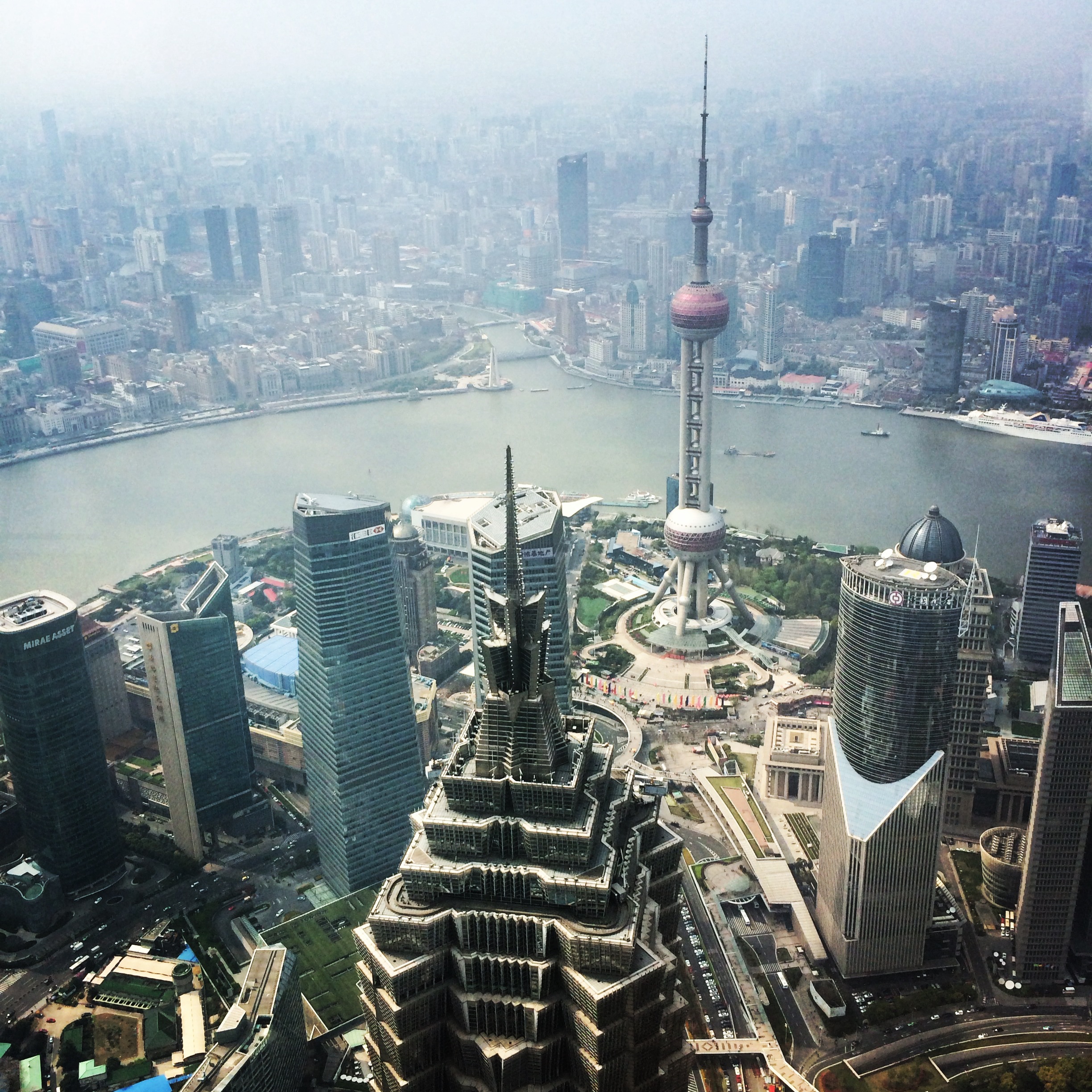
The view from the 100th floor of the Shanghai World Financial Center.
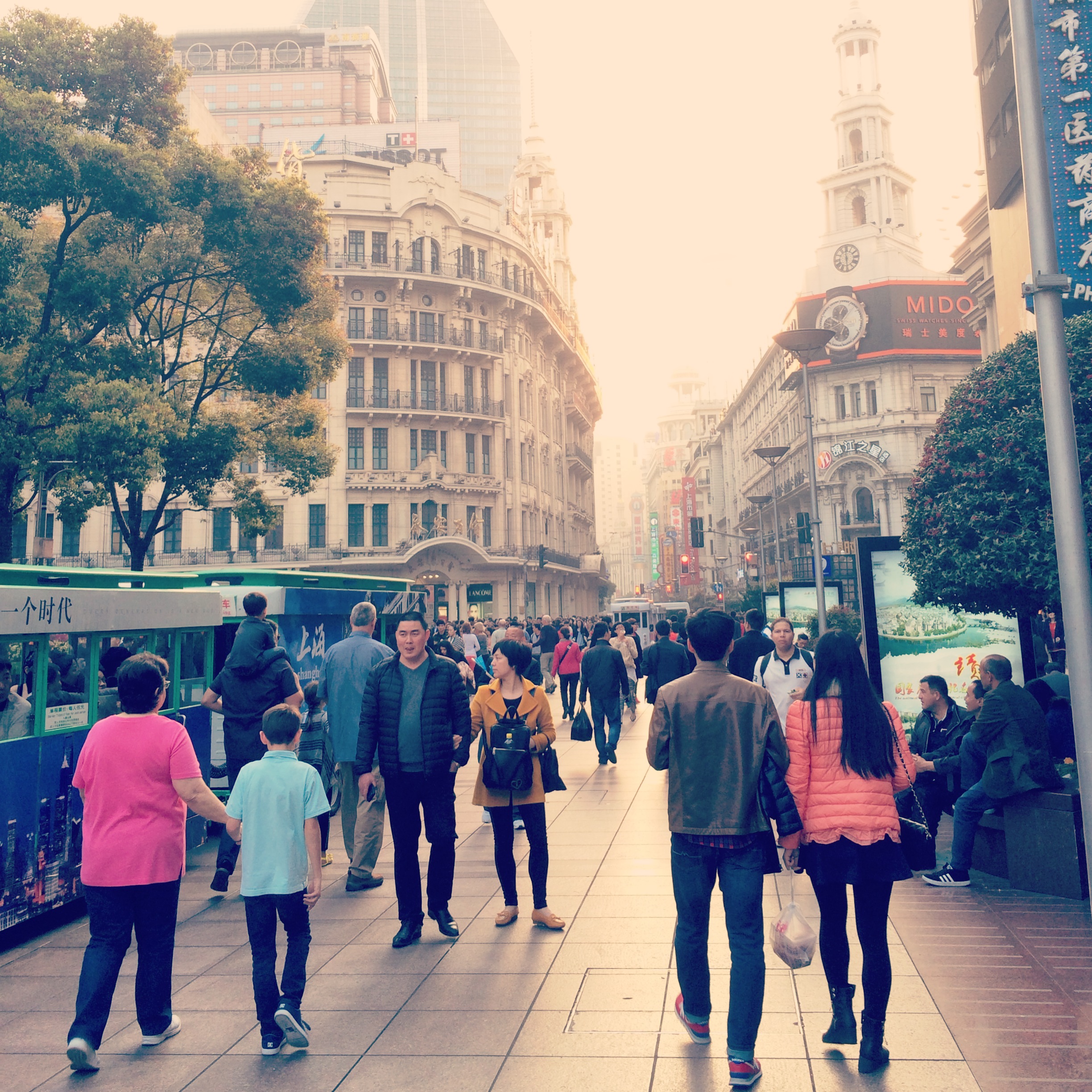
Within the sea of people on East Nanjing Road. Ren Shan Ren Hai.
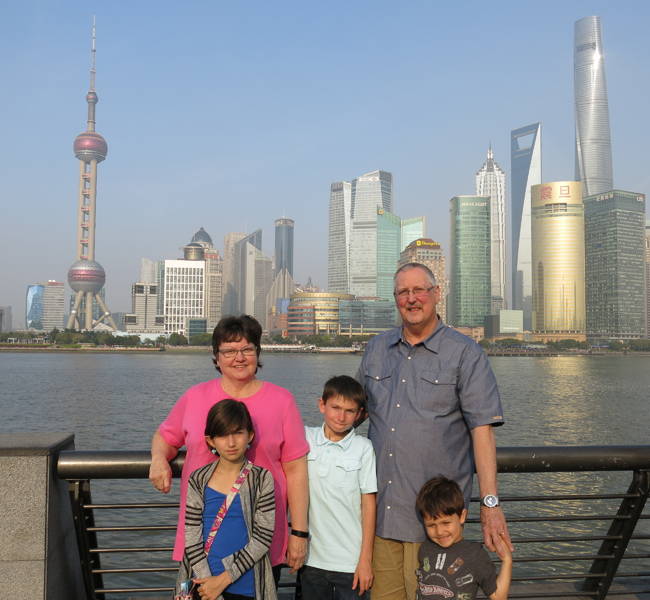
The Bund
After sharing Shanghai with Grandma and Papa, it was time to discover Beijing together. The name Beijing, meaning “northern capital,” was applied to the city in 1403 to distinguish it from Nanjing (southern capital). Since 1949, Beijing has been the capital of the People’s Republic of China and remains the hub for political and cultural Chinese history, dating back thousands of years when dynasties ruled the land.
We began our tour of Beijing in Tiananmen Square. The 4th largest city square in the world, this massive square is known for its political history and lies at the doorstep of the southern gate into the Imperial City.
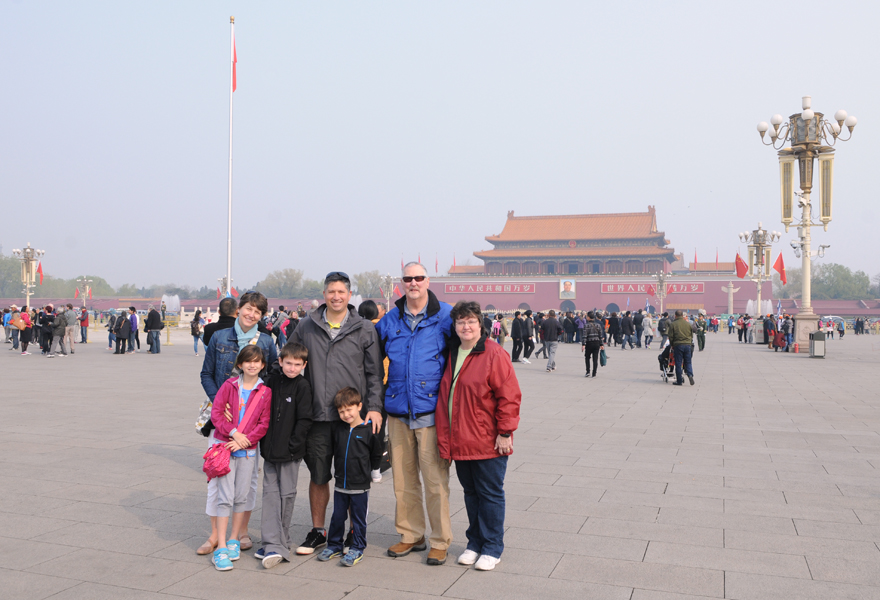
A large portrait of Mao Zedong can be seen in the background above the entrance into the Imperial City.
In 1406, a plan was drafted to move China’s capital from Nanjing to Beijing. But to do this as a dynasty, the emperor would need a suitable palace. Thus, construction of the Forbidden City began and was completed in 1420. Covering over 180 acres, it’s 980 buildings housed the emperor and his household (including many concubines). It served as China’s political center for over 500 years, ending in 1924.
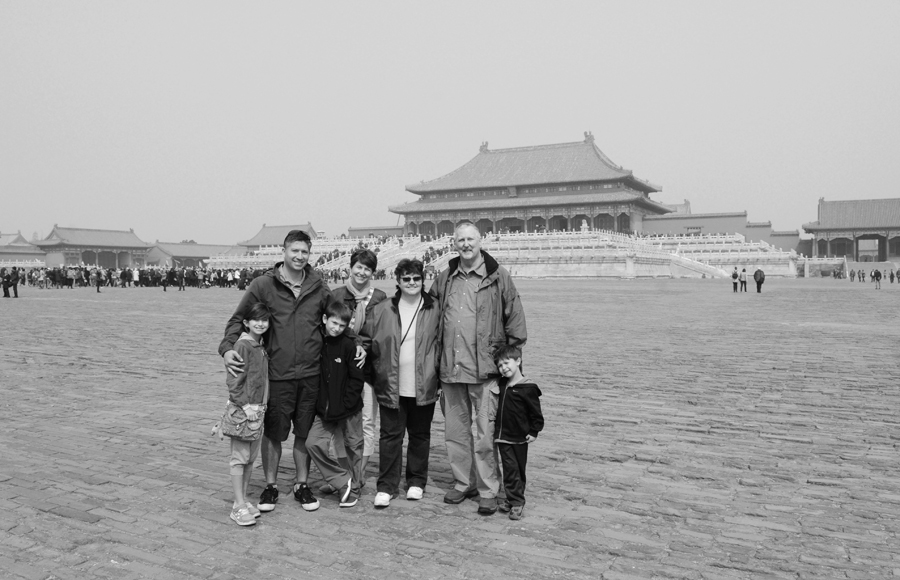
Inside the Forbidden City
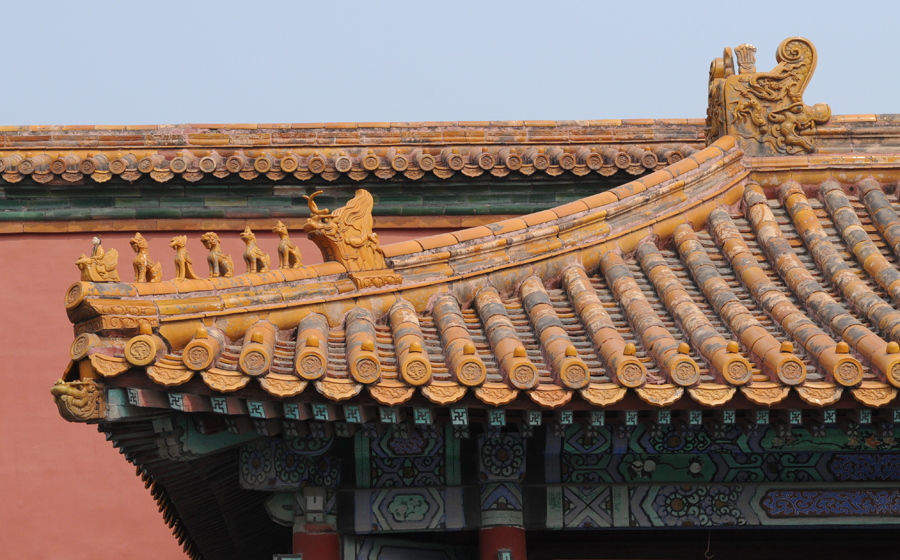
The Forbidden City is a World Heritage Site and is recognized as the world’s largest collection of preserved ancient wooden structures.
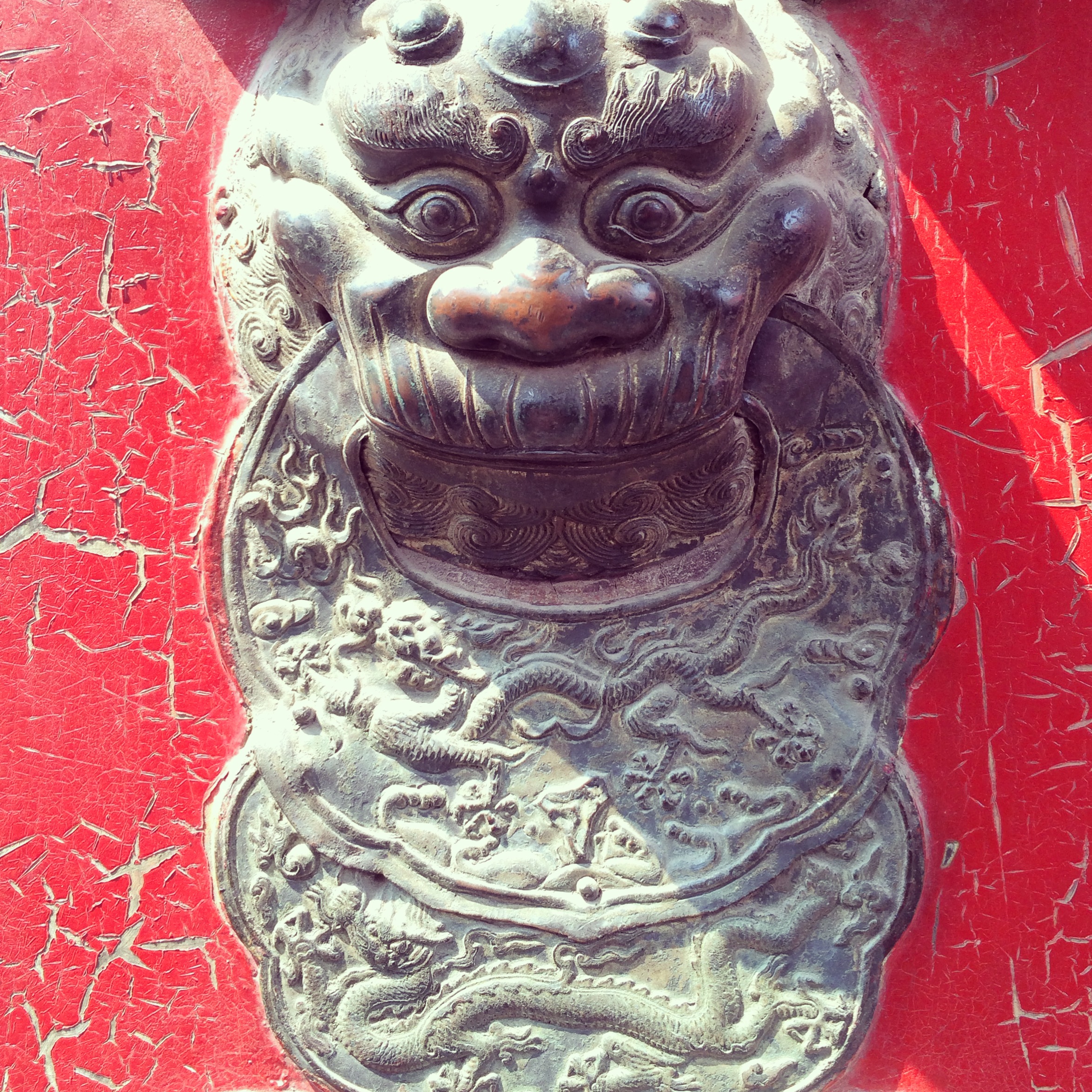
Door Details.
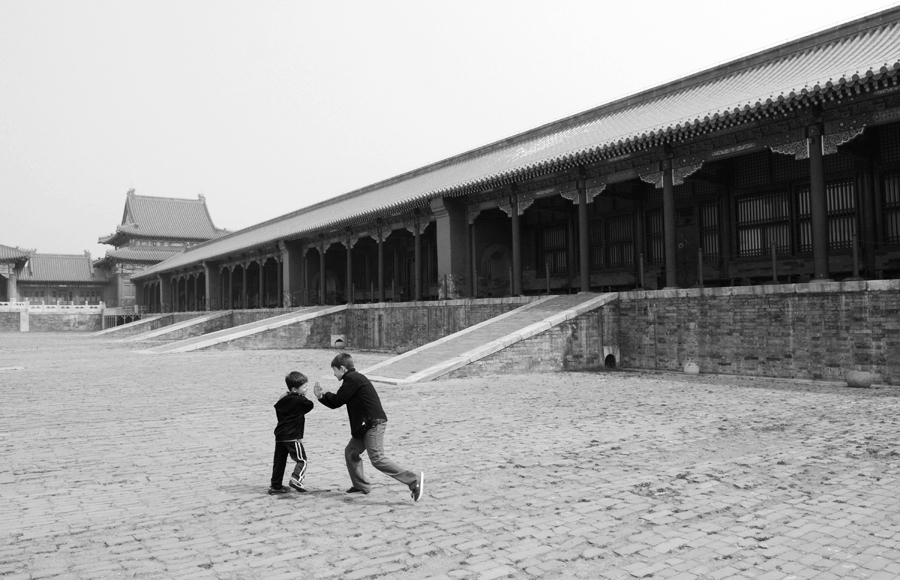
The last emperor was Luke’s age when he took the throne. Jack and Luke had so much fun imagining this place as their own.
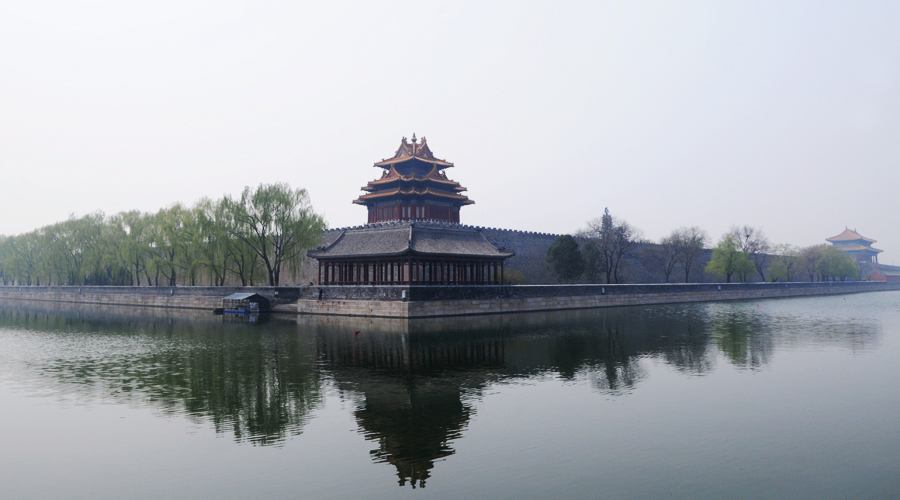
Looking back at the wall surrounding the Forbidden City.
The traditional neighborhoods in Beijing were courtyard residencies that were connected to form long narrow alleys called hutongs. Fortunately, many of these beautiful neighborhoods and hutongs have been protected from demolition in order to preserve Chinese cultural history.
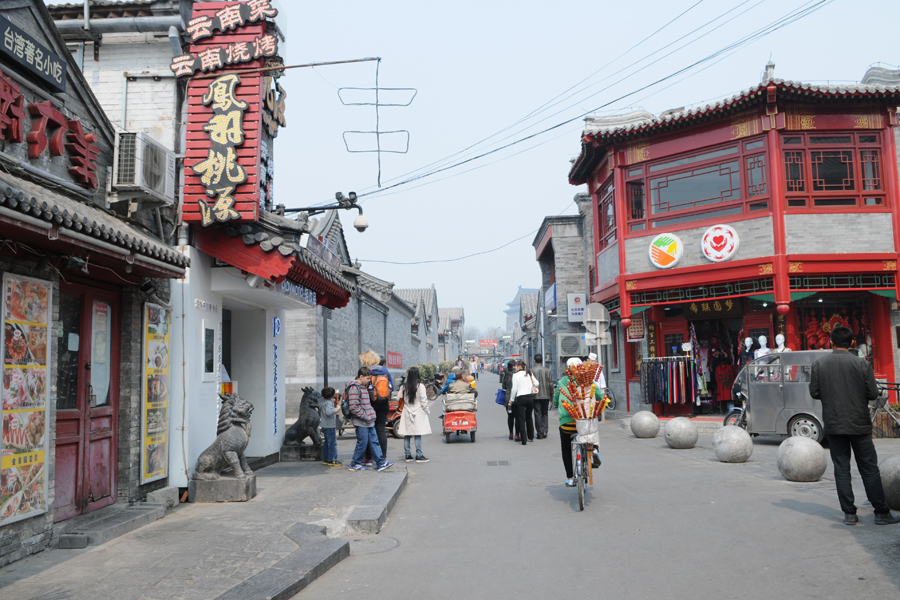
A Beijing hutong.
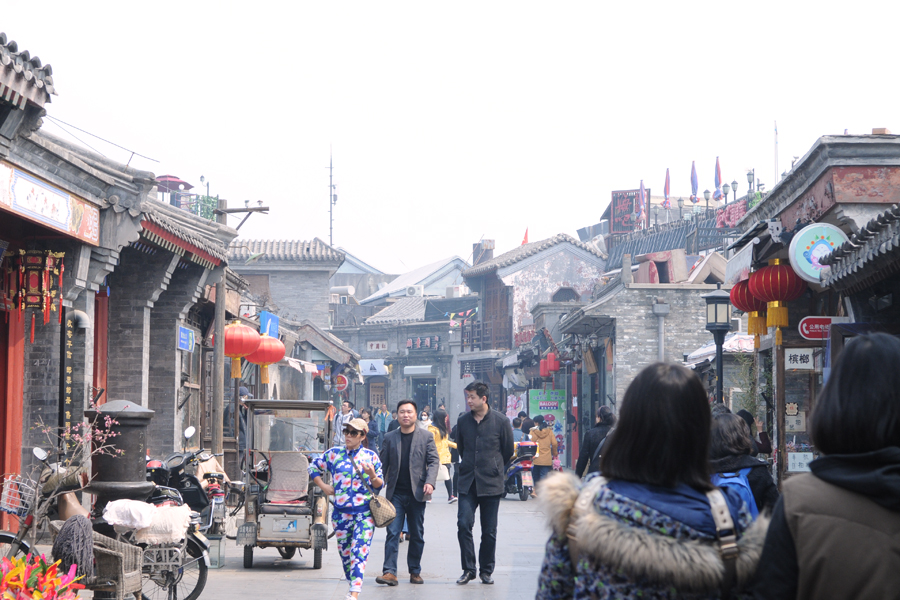
I can have her outfit made for you, if you’d like.
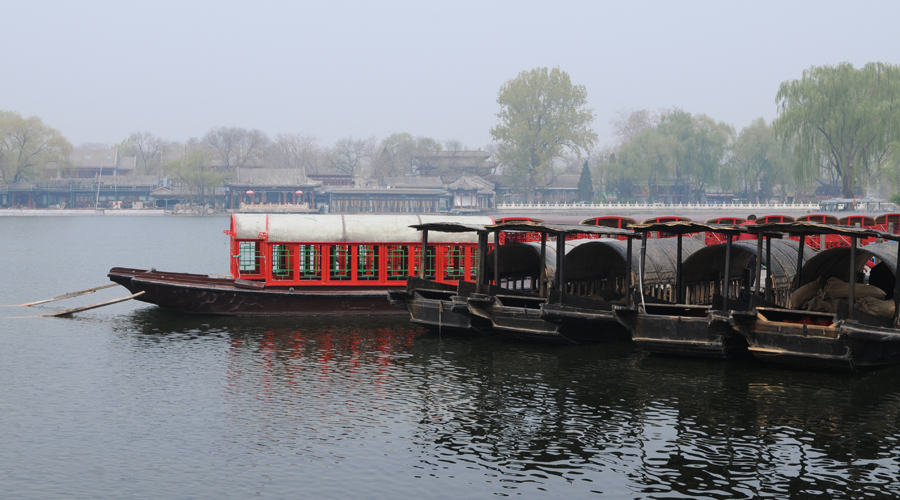
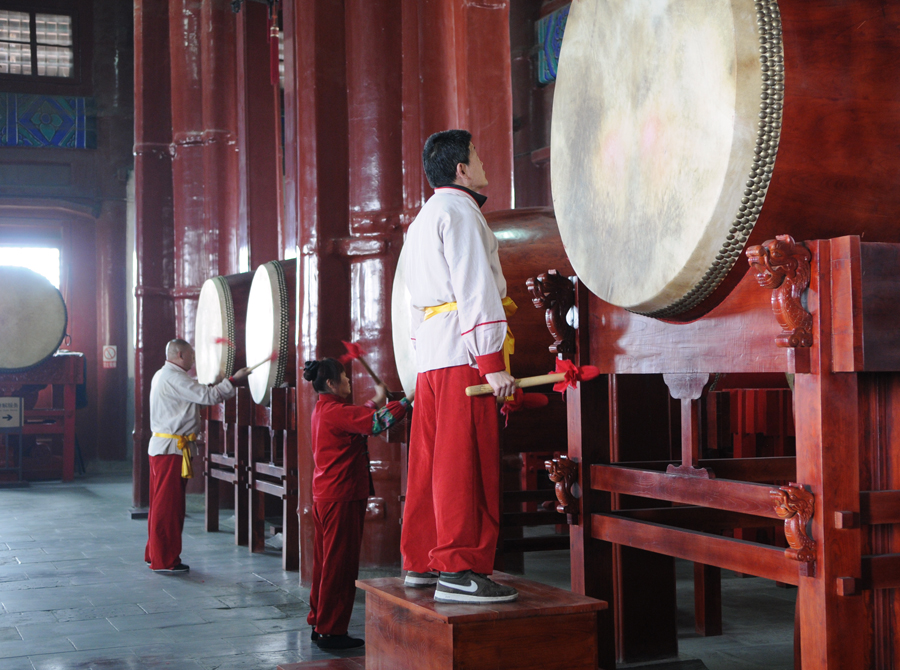
Until 1924, Bell and Drum towers (gulou and zhonglou) served as the official timekeeping for Beijing. Originally built in 1272, they were located at the heart of the existing capital city of Dadu.
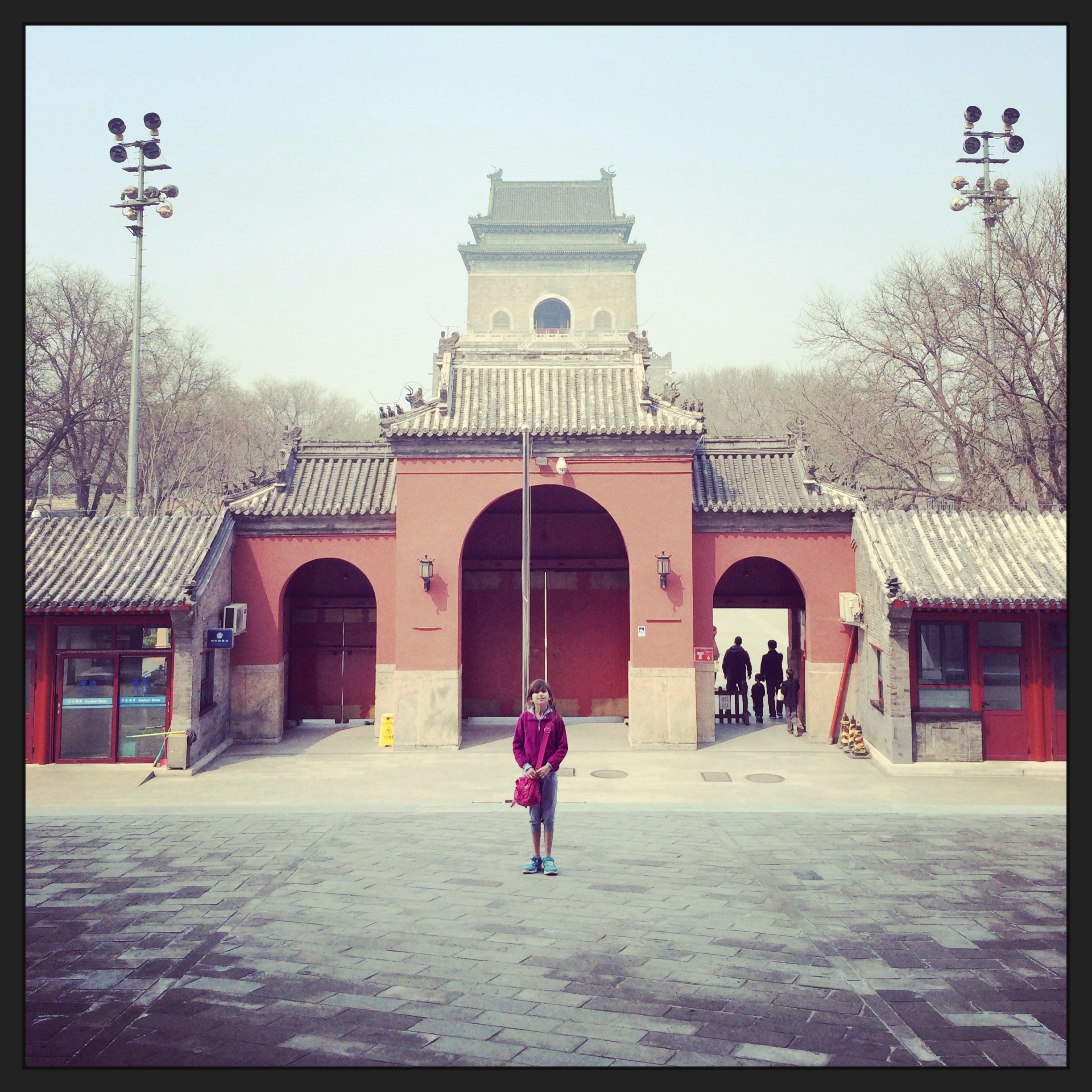
Kate in front of the bell tower.
We were fortunate enough to watch a drum ceremony inside the drum tower.
In 1750, the Summer Palace was designed as a political, administrative, spiritual, residential and recreational retreat for the royal family. Located 9 miles from the center of Beijing, this masterfully created 640 acre estate remains an important symbol of the philosophy and practice of Chinese cultural gardens.
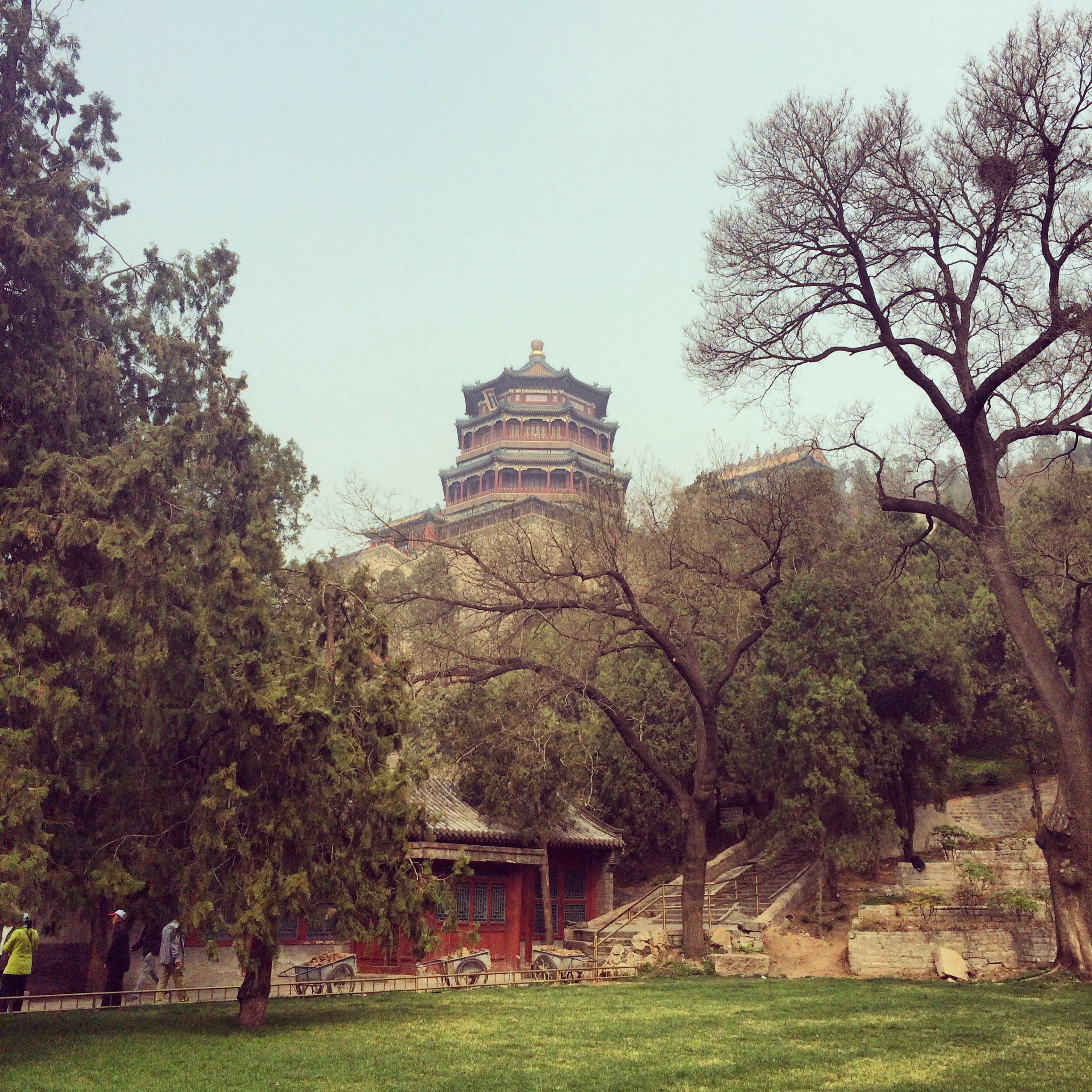
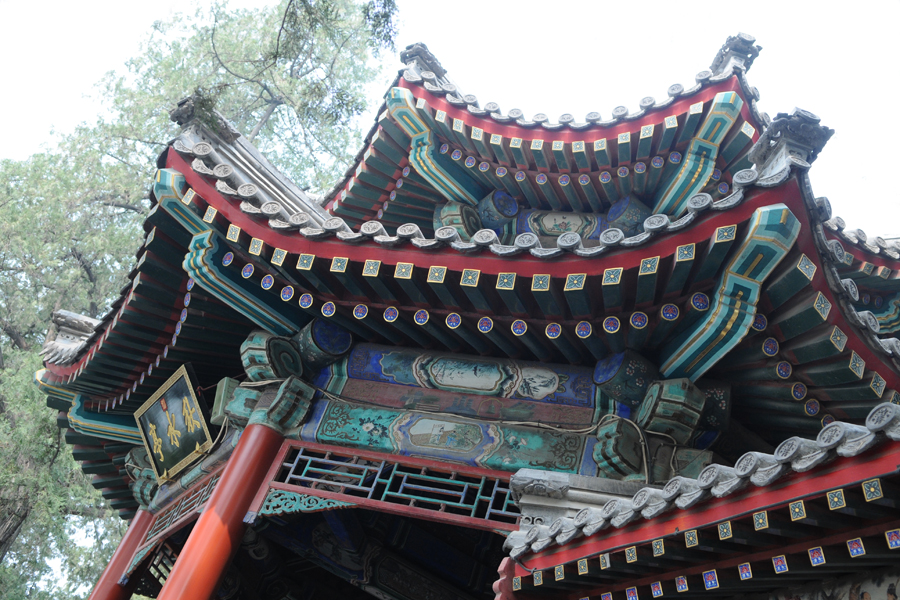
Traditional halls, pavilions, temples, and gardens surround a beautiful lake.
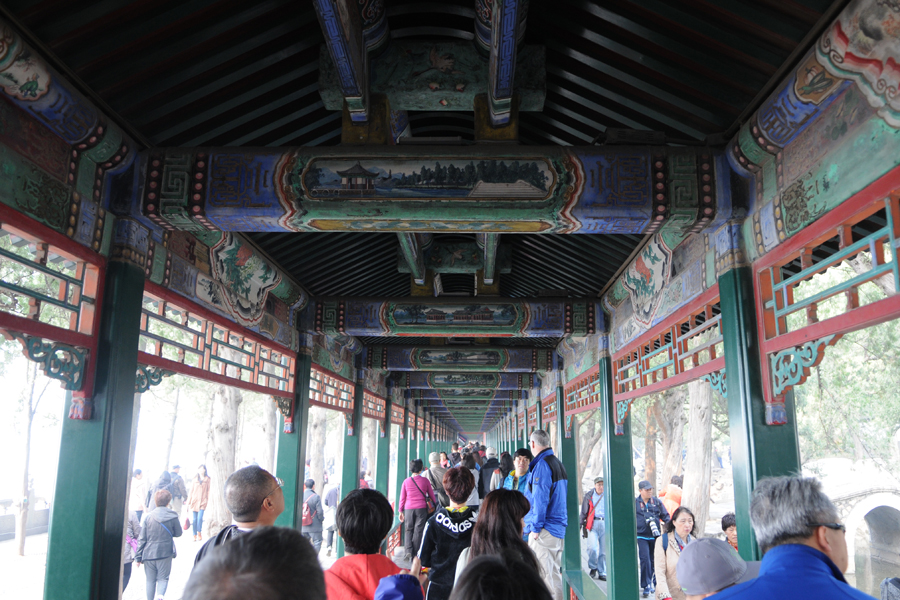
The Long Corridor: Roofed corridors connect the halls and pavilions. This “long corridor” contains 10,000 paintings on it’s walls and ceilings.
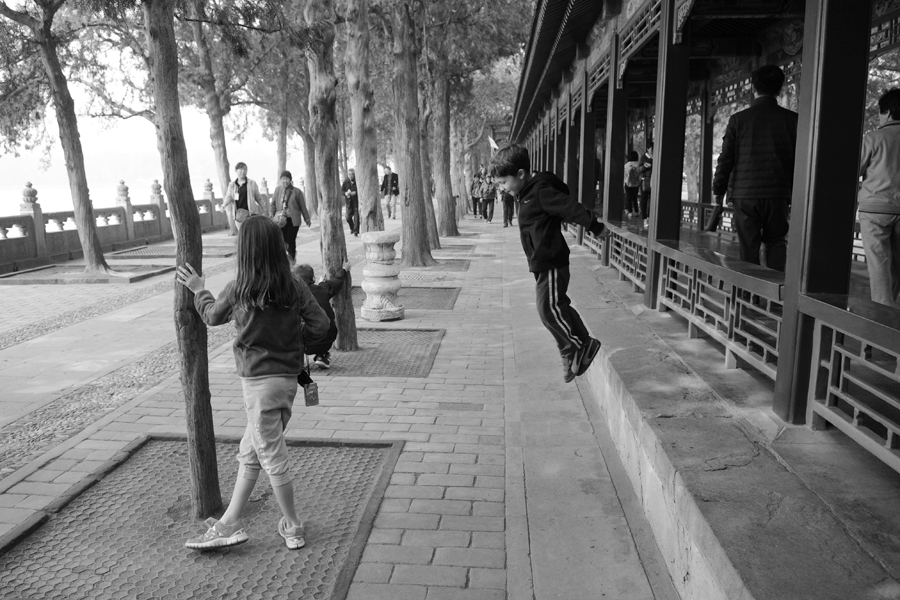
Everywhere is a playground.

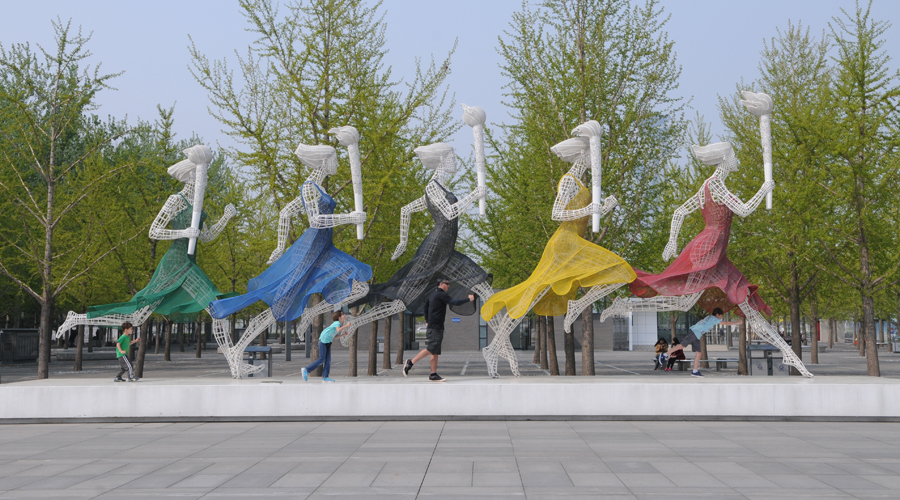
In 2008, Beijing hosted the summer Olypmics. In 2015, Beijing hosted the Pawlowski family.
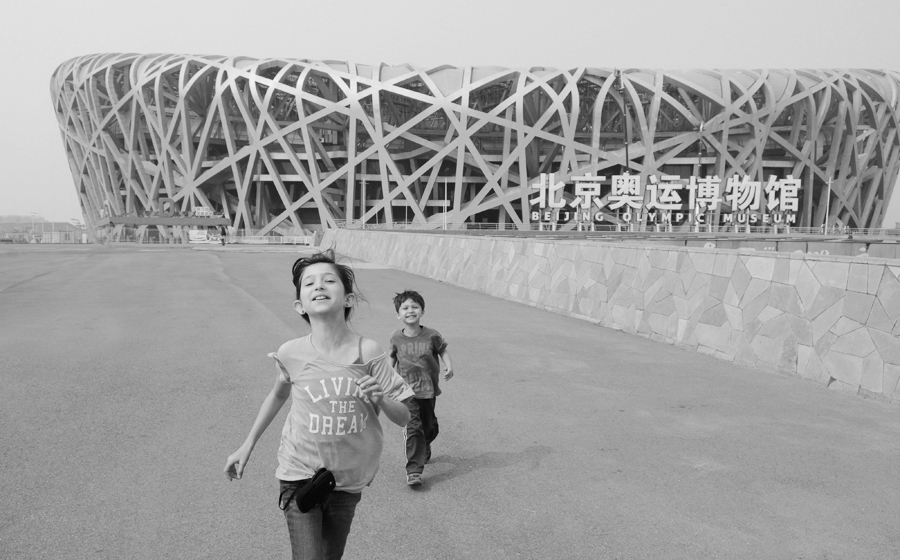
Racing from the “Brid’s Nest.”
The Great Wall: Through deserts, mountains, hills, and valleys, it stretches east to west for over 13,000 miles. Construction began in 220 BC as a unified effort to provide fortification against invasion from the north. Since it’s completion during the Ming Dynasty (17th century), it has served as a symbol of China’s strength and perseverance.
Historically and architecturally, it is astonishing to witness in person. Being able to experience this national treasure with my parents made it even more amazing.
Photos cannot do justice to the sheer scale and beauty of the Great Wall.
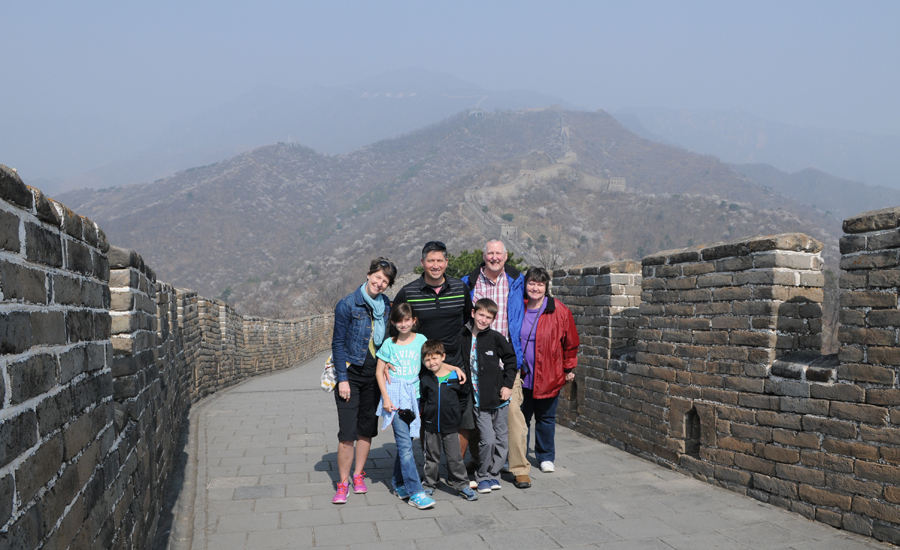
Atop the Mutianyuchancheng section of the Great Wall.
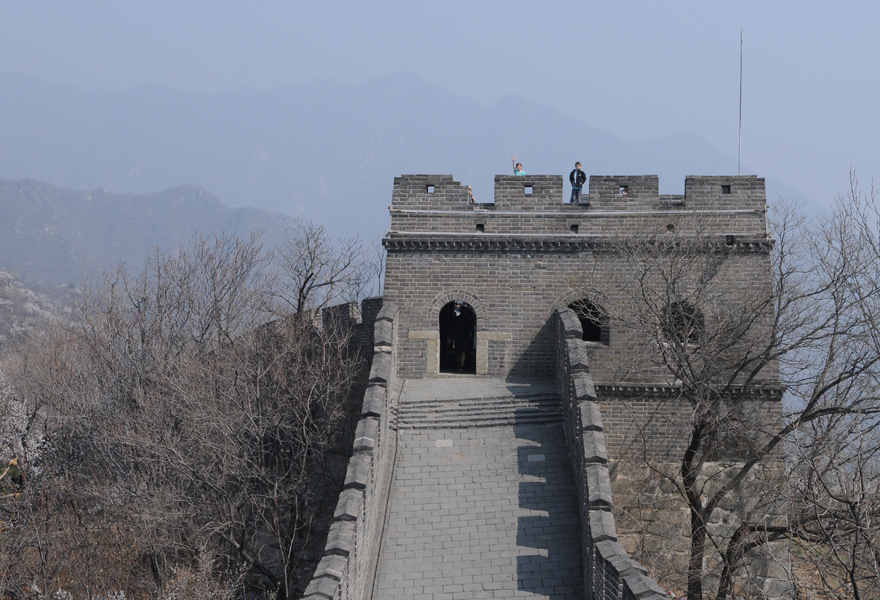
Jack and Kate overlooking China from a watch tower.
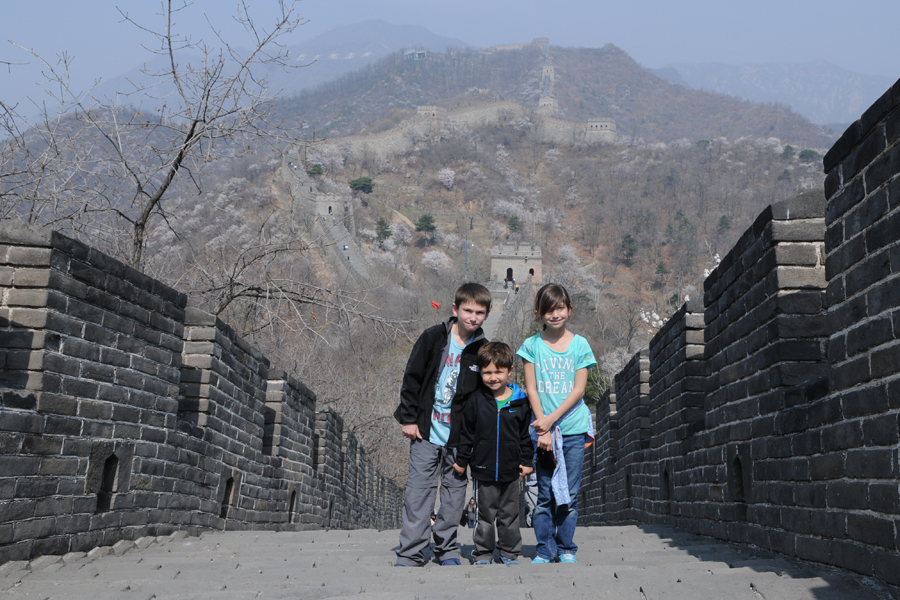
The wonders shared on this journey through China with Grandma Patty and Papa Tommy were immeasurable. When I asked what they enjoyed most during their grandparent’s visit, Kate summed it up best, saying “Just being with Grandma and Papa was the best.” Yes, we were able to see amazing sites, but the hugs, talks, and laughter are what we will remember the most. Thank you, Grandma Patty and Papa Tommy, for the unforgettable journey.
Now marks the date when we can look ahead to our summer reunion. Luke’s countdown to zero days has already begun.
 ourshanghaidays
Awesome job Julie!!! Loved it❤️❤️❤️love mom
Sent from my iPad
>