Set within the northwestern plains of Cambodia, Siem Reap is a tropical countryside home to mangrove forests and low-lying agricultural plantations that farm sugar cane and fields of rice. Along with it’s agricultural resources, Siem Reap plays an important role in preserving the history of Cambodia with it’s skeletal remains of the Khmer Empire.
Known as “Angkor” from 802AD to 1432AD, the region was controlled by the wealthy and powerful Khmer Empire. It rose to become the largest pre-industrial civilization with a complicated water management system along with an elaborate infrastructure that supported up to 1 million people. For 600 years, each king would build his own temple to worship his own religion, shifting between Hindu and Buddhist through the years.
After the fall of the Khmer Empire to Thailand (Siam) in 1432, over 1000 temples were taken over by nature. The region eventually succeeded in regaining control from Thailand and was renamed Siem Reap, which means “defeat of Siam (Thailand)” in Khmer. Since the 1927 re-discovery of the Khmer temples by a French explorer, Siem Reap has served as the gateway to it’s Angkor history providing a source of much needed income and pride for the local people.
Our Siem Reap experience began the morning of November 3rd local time…which just happened to coincide with Game 7 of the World Series. Our priorities shifted back to America for a few hours. The temples could wait.
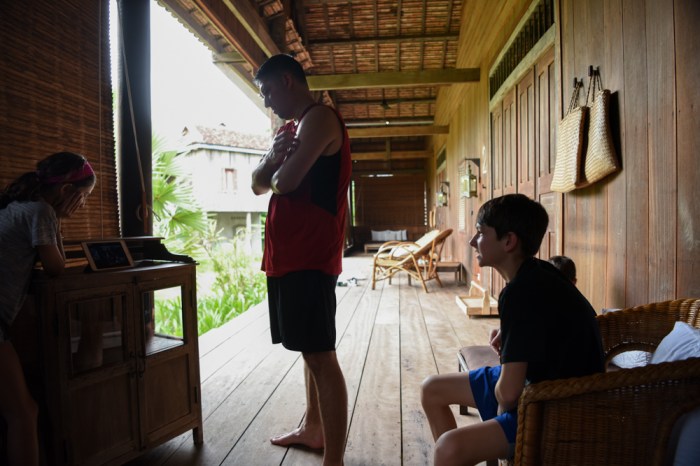
Streaming Game 7 on our iPad.
After cheering on our hometown tribe for a few stressful hours, we were anxious to see Cambodia.
Kampong Phluk:
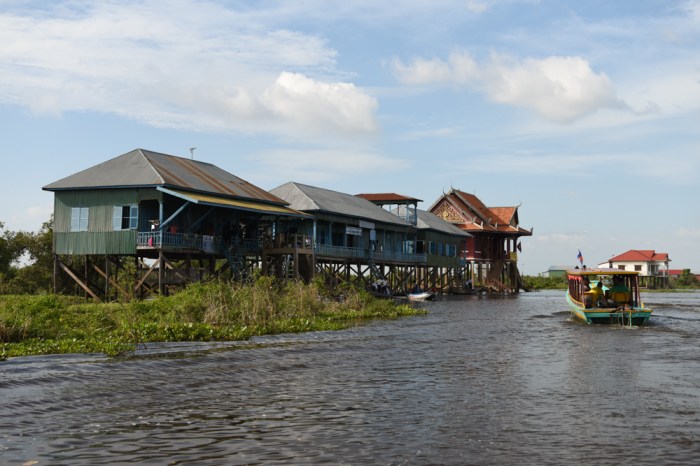
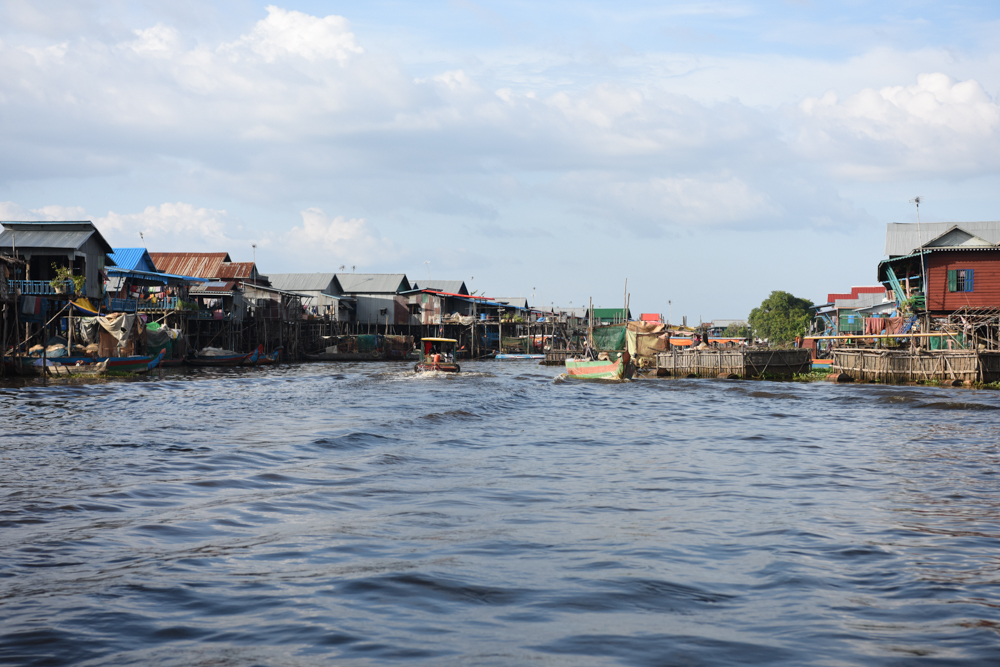
Our first excursion took us to a floating village within the floodplain of Tonle Sap lake. Surrounded by flooded mangrove forest, Kampong Phluk is home to more than 3000 Khmer locals that live in houses built on stilts.
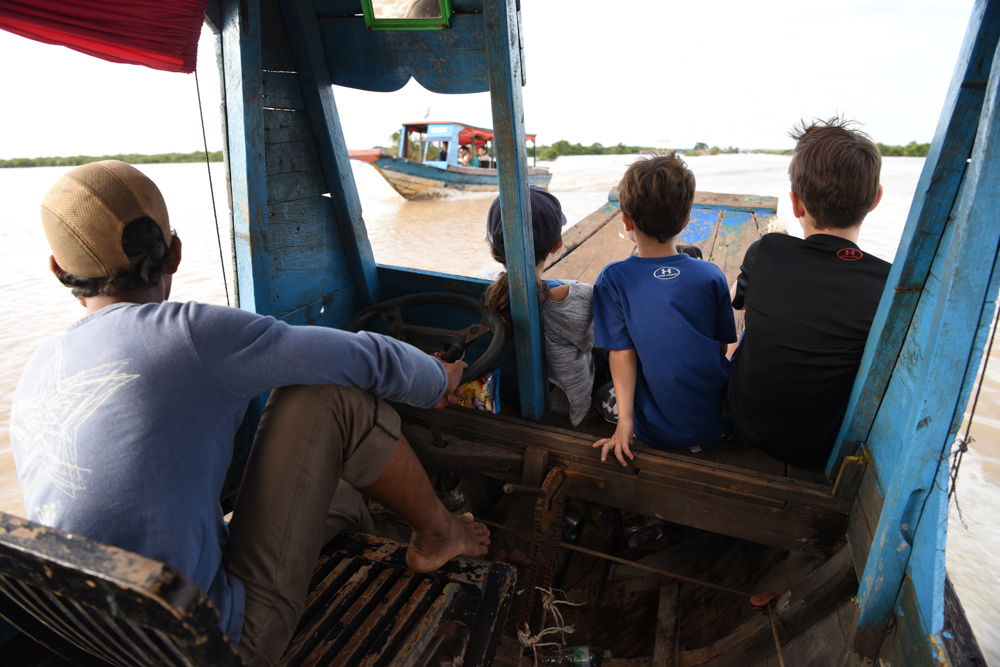
To get there, we chartered a boat…
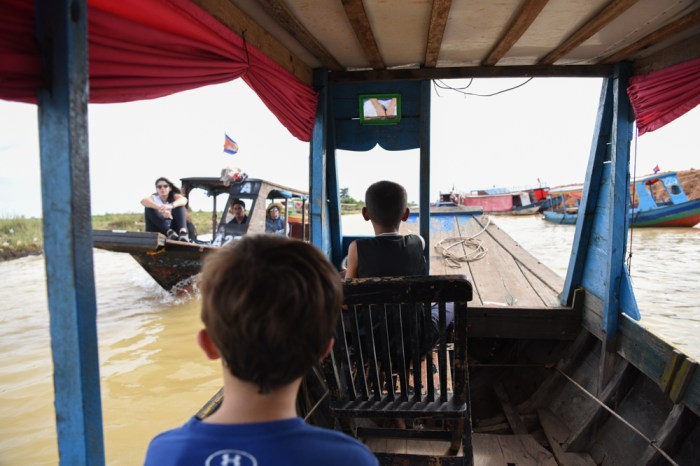
…with a captain not much older than Luke.
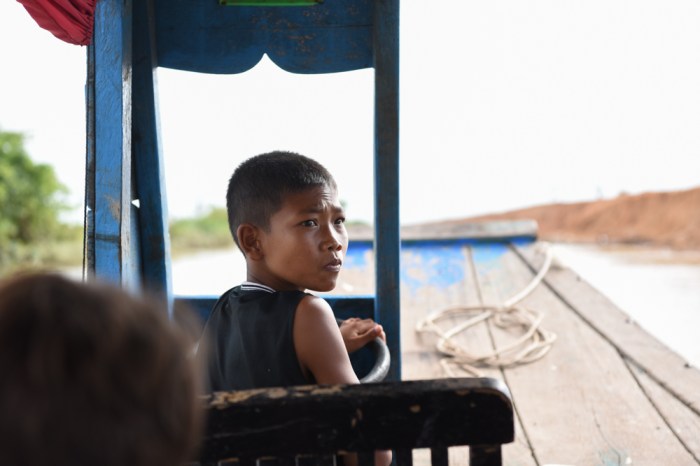
I couldn’t decide if he was determined or frightened to be at the helm.
Upon entering the outskirts of the village, we stopped at the local elementary school.
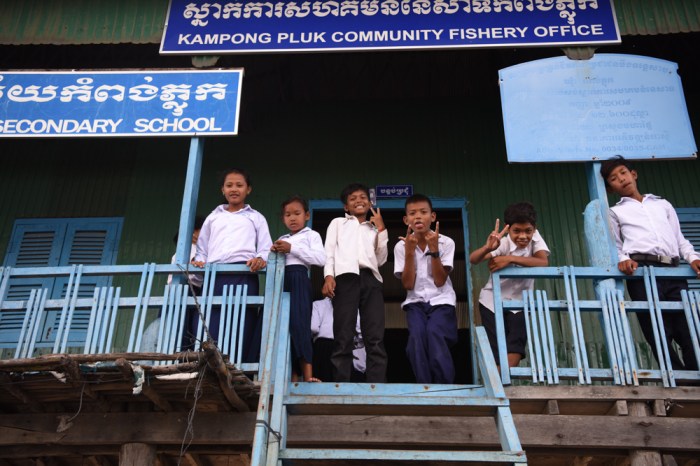
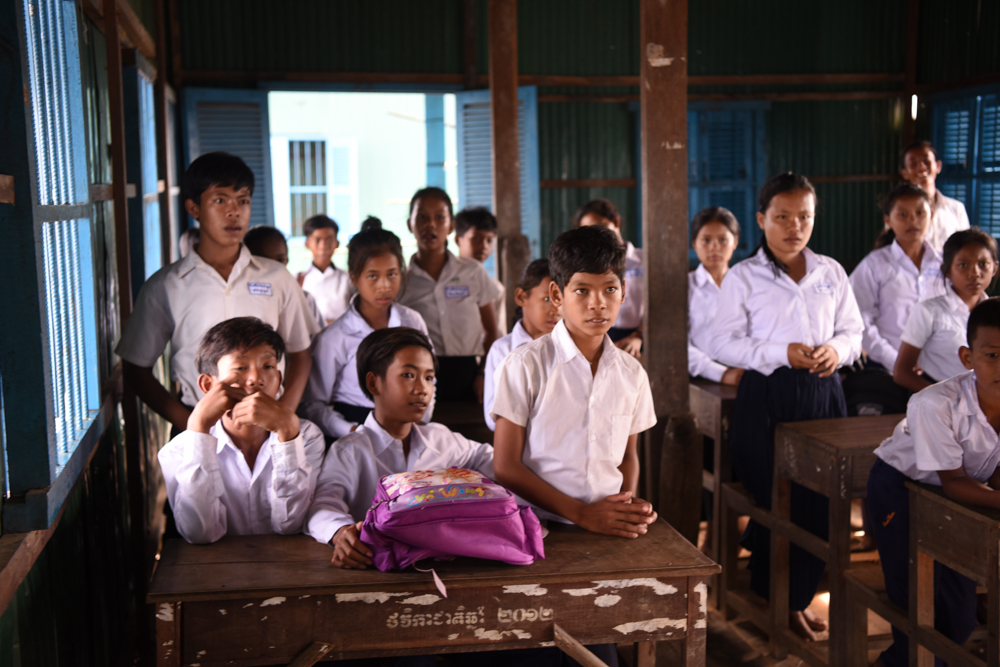
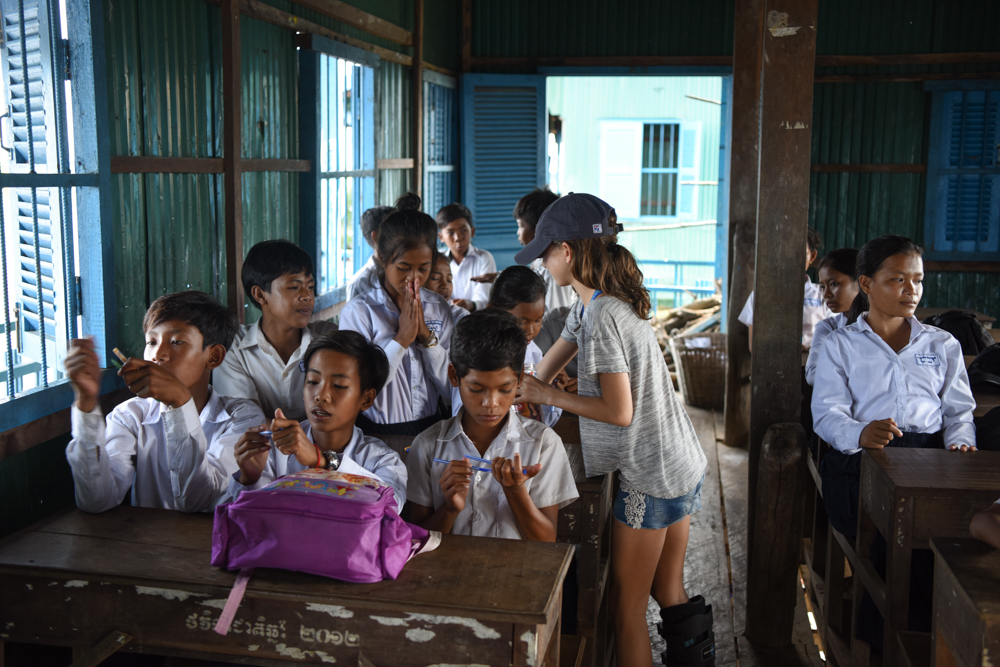
Kate handing out pens we brought for the students.
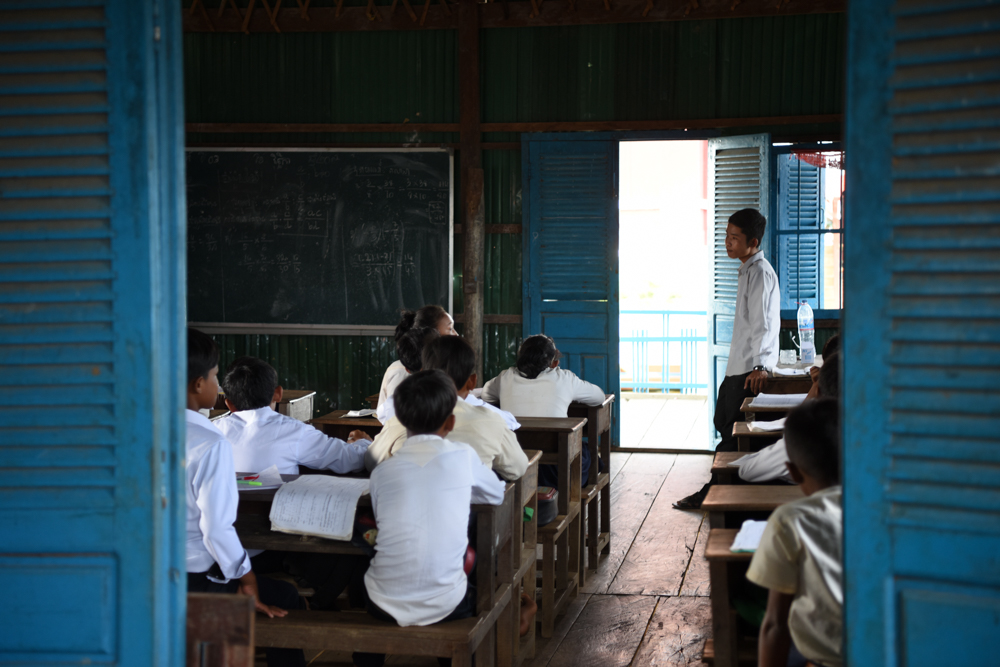
Learning above water with very few resources, no electricity, and without technology of today.
November is the end of Cambodia’s monsoon season, therefore the houses only rose a few meters from the water.
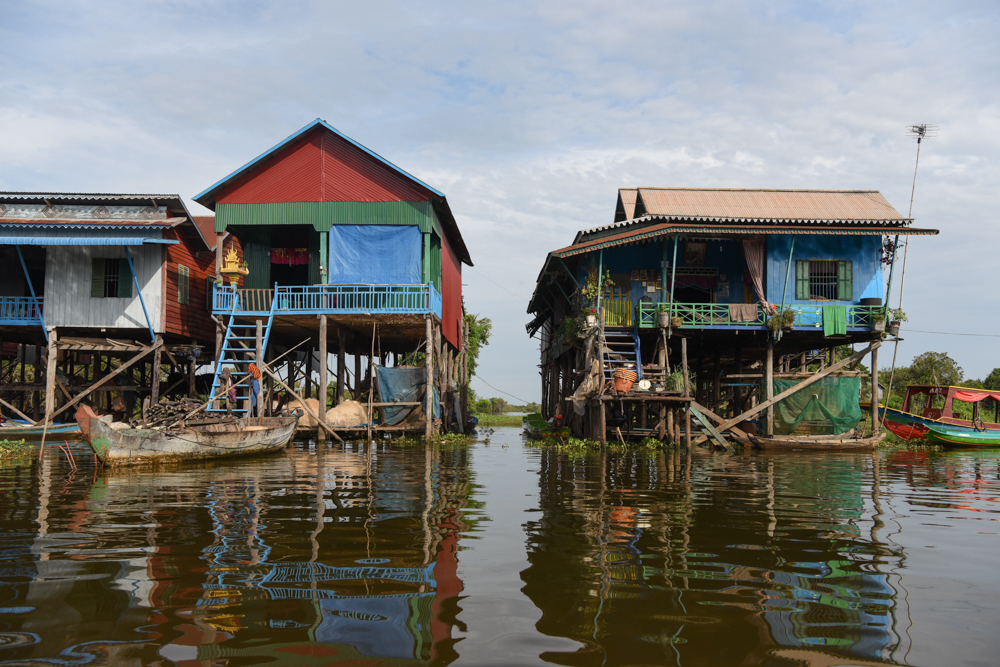
In dry season, the stilts jut the houses 6 meters above land.

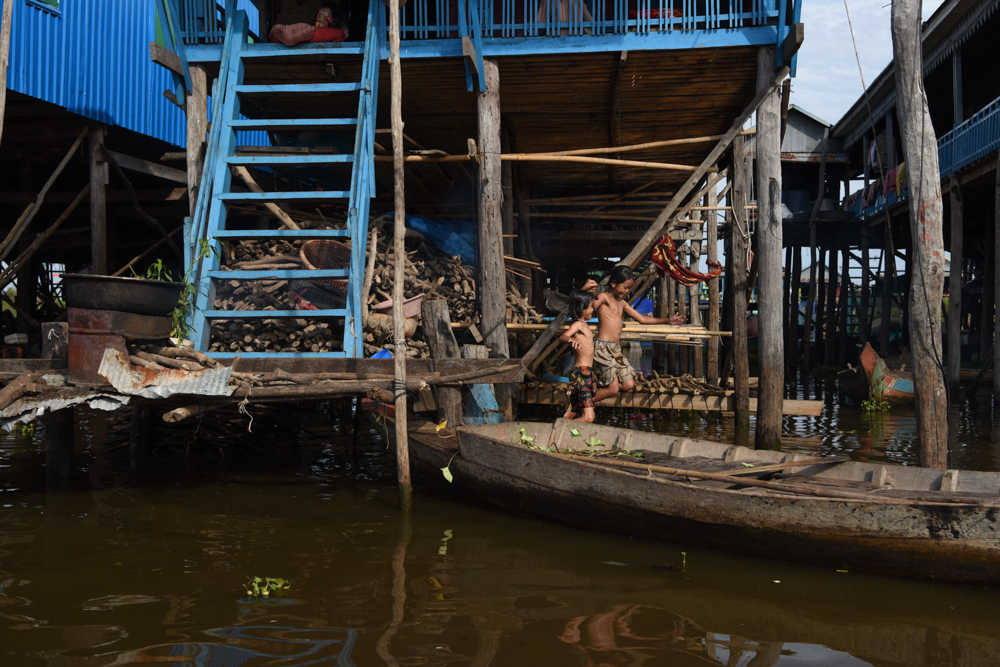
Boys taking an afternoon swim.
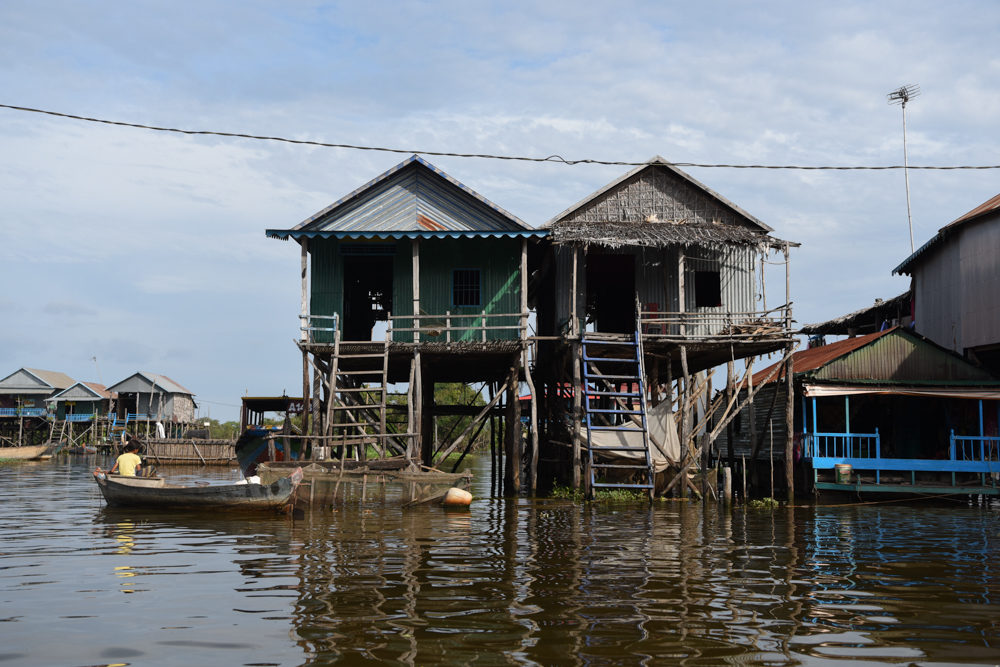
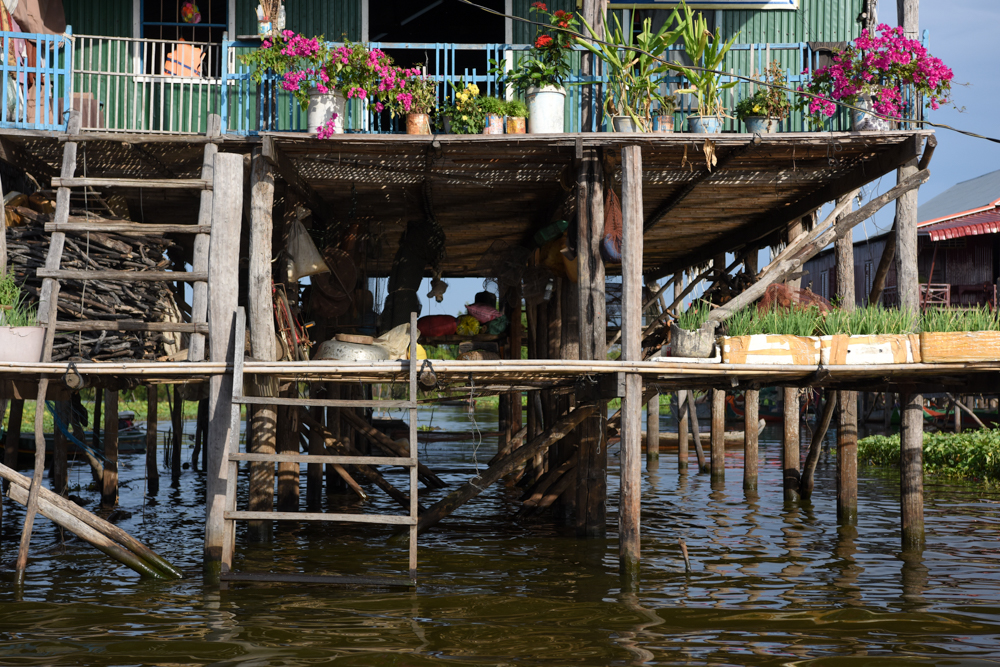
At the center of Kampong Phluk is an island that provides dry land with substantially less flooding.
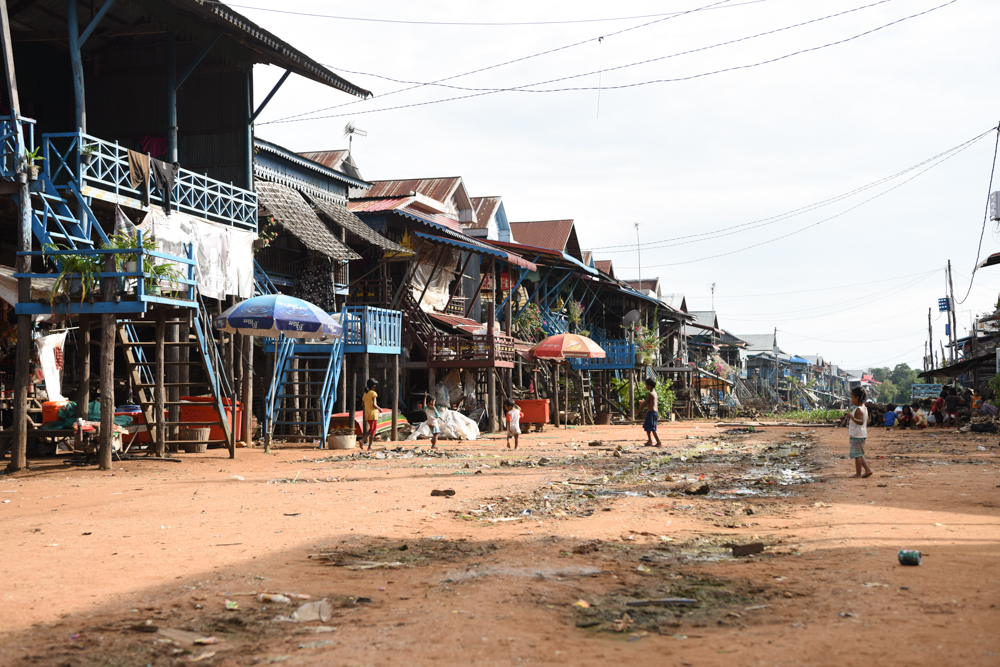
Here, we visited another school…
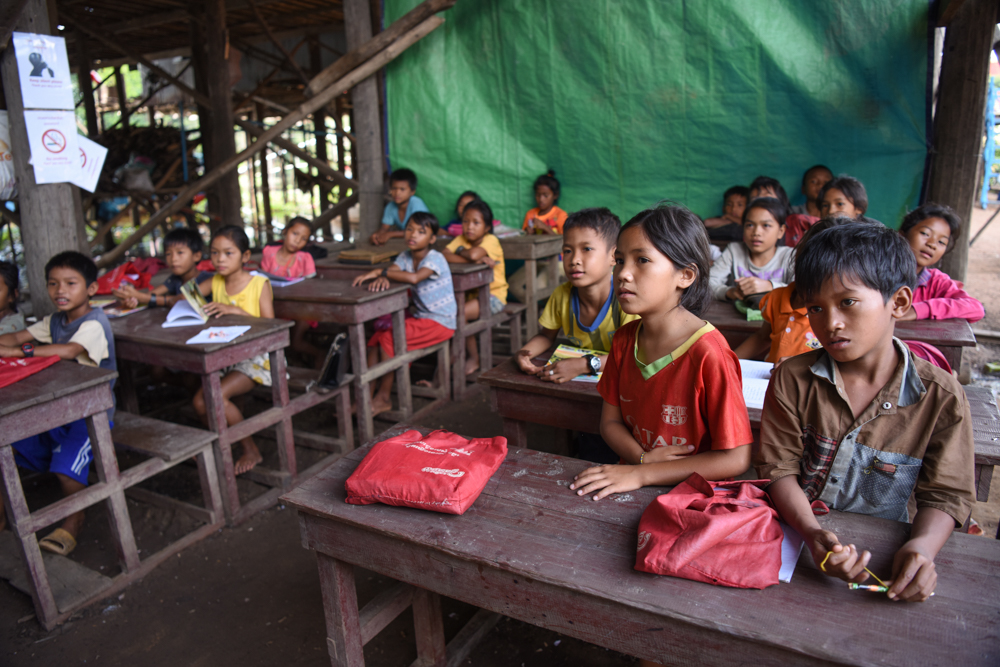
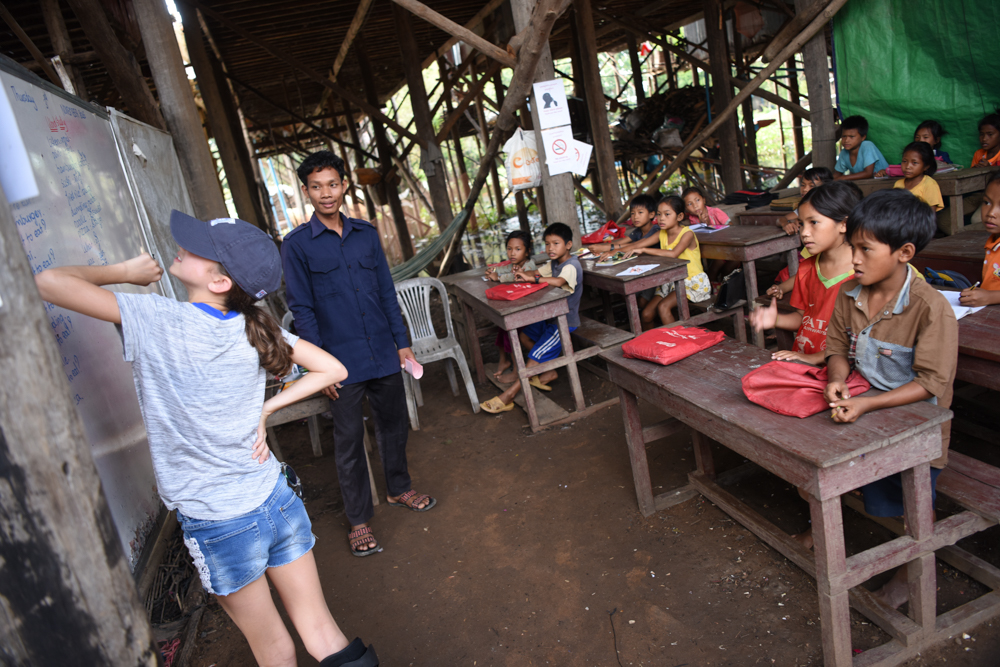
Kate gave a try at teaching English.
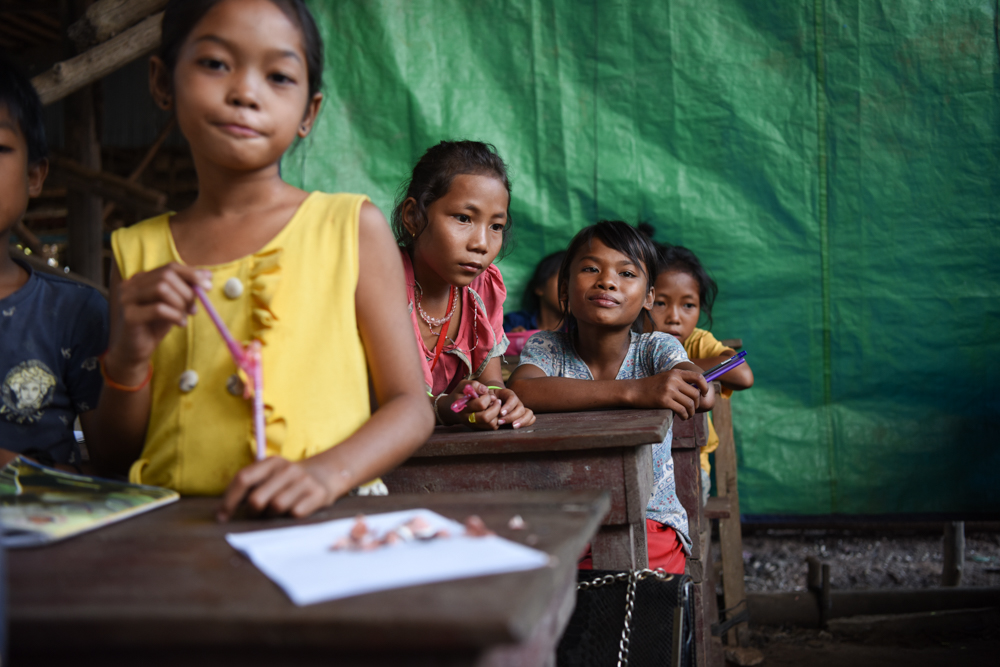
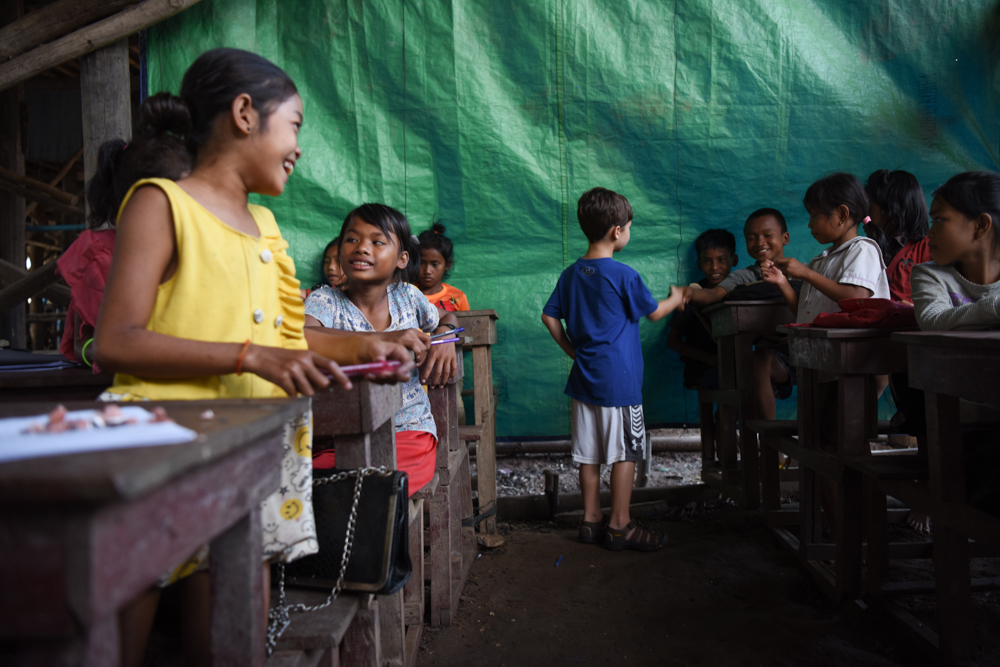
…and Luke made a few friends.
We were able to have a look inside a local floating home.
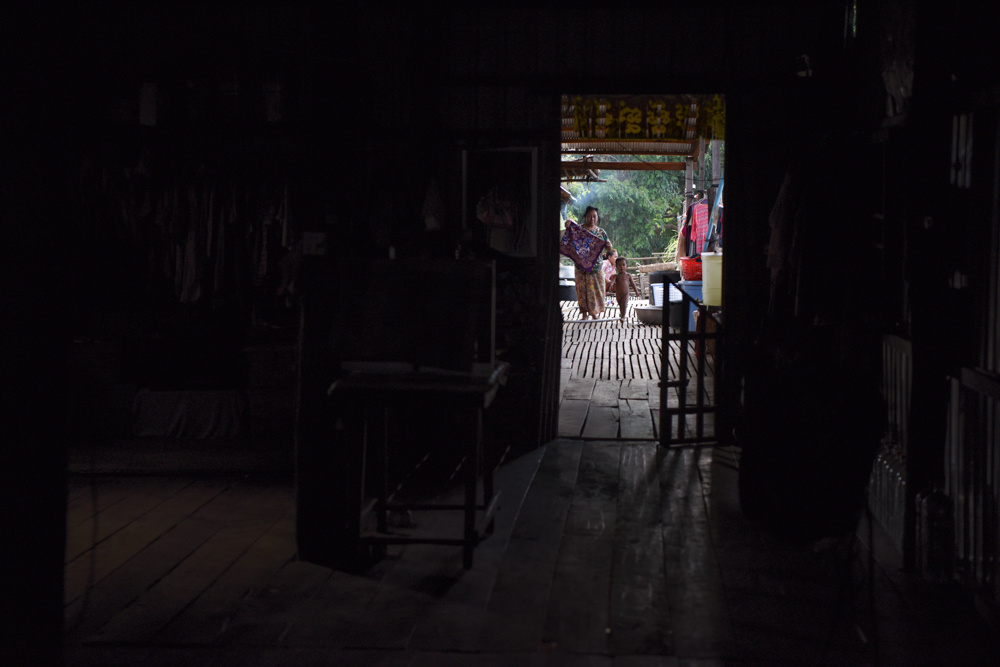
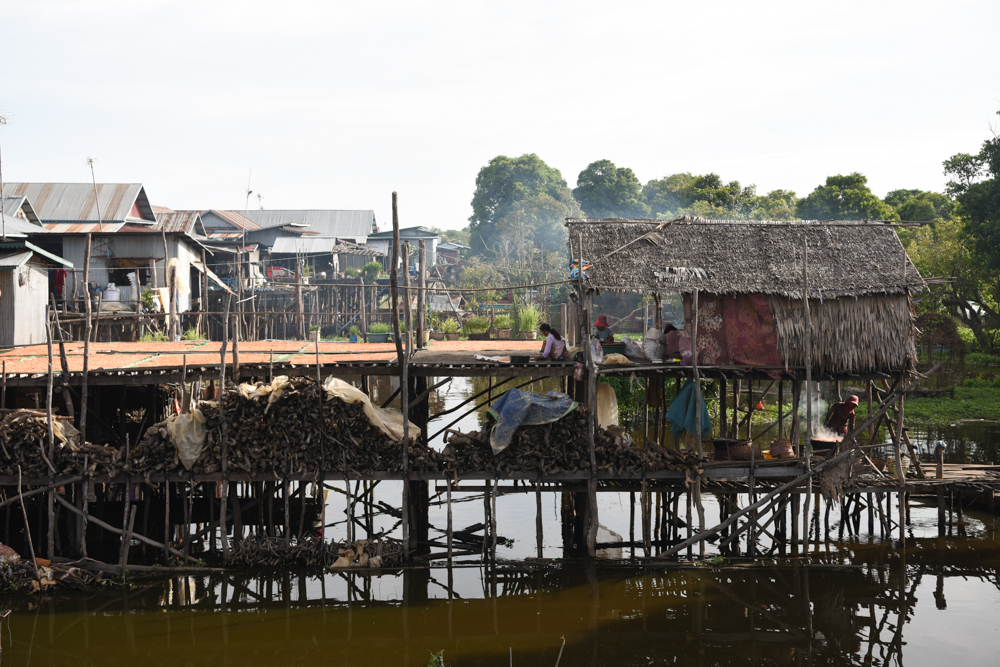
In case of fire, the shared kitchens are built separate from the main home.
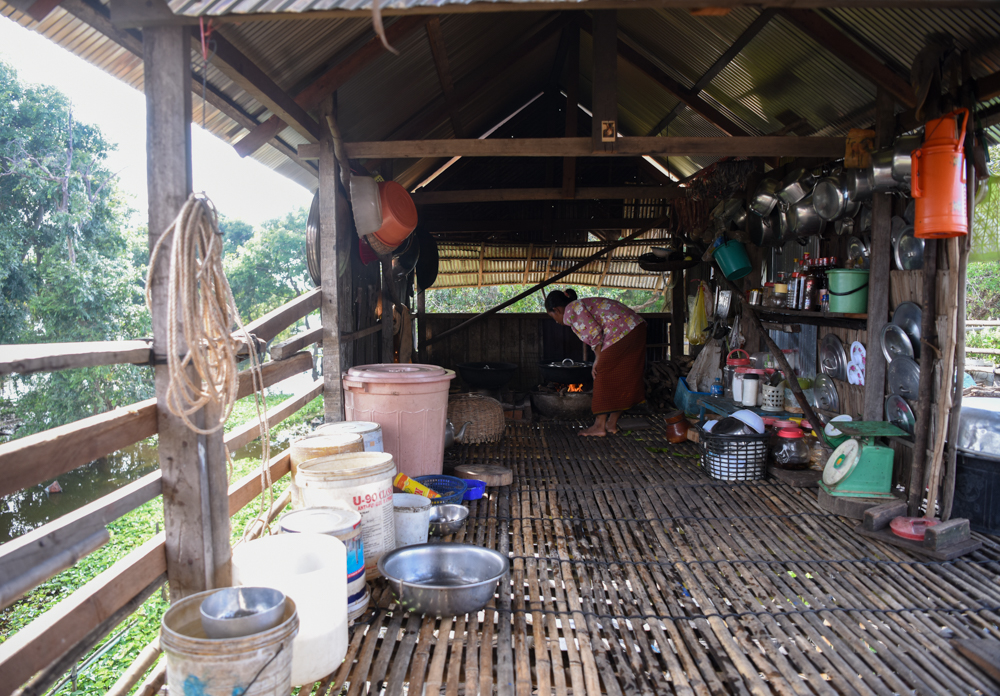
Inside a floating home kitchen. The buckets along the side are filled with rain water for daily use.
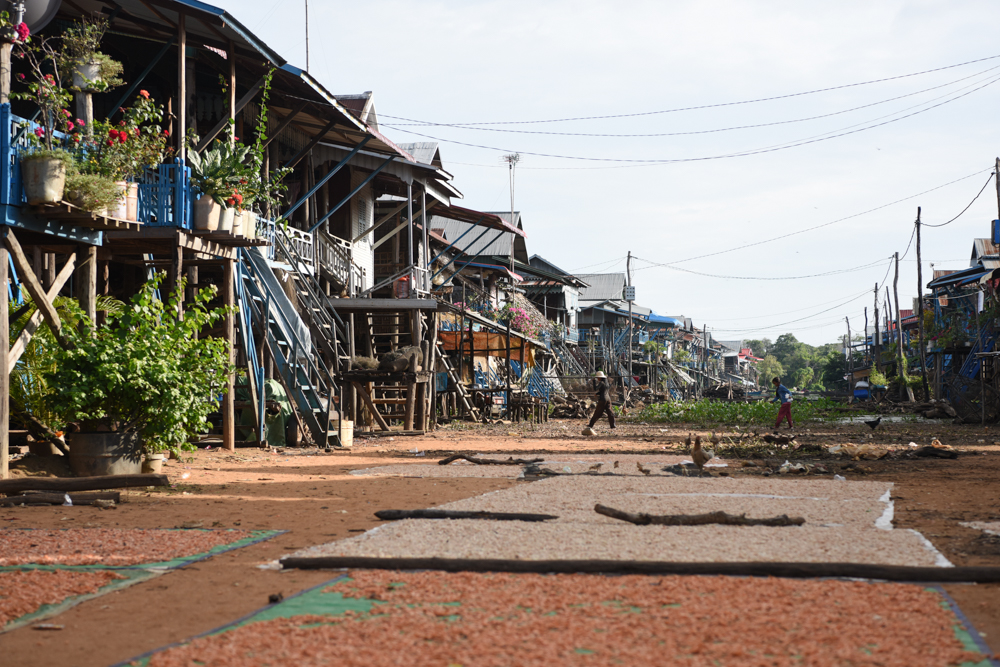
The streets of the island are lined with tarps covered with drying shrimp, a primary source of the Kampong Phluk economy.

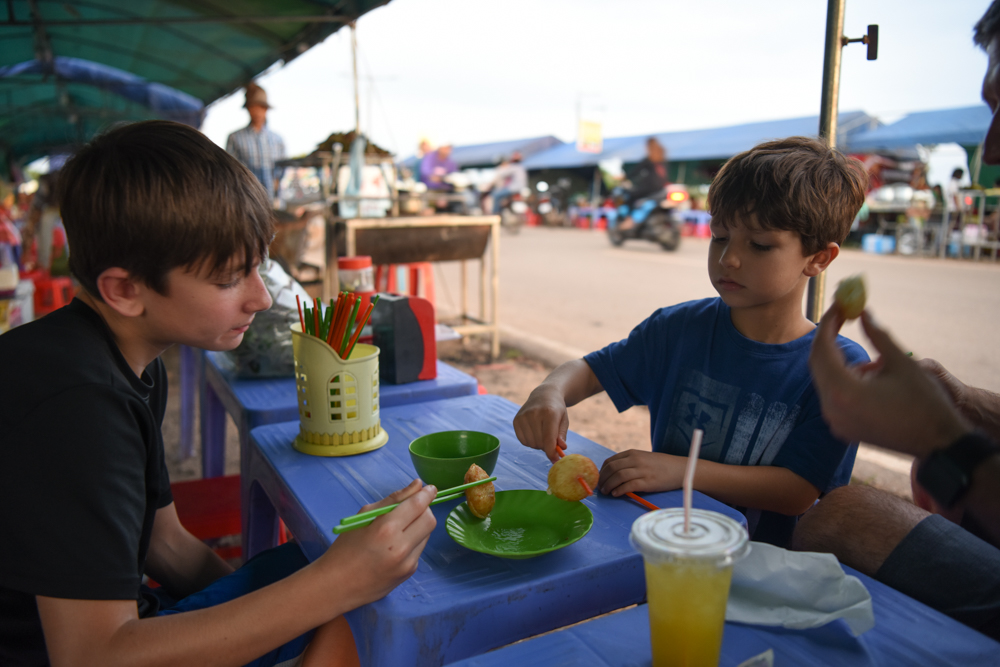
For dinner, we stopped at a food street for local Khmer food and fresh sugar cane juice.
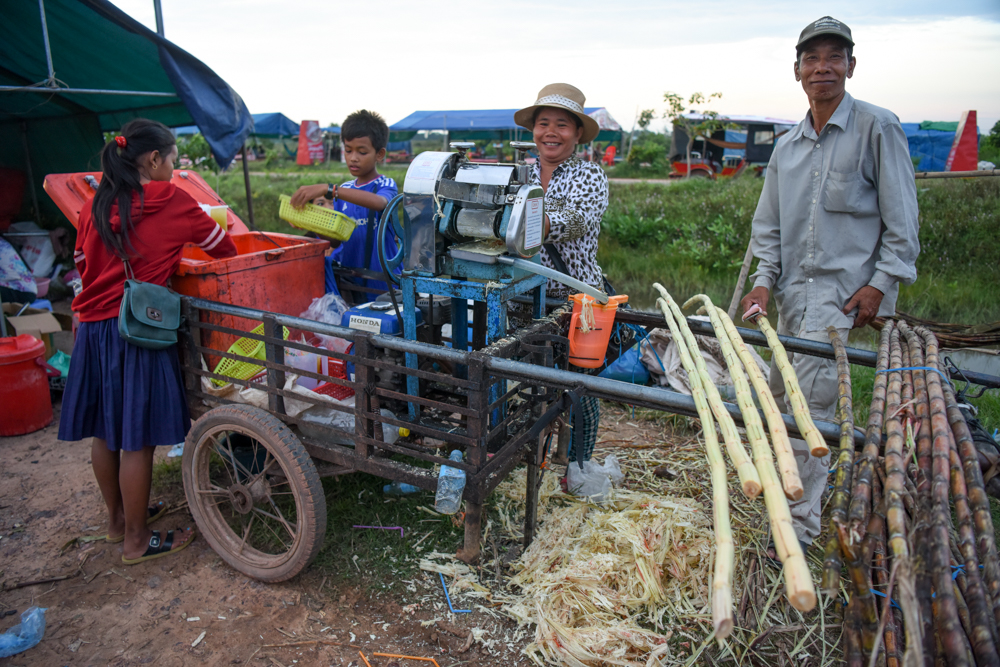
Sugar Cane juice vendor.
Angkor Wat Sunrise:
Built by a Khmer king in the 12th century as a Hindu Temple of God Vishnu, Angkor Wat remains the largest religious site in the world and is a UNESCO World Heritage site. Today, it exists as a Buddhist temple and a source and symbol of national pride that adorns the Cambodian flag. It’s unique sandstone architecture is a prime example of Khmer classical style with a temple mountain design and five redented towers shaped like lotus buds. Allowing plenty of room to play tag with Jack, Angkor Wat became Luke’s favorite temple.
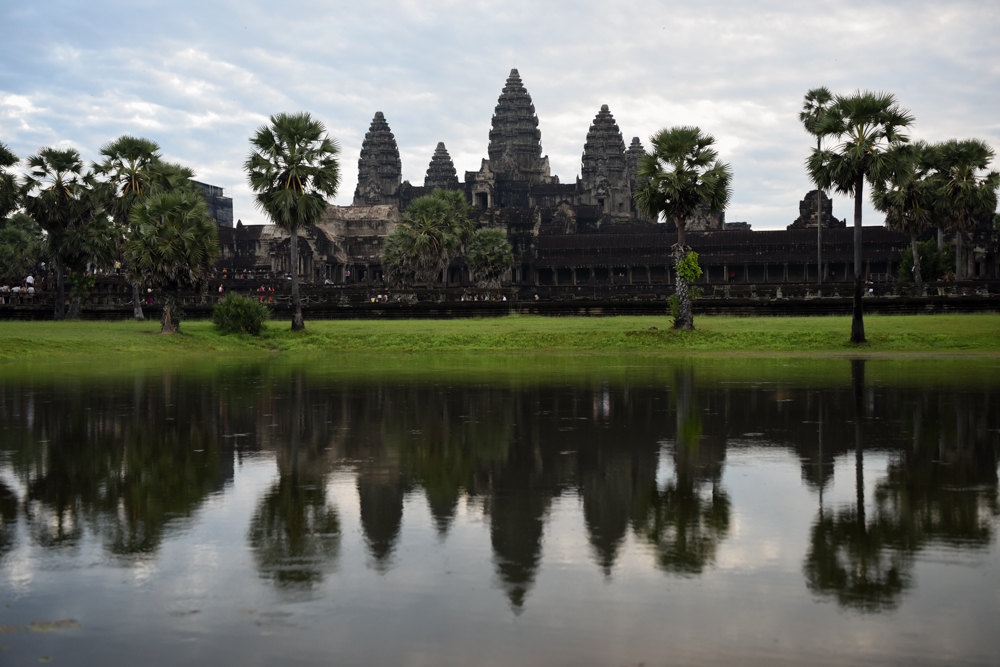
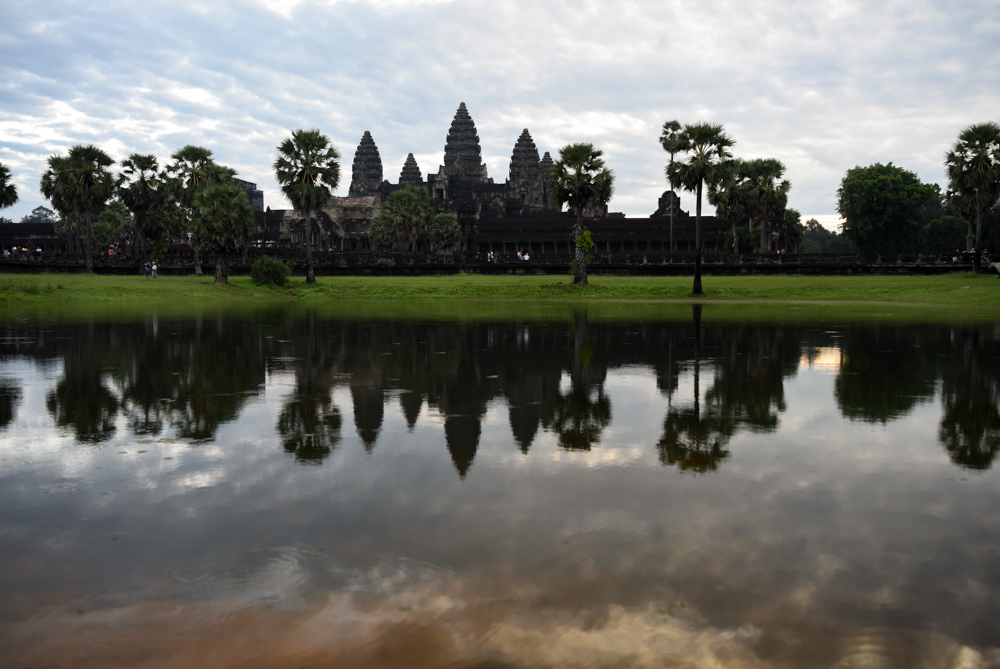
The outer wall and moat enclose the temple which spans 203 acres
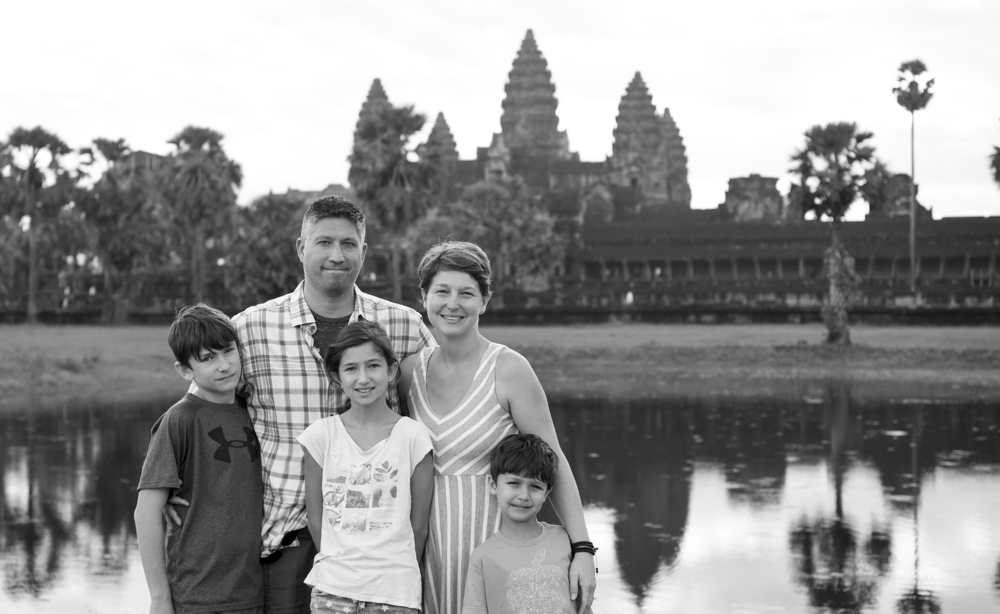

Luke was still not thrilled with the 4am wakeup call.

Inside Angkor Wat, we:
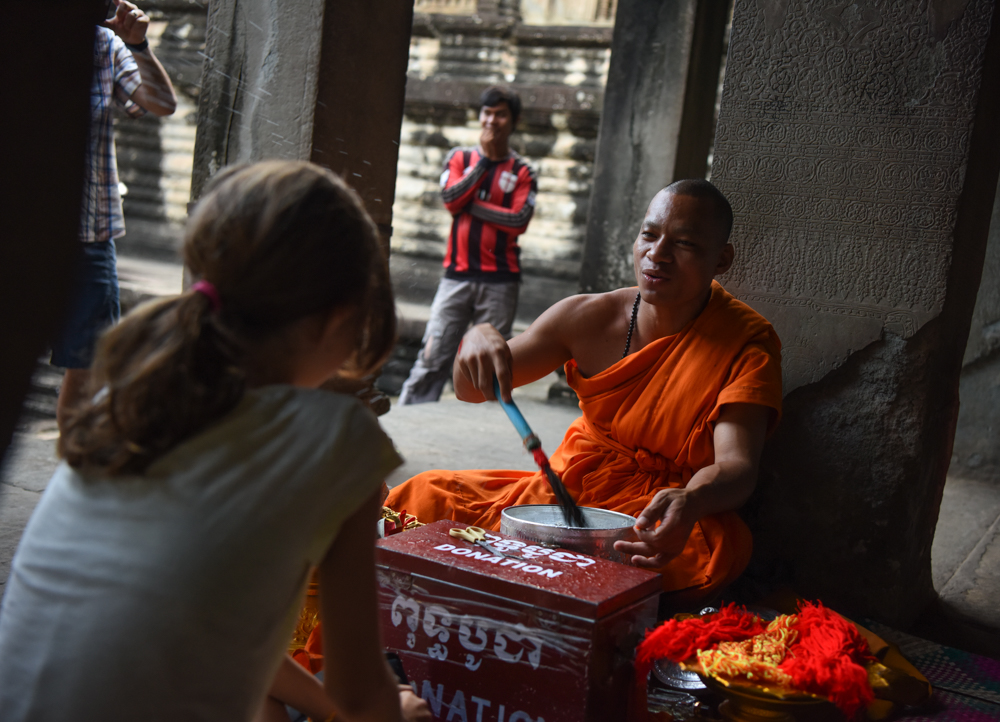
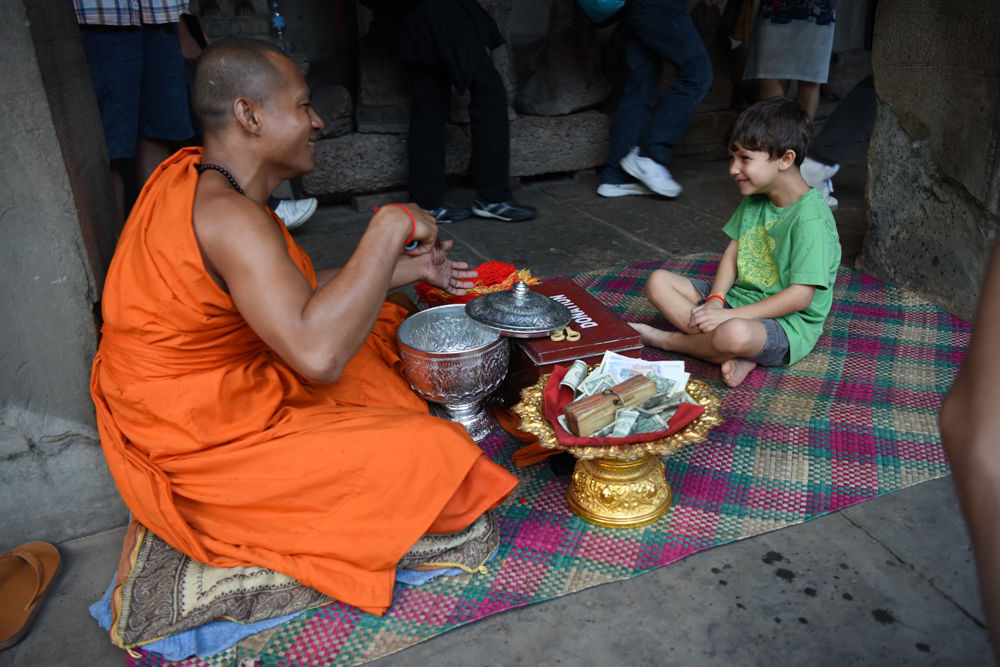
received a Buddhist blessing.
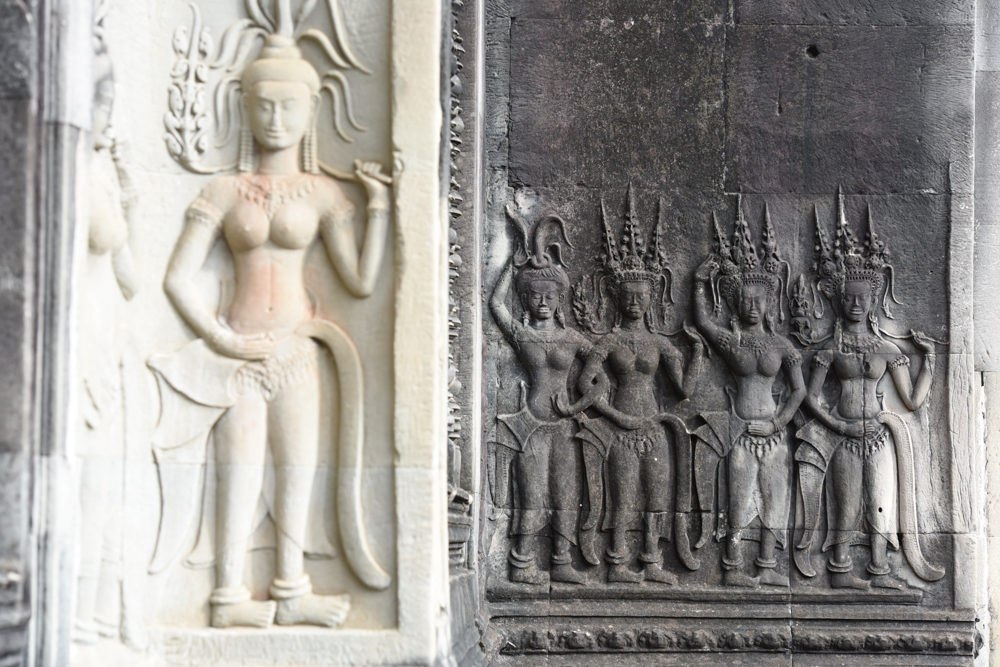
admired (while Luke giggled at) the extensive stone wall carvings…
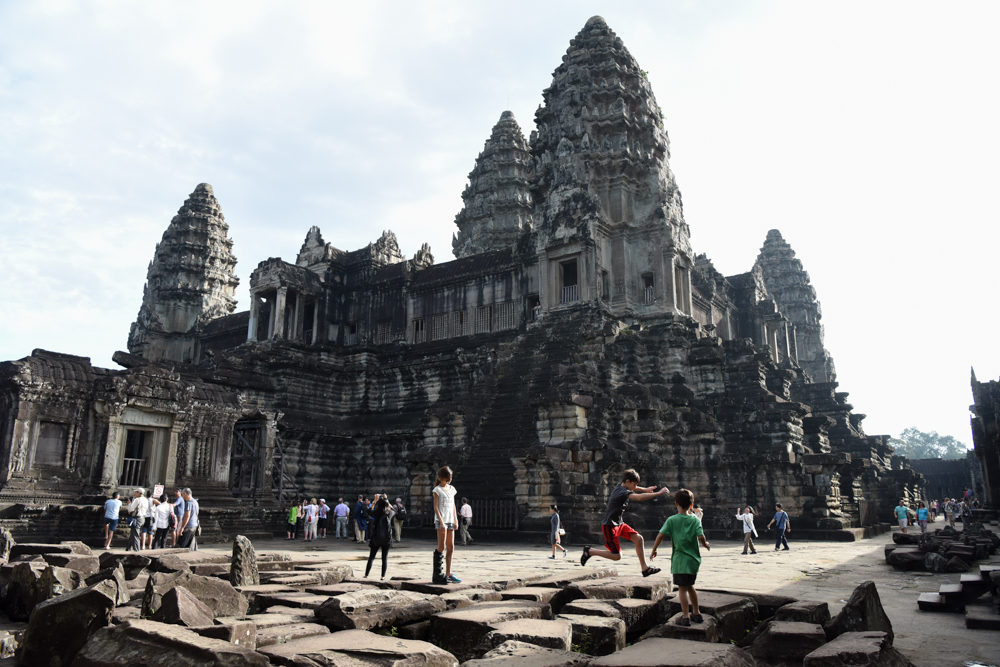
and found time to parkour.
Ta Prohm:
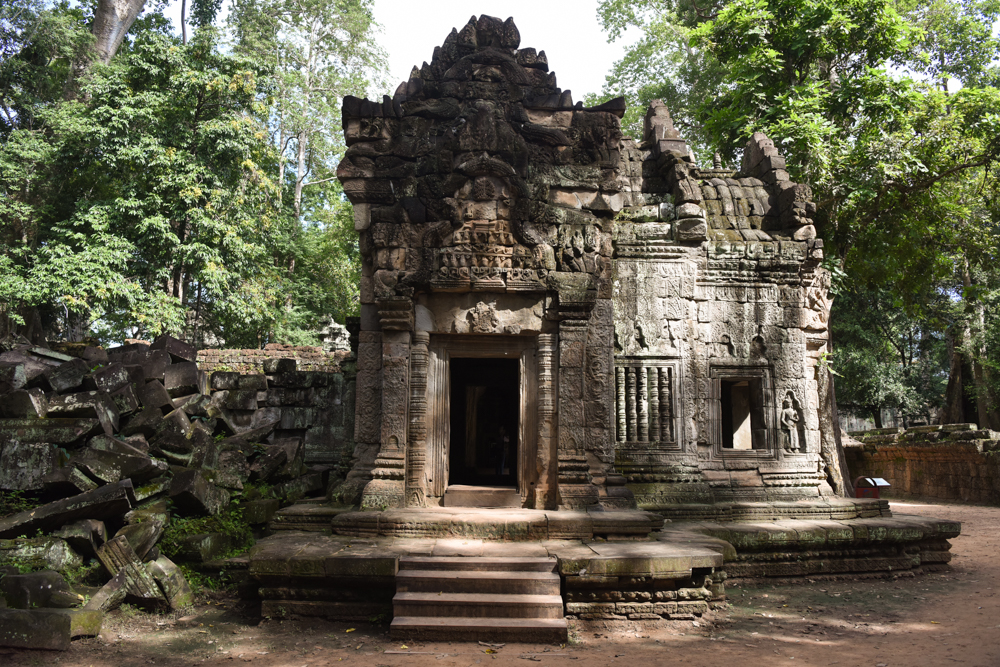
Well-known for it’s role in the movie Tomb Raider, this temple was built as a Buddhist monastery and university in the early 13th century. Having been left in it’s unpreserved state, Ta Prohm remains canopied and overtaken by the surrounding jungle with large silk-cotton and ficus trees growing out of it’s ruins with roots slithering down into the earth. This was my favorite temple, as it merged the serenity of a temple with the beautiful colors and sounds of nature.
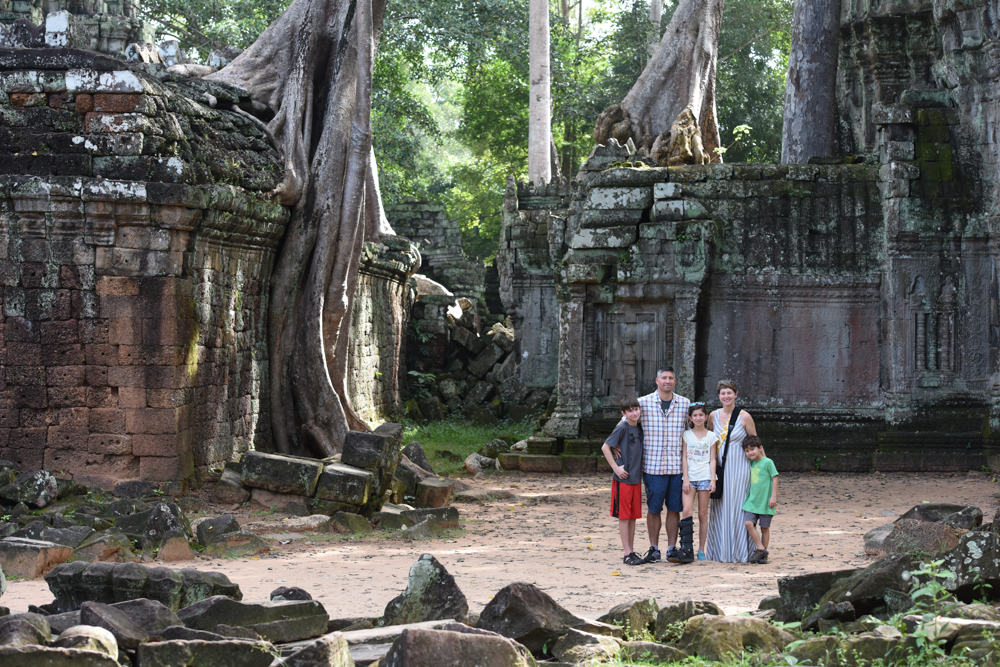
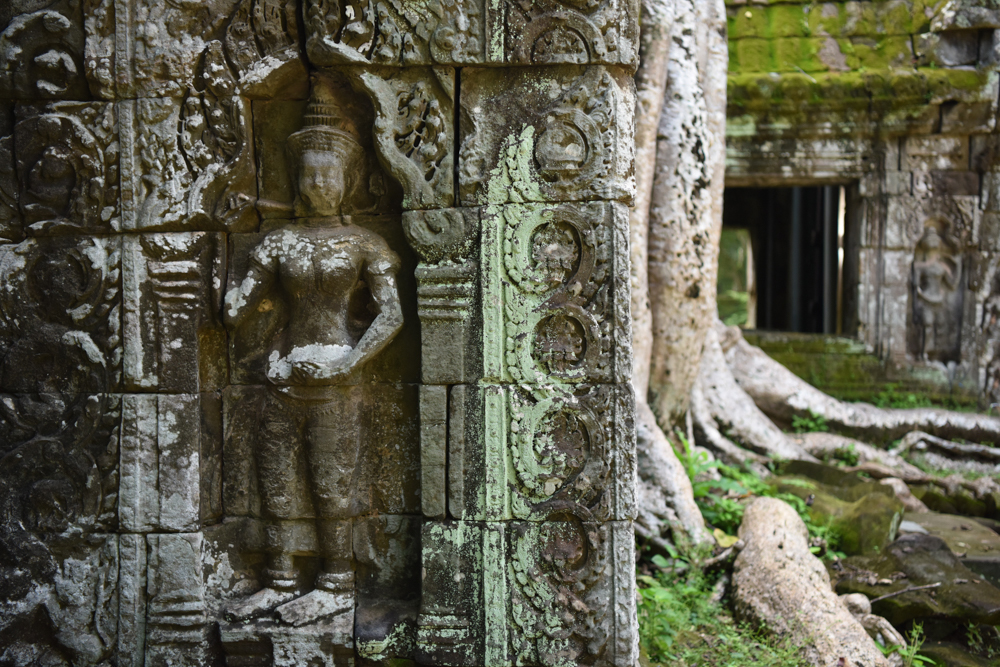
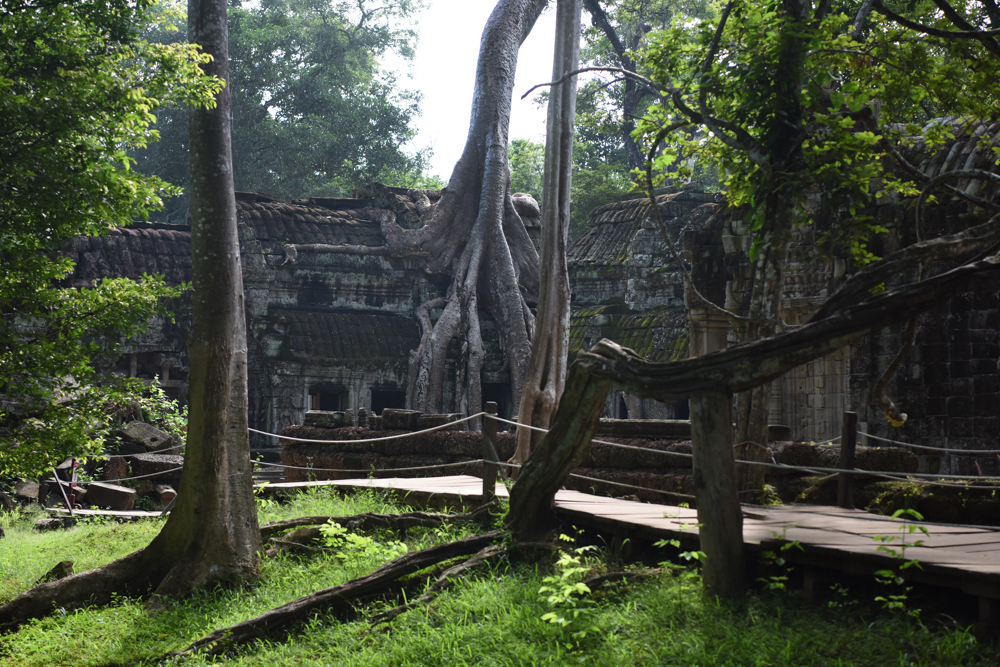

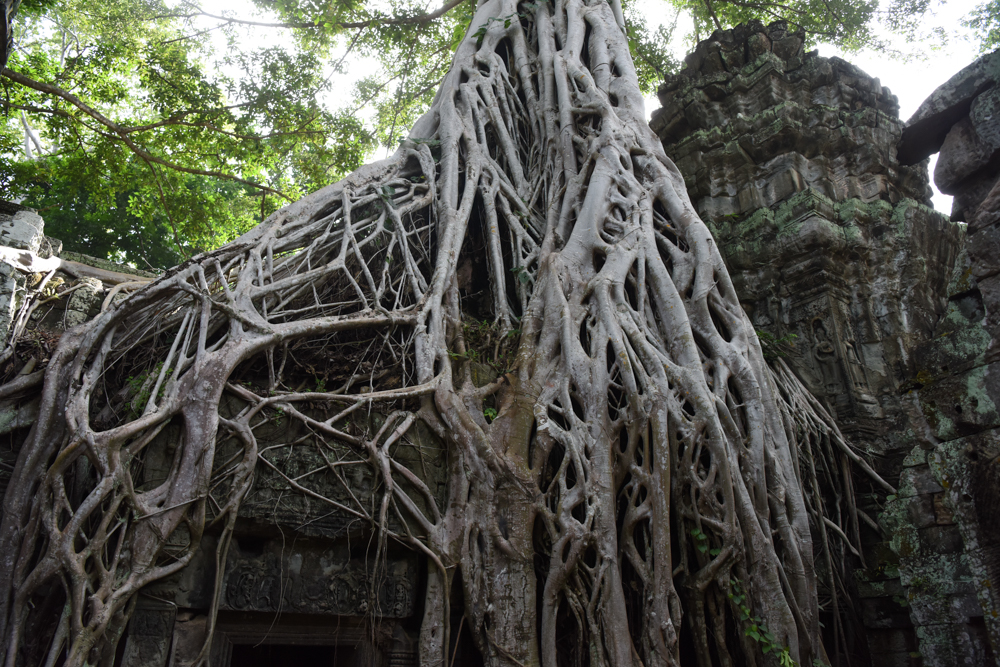
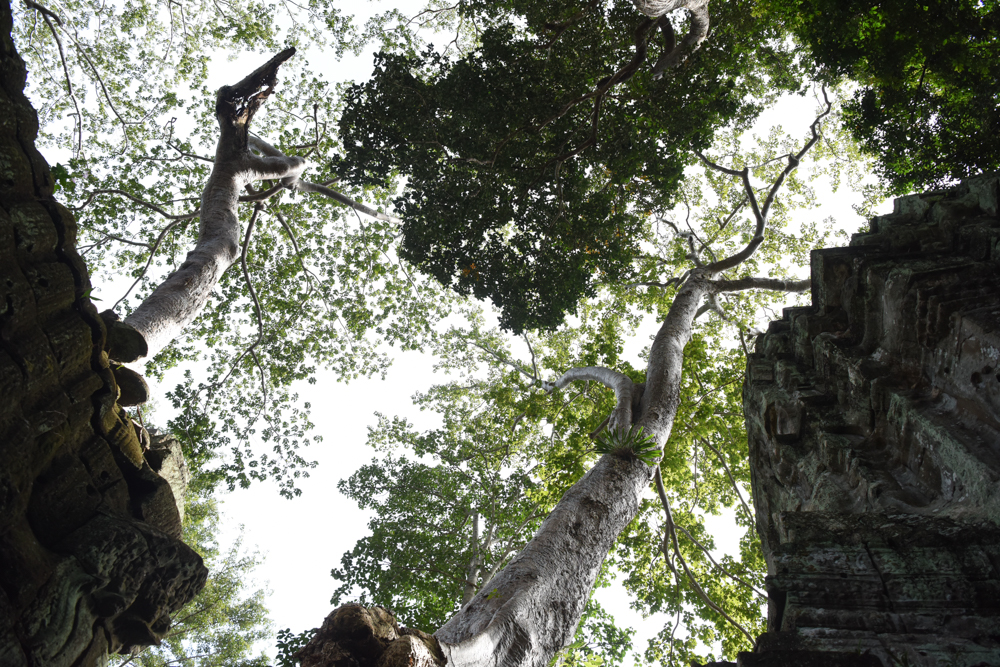
Parrots sang as they flew between the trees above.
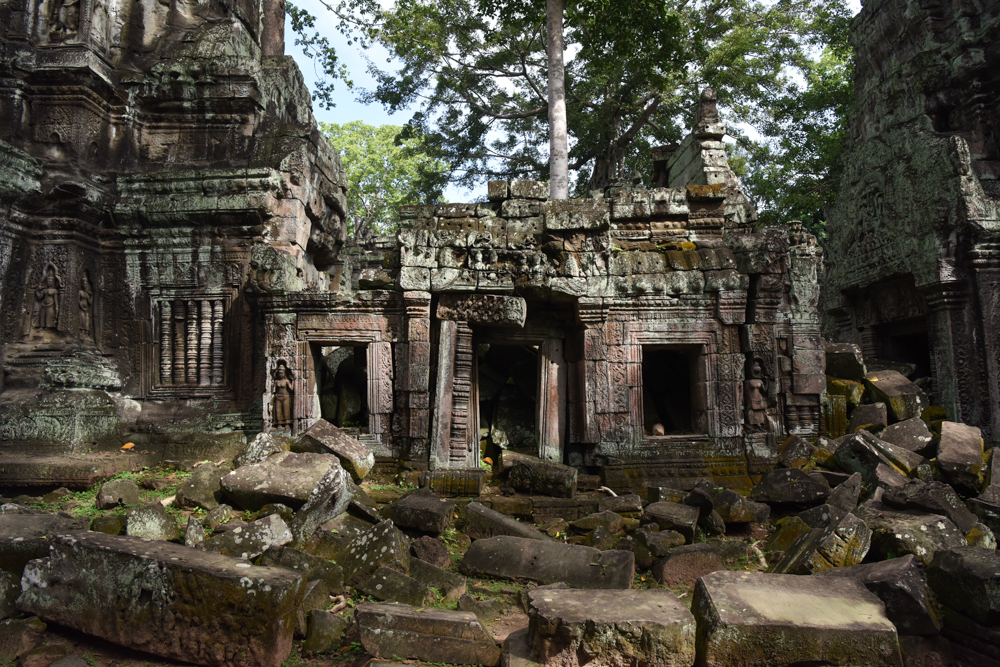
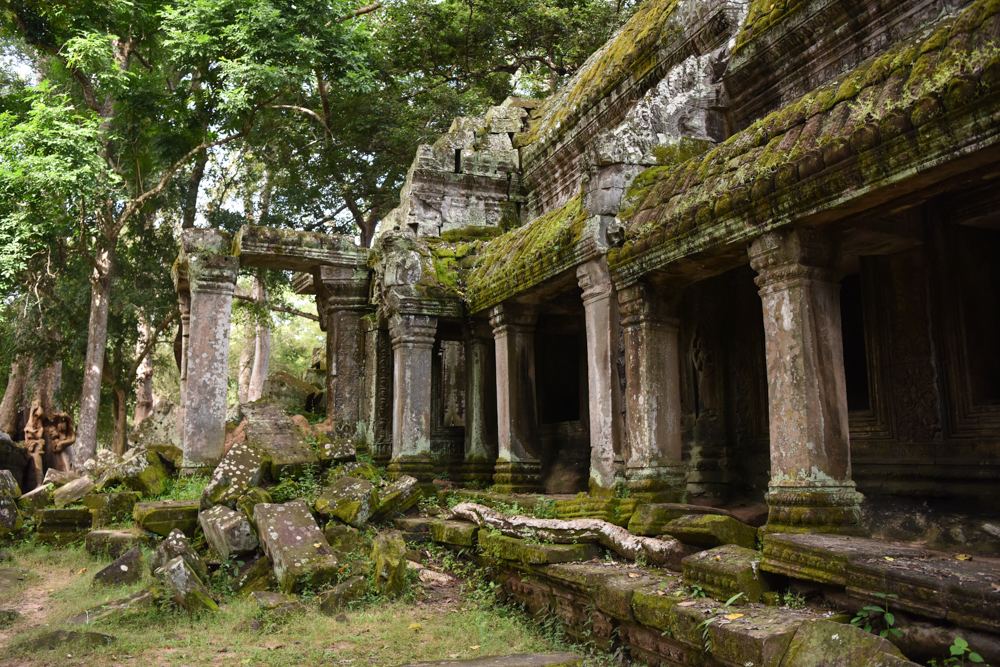
Truly breathtaking.
After a day of temples, we were ready to appreciate the hard work put into creating these stunning monuments. The handmade stone carvings and bas-relief artwork cover every inch of the Angkor temples, so we headed to an art studio where these Cambodian traditions live on.
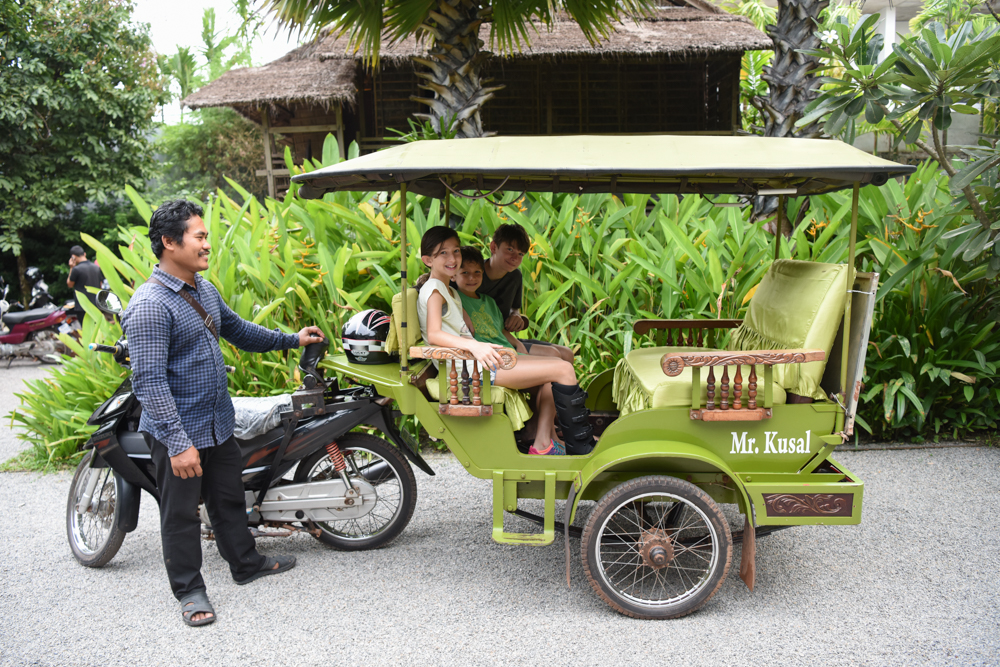
Our tuk-tuk.
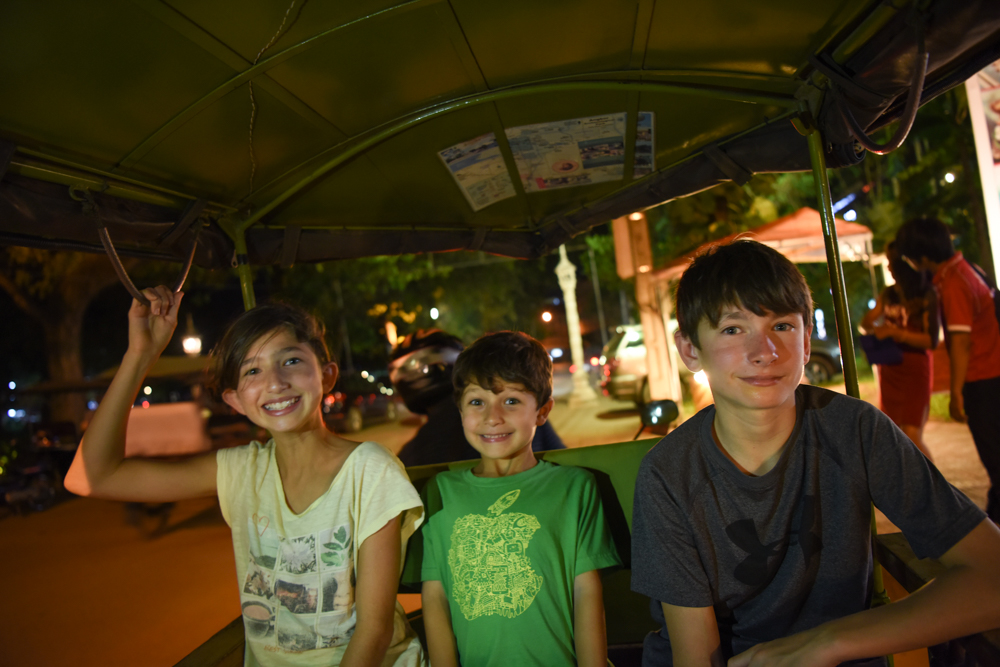
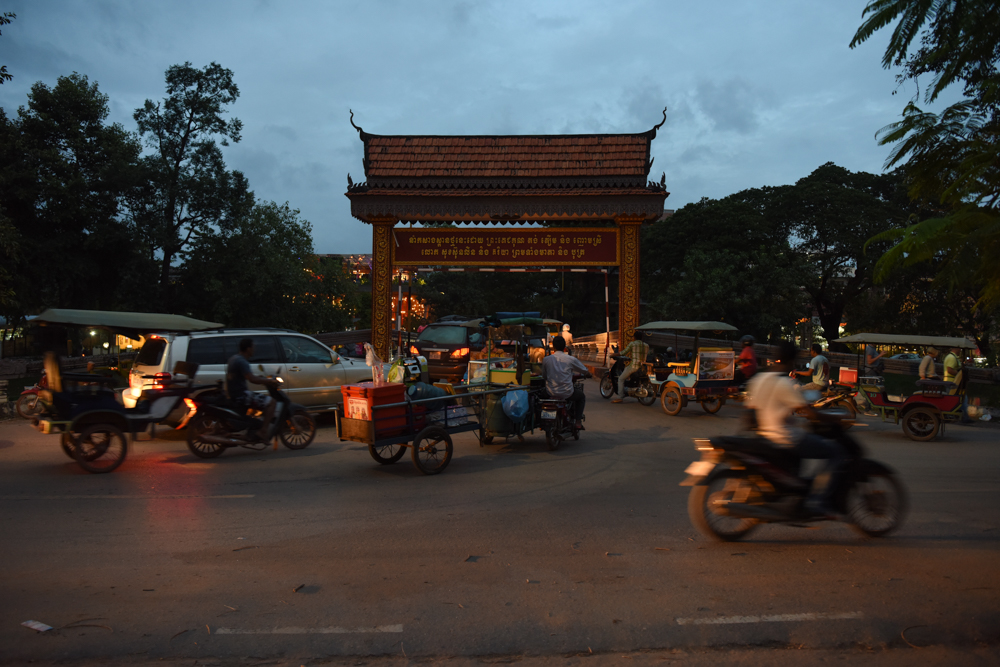
The bustling organized chaos of Cambodian streets.
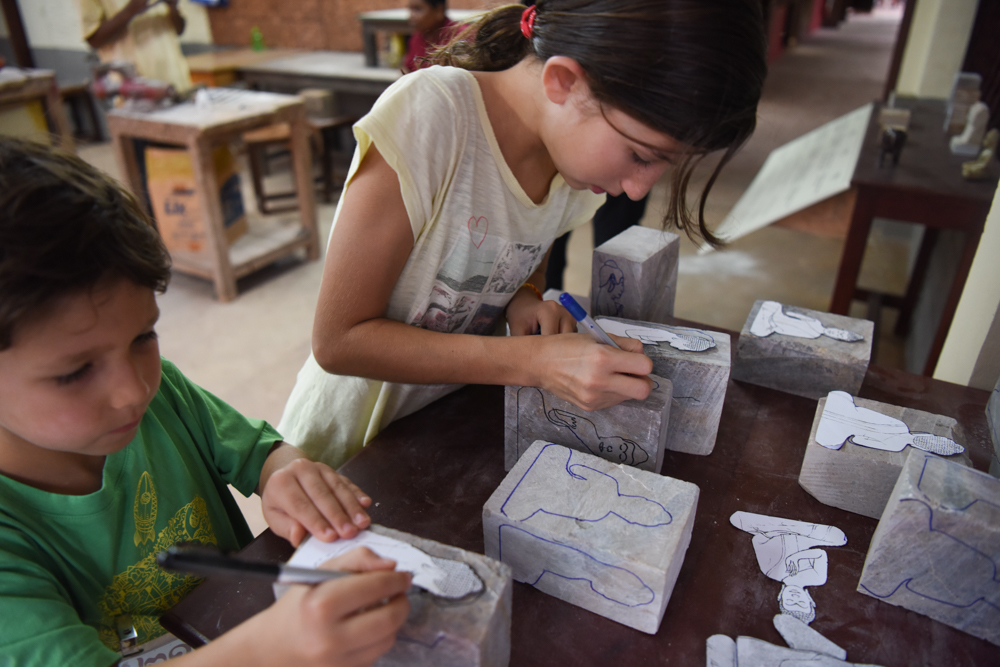
Helping pattern the soapstone for carving.
Banteay Srei:
Banteay Srei was constructed in the 10th century from red sandstone and is dedicated to the Hindu god Shiva. With it’s intricate wall carvings and relatively miniature scale, this temple is known as the “jewel of Khmer art.” It’s unique beauty and delicacy secured it’s place as Kate’s favorite Angkor temple.
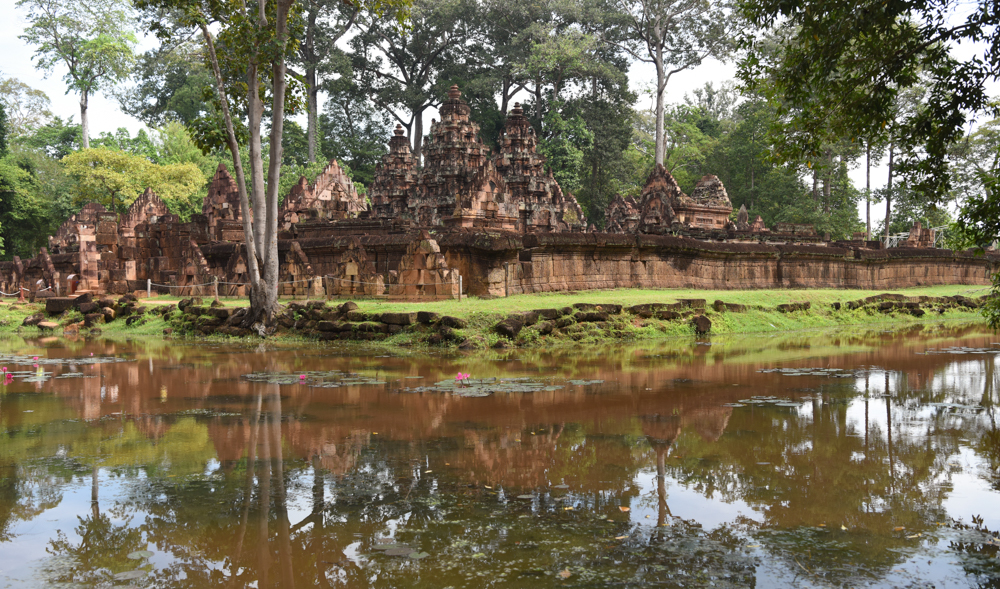
A lotus-filled moat surrounds Banteay Srei.
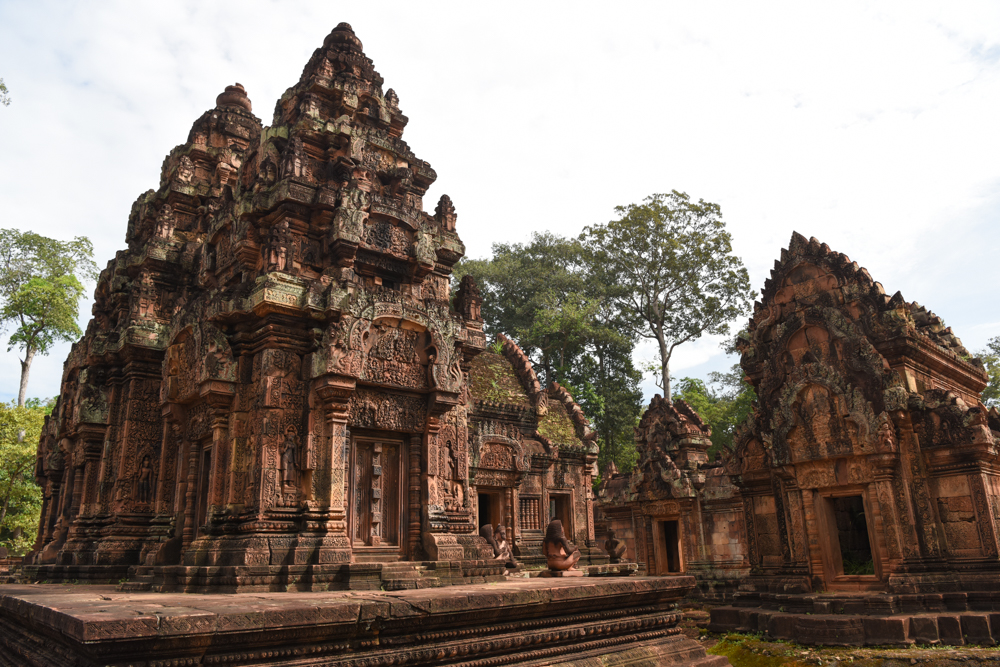
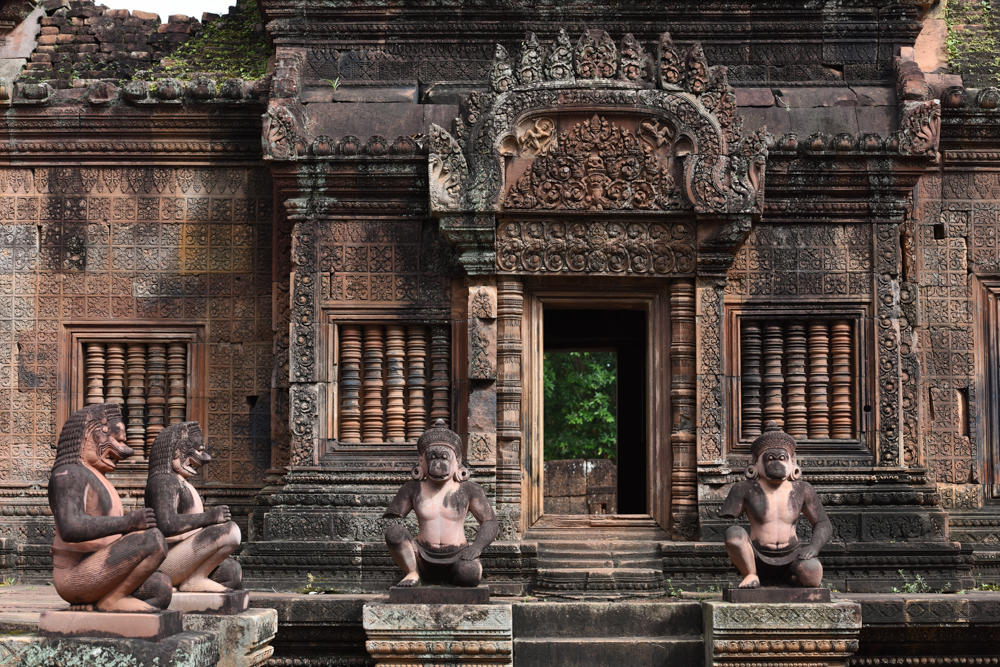
The entrance to the sanctuary.

Much of the elaborate detailed wall carvings have survived.
Bayon:
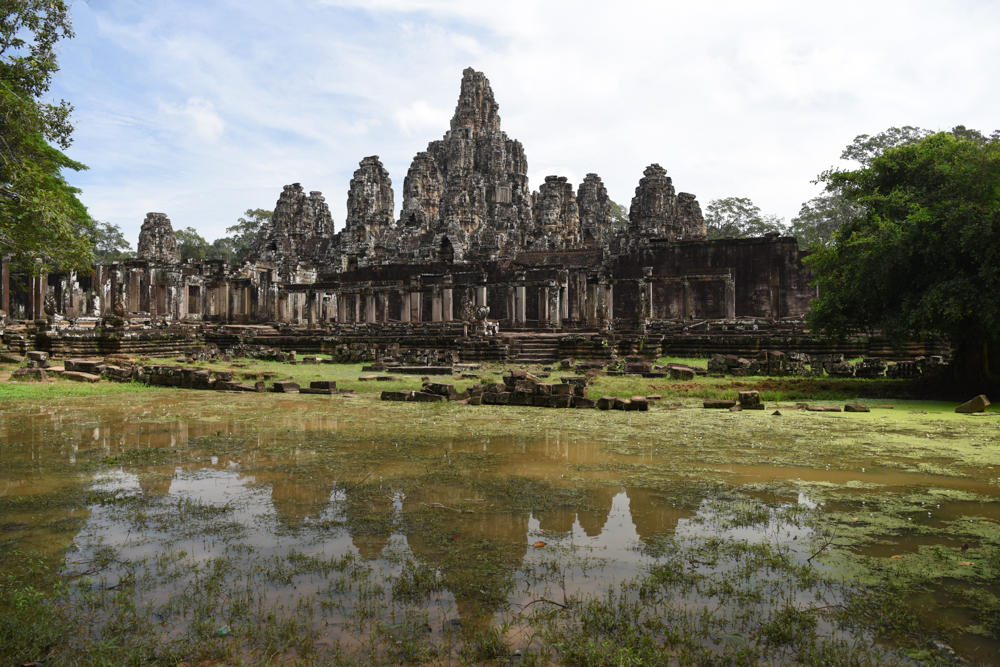
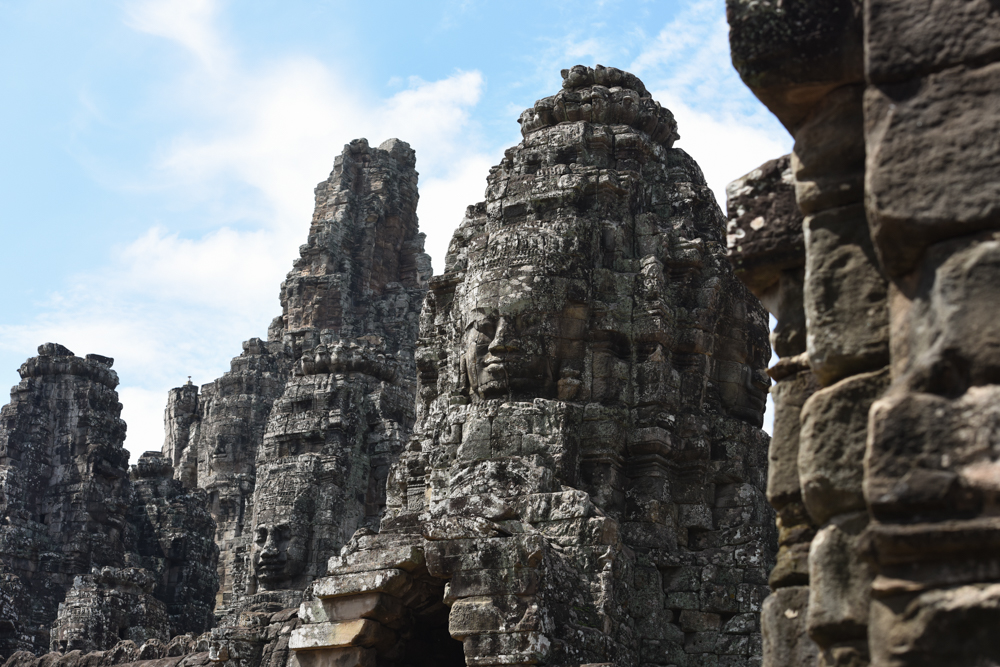
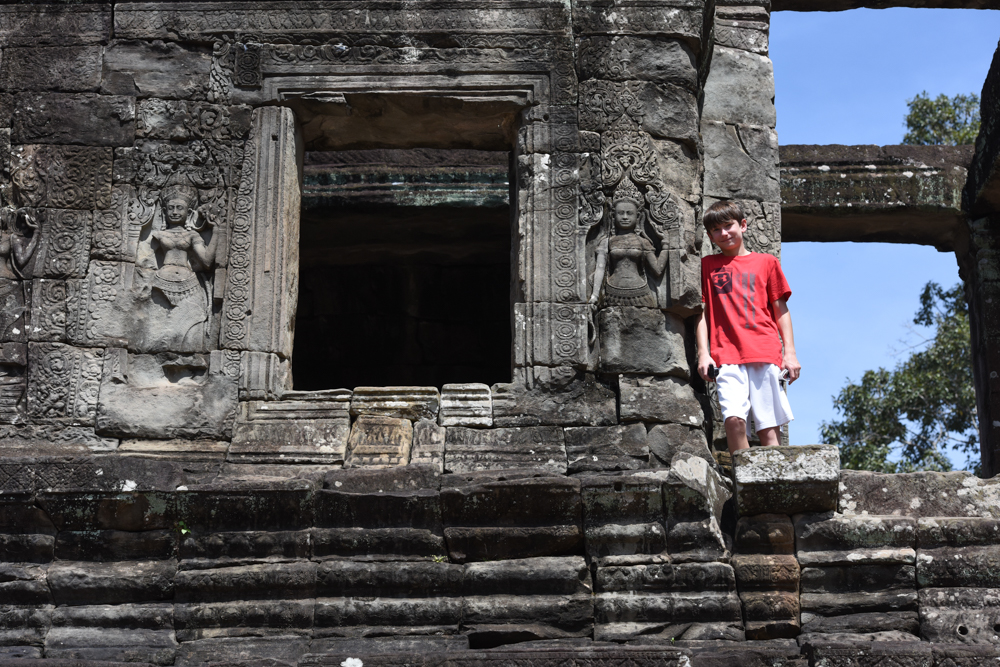
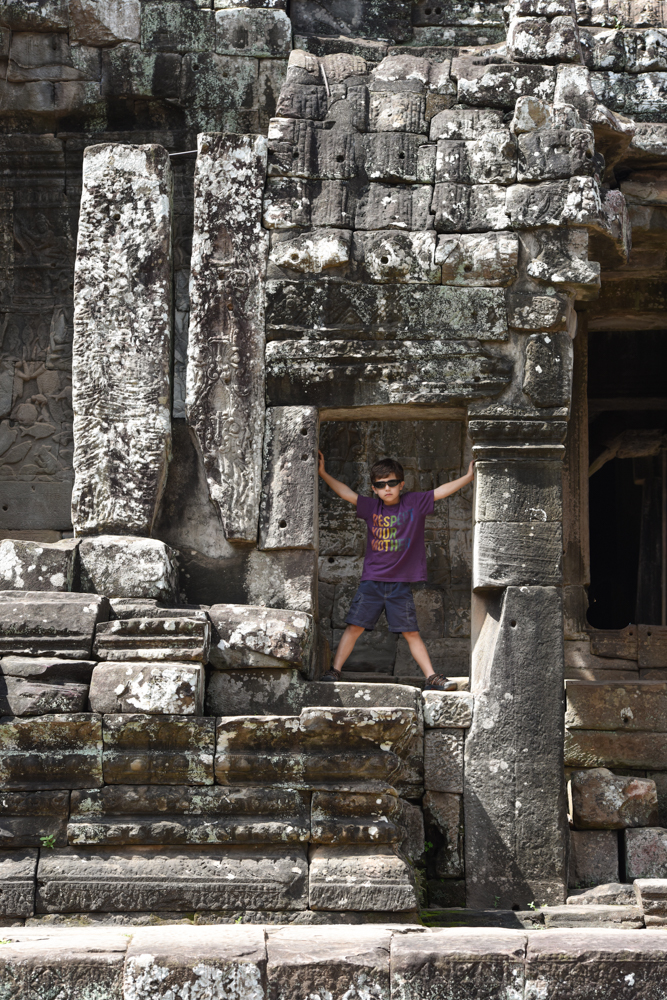
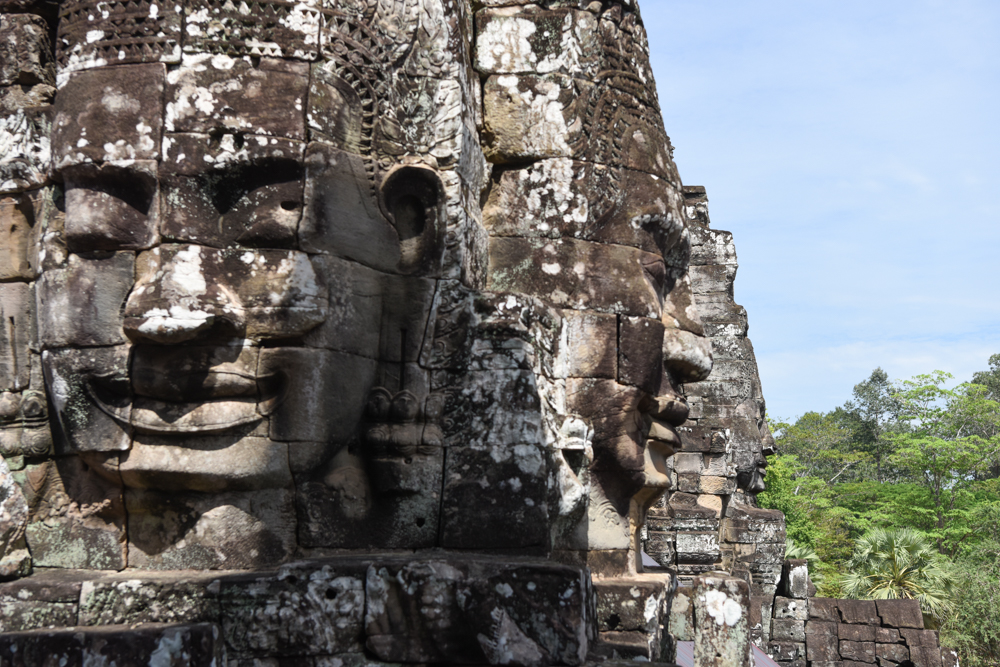
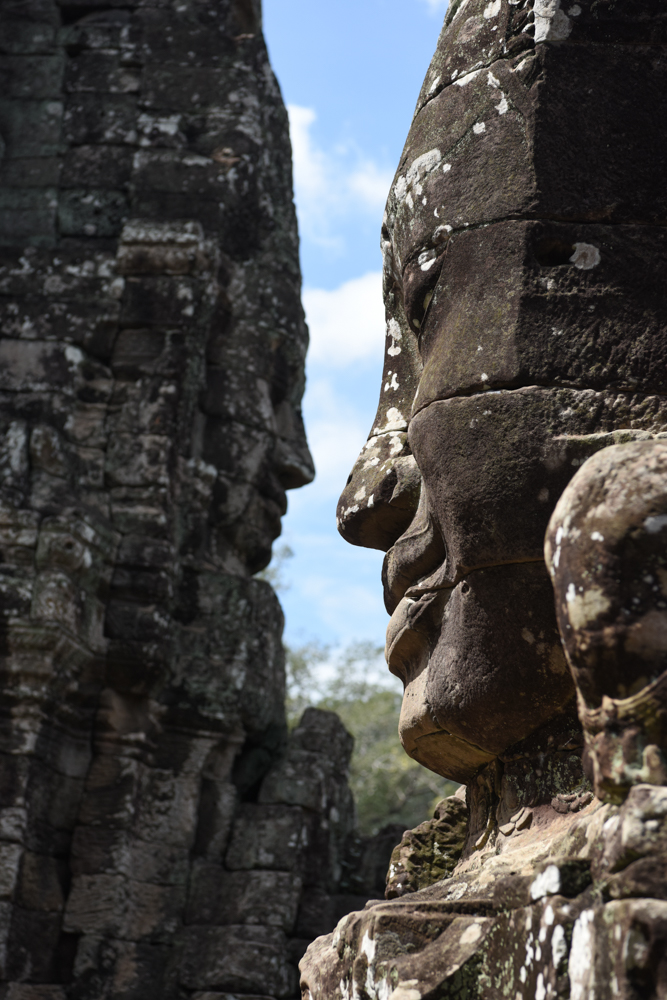
At the center of Angkor Thom, the last and most enduring capital city of the Khmer Empire, stands the Bayon temple. Built in the late 12th century, this Buddhist temple represents the baroque style of Khmer architecture. Known for the gigantic stone smiling faces protruding from it’s many towers, this massive temple quickly became a favorite for both John and Jack.
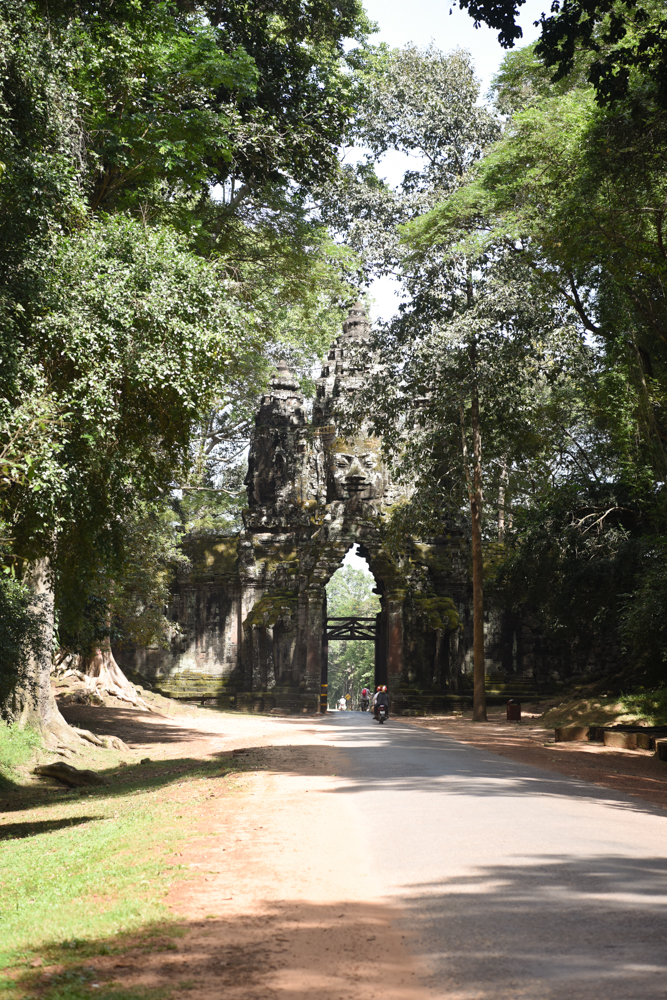
Entering the gate of Angkor Thom.

Sunset in the countryside:
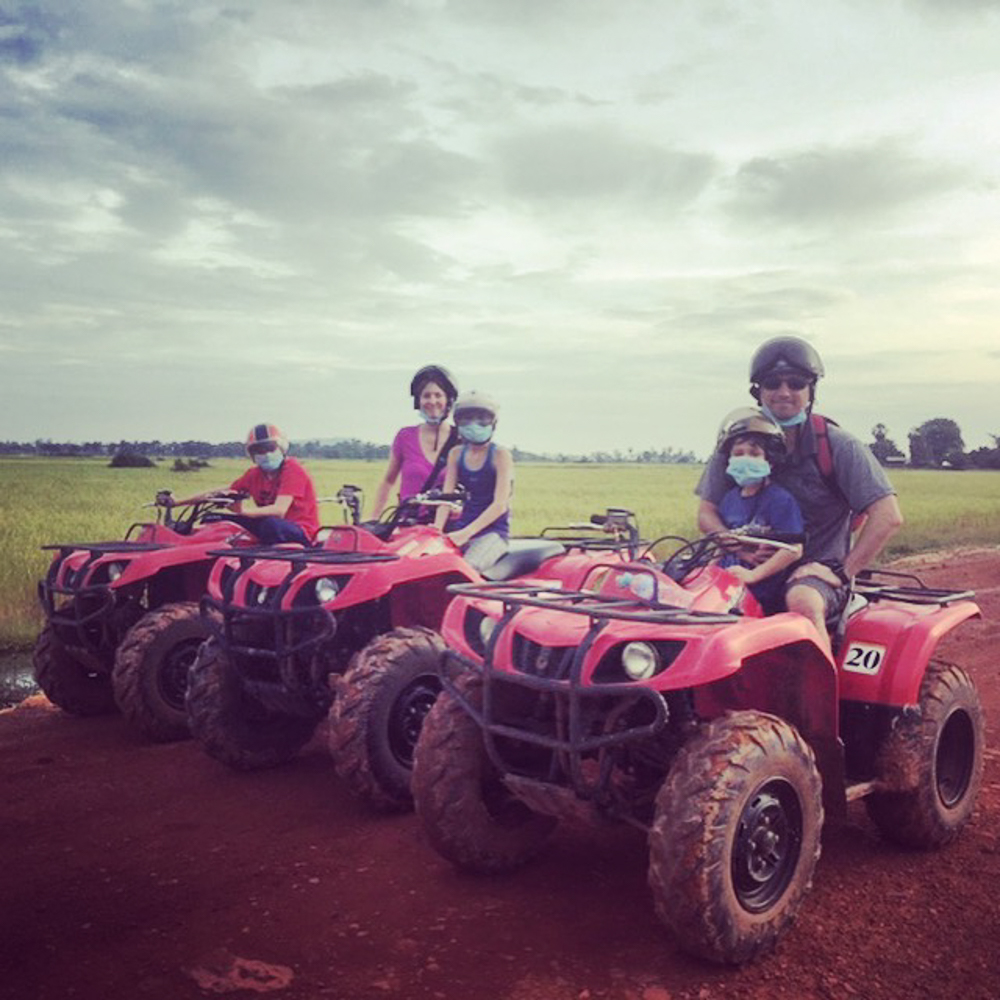
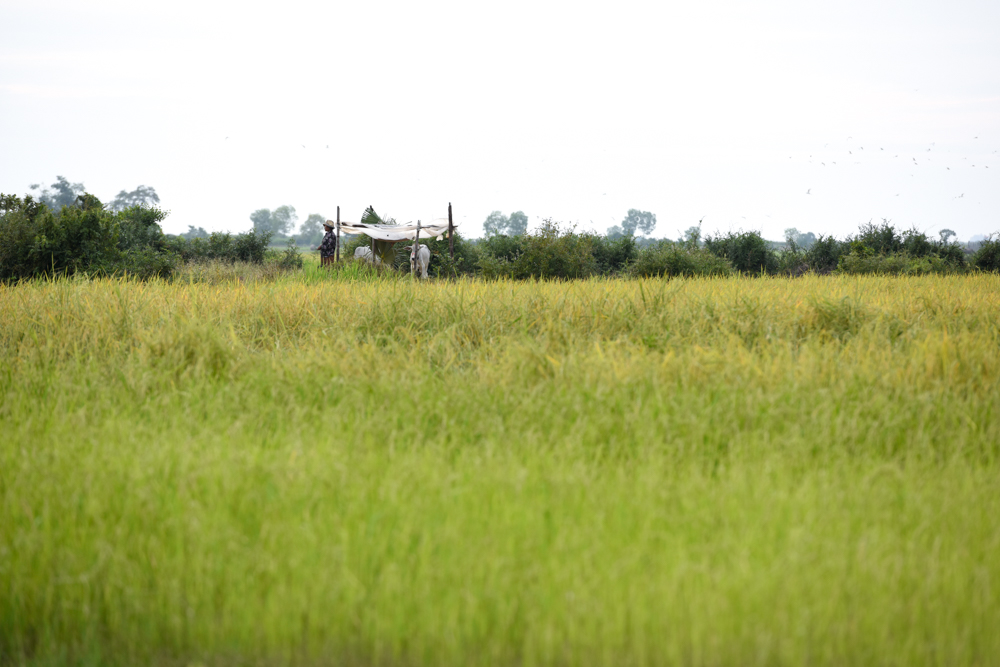
For our final evening, we took a quad bike tour through the rice paddies and local villages. Winding through dusty, uneven laterite roads, we got a glimpse of the simple beauty and hard life beyond Siem Reap’s temples.
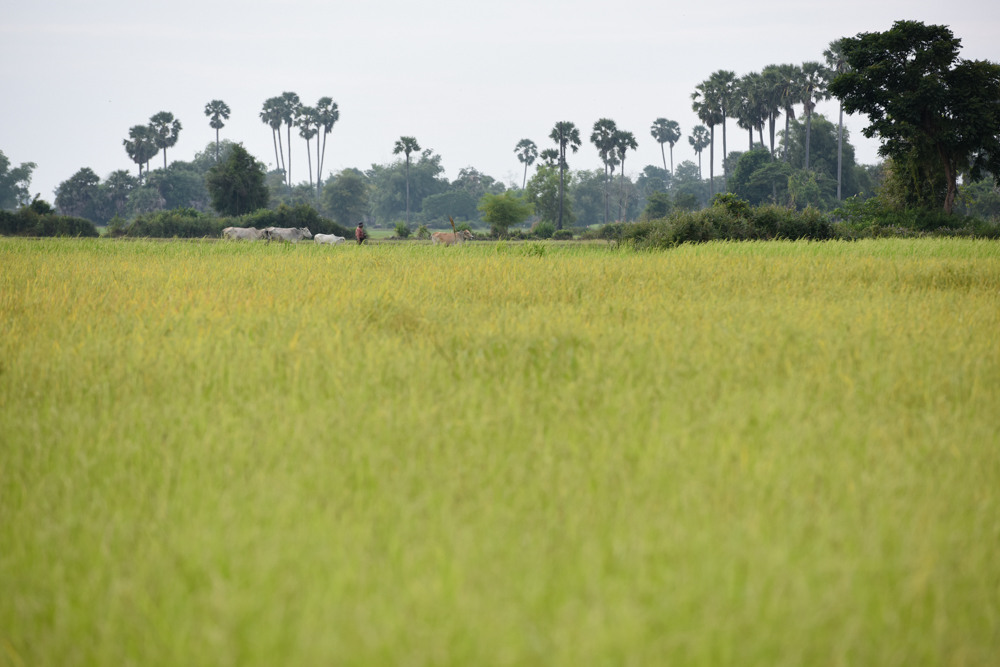
Rice farmer with his cattle.
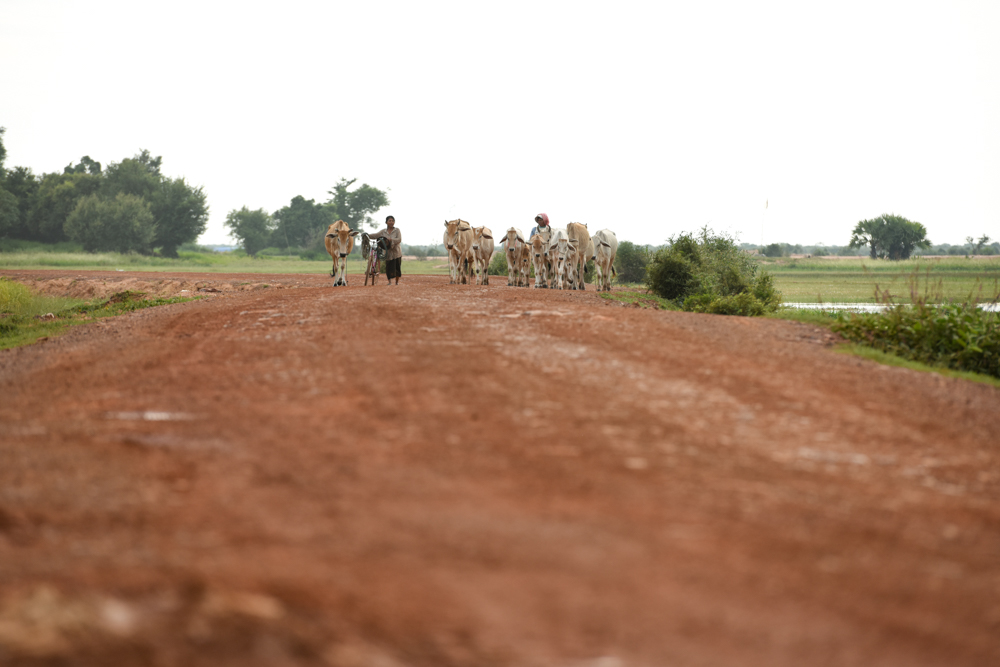
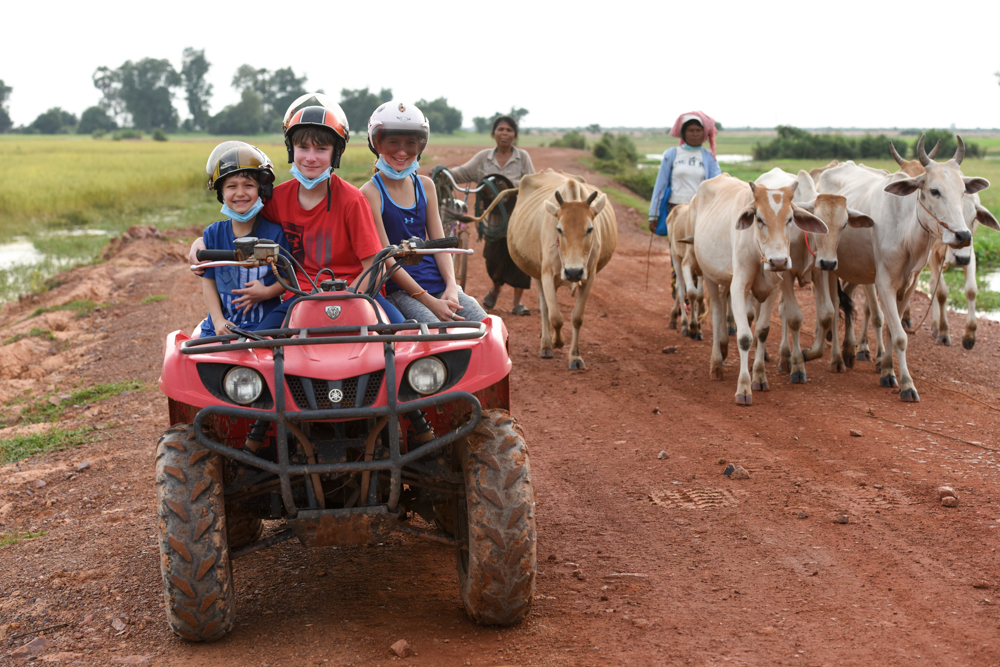
Luke found it hysterical that we were being photo-bombed by cows.
After days of exploring the temples of Angkor by foot, we ended with a foot massage for all.
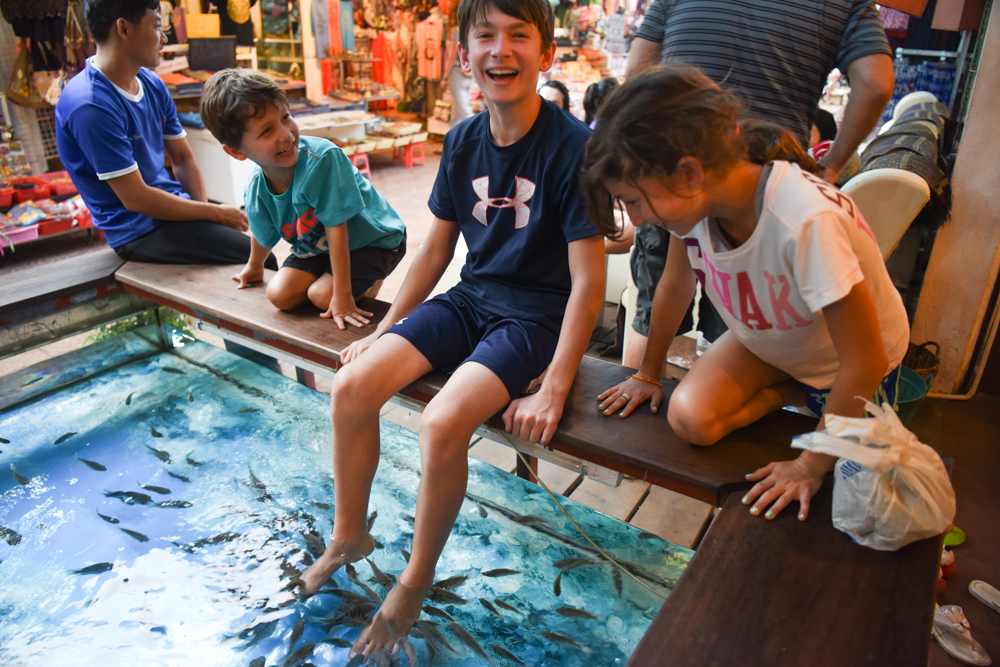
Jack was the only “brave” one to endure a fish foot massage.
 ourshanghaidays
Julie. That’s was awesome. What a great experience for all of you. Love mom❤️❤️
Sent from my iPhone